17 minutes ago
Monkey line, MSH announces symptoms, care and treatment
Periskopi(4 years ago)
(4 years ago)A day earlier, Deputy Health Minister Dafina Geja and National Institute of Public Health Director Naser Ramadani declared that no case of Monkey Lee in Kosovo has been marked in the country, saying they are on full alert and in response to the situation. Monkey line was said to have been confirmed [...]
Monkey line was said to have been confirmed in the countries of the region, while today the Health Ministry has published some data announcing that the period of incubation is between 5 and 21 days, while the disease is not easily spreading among people.
But how is Monkey Lee transmitted?
“Ape's permission is not easily spread among humans, but the disease can be taken through direct contact with the infected person, including: damaged skin, bone or body fluid, spit, sprayed ) prolonged face - to - face contact, contaminated materials, bed or towels used, sexual contact”
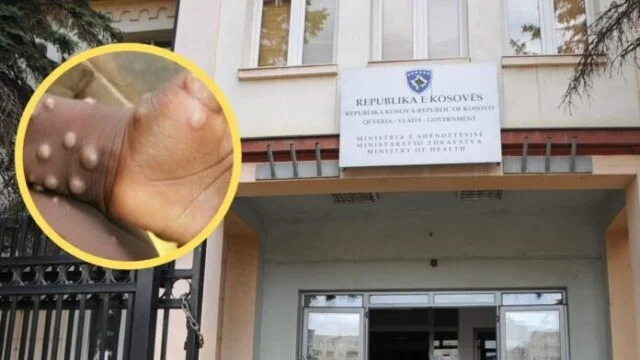
Monkey Lee symptoms: The typical symptom of Monkey Lee is the frying of the skin with bubbles on its face, hands, legs, mouth, and genital organs. Grieve and peri-anaal is reported during this epidemic. Red can be accompanied by fever, feelings of concern, or disease, headaches, fatigue, and swelling of lymph nodes. You are infectious as long as you have symptoms of disease.
What should we do if I think I have a monkey Lee?
“If you have a tan, accompanied by fever or feelings of concern or illness, talk to your doctor about testing your illness. If you suspect or confirm that you have a monkey's Lee, you should isolate yourself until the change in your skin has fallen.
During this period, you can receive treatment to ease the symptoms of Monkey Lee. Anyone who cares about you needs to take appropriate personal protective measures”.
How can we protect ourselves from Monkey Lee?
Everyone in close contact with an infected person, including sexual contact, can be sick of Monkey Lee. Take steps to protect yourself during the current epidemic in Europe, avoiding contact with skin or face - to - face with anyone who has symptoms, practicing safe sex, keeping his hands clean”.
Otherwise, Deputy Health Minister Dafina Geja at a media conference Wednesday indicated that no case of the Monkey Lee in Kosovo was marked.
Geja had said that the epidemiological risk data for the population is low, however, showed that the MSH with its structures is monitoring the situation.
Even, Kosovo National Institute of Public Health director Naser Ramadani said on Wednesday that the IKSHPK is paying attention to the epidemiological situation of the Monkey Lee, while saying the risk of that in Kosovo is low.