a minute ago
Greek foreign minister threatens Albania if it raises key issue
Periskopi(4 years ago)
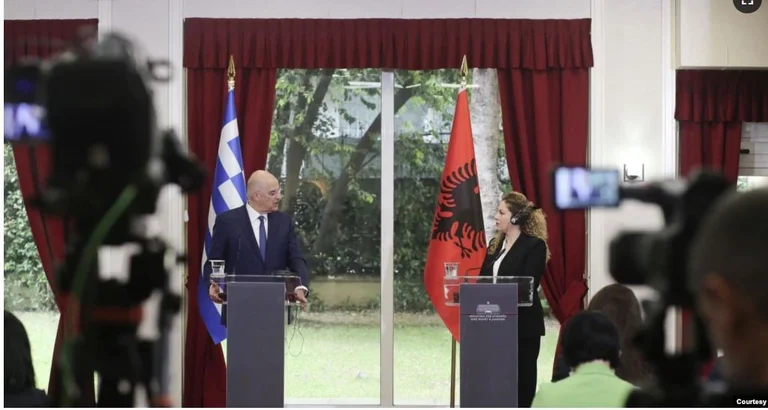
(4 years ago)In Tirana, Albanian Foreign Minister Olta Xhacka's request that between the two countries could be discussed in the future and on community ownership rights Qam received a threatening response from Greek counterpart Nikos Dendias. He spoke of an issue that does not exist and how it [...]
Greek authorities have always refused to raise the issue in talks with Albania, considering it an existential issue. For several years, however, the Albanian side has mentioned it in several meetings, at least at the level of foreign ministers.
Even today, at the meeting with her Greek counterpart, the Minister Olta Xhacka said that our friendly “countries could begin discussions on other issues, however difficult we have inherited from history and the tragic period of World War II, such as the need to abdicate the War Law, or the question of community property rights and human rights cam”.
But as for absorption of the war law, Greek Foreign Minister Nikos Dendias said that “is something we need to secede and co-operate that the historic points for his absorption be completed as soon as”, he used our open threatening tones towards Albania, in a clear reference to raising the question. According to him, “should not create questions that do not exist, because this would lead to multiple levels, where Greece would decide other issues dealing with Albania's European path”.
The issue of absorption of the war law between the two countries has been addressed several times between the parties. A year and a half earlier, but during a visit to Tirana and Prime Minister Edi Rama's side, Minister Dandas had named an anachronism, while Prime Minister Rama had voiced confidence that this would be closed positively and quickly.
During that same meeting, the two disclosed the decision to provide solutions to the international Court of Justice at The Hague, the United Nations body. Today, Minister Gack said that “confirmed our will to seek a compromise to refer the case to a third judicial party, such as the International Court of Justice”.
While Minister Dendias stressed that “is important how we will explain steps to fulfil the technical part so that we can deposit the documents in court immediately”.
Sending to the tribunal requires the parties to determine the points of disputes between them that they will seek the interpretation of the court. The Voice of America has learned that the two countries have launched feasibility phases of talks that will have to be held later to reach agreement on the document to be sent to the tribunal. These talks should be held following the president's granting of full might, while the agreement will again have to be ratified by parliament.