21 minutes ago
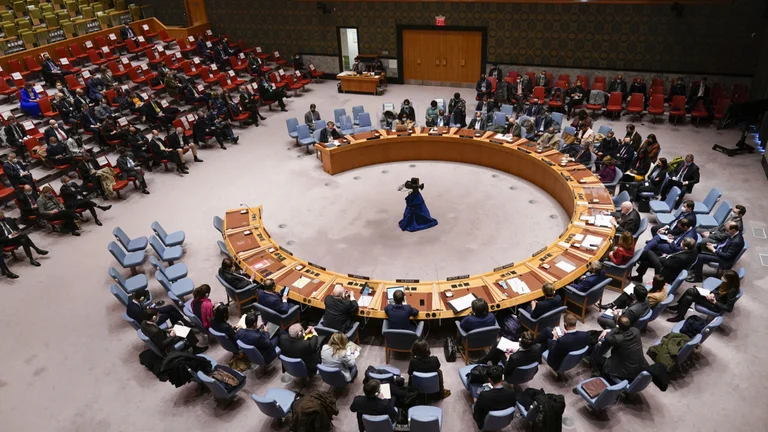
These are the topics to be discussed at today's Security Council meeting on Kosovo
Periskopi(4 years ago)
(4 years ago)The UN Security Council will meet this afternoon in New York to review UN Secretary General Antonio Guterres' upcoming report on UNMIK's work. Kosovo at this meeting will be represented by Deputy Prime Minister and Minister of Foreign Affairs and Diaspora Donika Grovalla. In [...]
Kosovo at this meeting will be represented by Deputy Prime Minister and Minister of Foreign Affairs and Diaspora Donika Grovalla.
In the report where recent developments are summed up, Kosovo-logging dialogue is cited, among other things, not allowing referendum and Serbian elections to be held in Kosovo. Serbia and the war in Ukraine.
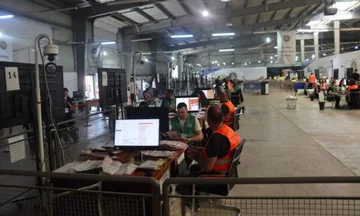
On January 15th, Kosovo's parliament decreed that it will no longer allow Serbs living in Kosovo to vote in Serbian elections and referenda within Kosovo, virtually interrupting the long-standing practice of allowing the Organisation for Security and Co-operation in Europe (OSBE ) to collect Serbian voters' ballot ballots in Kosovo and to send them to the counting centres in Serbia<2>, Klankosov reports.
“at a January 20th meeting of the OSCE Permanent Council, US Permanent Representative to the OSCE Michael Carpenter commended Serbia for organising the referendum as a key “step towards depoliticisation of Serbia's judiciary in line with European standards”, which he added would be “states the process of Serbia's membership in the EU”. While Carpenter acknowledged Kosovo's right to establish the conditions under which elections of other states are held within its territory, he said US had hoped Pristina would continue to allow O The SEU to help Serbs living in Kosovo vote in Serbian elections.
“In a joint statement issued on March 23rd, France, Germany, Italy, Great Britain and the US collectively known as the Quint-Decept “Great disappointment” in Pristina for its failure to “demonned its commitment to the civil protection principle and the political rights of all its citizens, including members of minority groups”.
Even the case of the court's Mitrovica president, Ljiljana Stevanovic, as well as the protests following that decision are summed up in the report.
“In the northern cities of Kosovo, Mitrovica and Gracanica, hundreds of ethnic Serbs protested on March 25th after the suspension of the chairman of the Mitrovica Foundation Court, Ljiljana Stevanovovic, for attending a meeting with Vuciqi in Belgrade. According to media reports, protesters demanded Kurti cancel the January 15th decision. Quinn countries issued a statement the same day expressing “concern for the risk of escalation or violence”.
It also stresses that the EU-mediated dialogue between Kosovo and Serbia has been blocked since mid-2021.
“After a nine-month break in the high-level talks, Vuciq and Kurti met on 15 June and 19 July 2021 under the auspices of EU High Representative for Foreign Affairs and Security Policy Josep Borrell and EU Special Representative for Belgrade-Pristina Dialogue Miroslav Lajcak. After the meeting, both leaders indicated that their positions remain very different”.
It further states that relations between Belgrade and Pristina have remained generally stable since the Council's latest briefing on October 15th 2021, but that the war in Ukraine has raised concerns about geopolitical tensions in the Western Balkans.
“EU and US member states have also expressed concern that Russia might seek to destabilise Kosovo. At a press conference during the Munich Security Conference, held from 18 February to 20 February, Osmani suggested Russia could use Serbia, its close ally, to destabilise the Western Balkans”.
Kosovo and its Western allies have taken steps to minimize possible escalation of tensions in the region. On 28 February, Pristina banned the transmission of Russian television channels”.
The United Kingdom is running the Security Council.