13 minutes ago
Russians with new technical standards planned mass executions in Ukraine, carrying 45 thousand body bags
Periskopi(4 years ago)
(4 years ago)Berlin-based Eastern European expert Sergey Sumlen has drawn up a summary detail on how mass cemeteries exist in the army, explaining the situation in Ukraine at the same time, Pryscope follows. This is what Sumlen says in a summary/analysis of the situation in Ukraine. Remember: February 26, [...]
This is what Sumlen says in a summary/analysis of the situation in Ukraine.
Remember: February 26th, 4 days after the planned attack on 22/02/22 (and 2 days after the actual attack) Russian state media RIA published a (just without error) article on Ukraine's victory, and “final resolution of the Ukrainian case” with this war”.
Don't forget: on Feb 26th, 4 days after the planned attack on 22/02/22 (and 2 days after the real attack) Russias bigger stage outside the RIA published an article about the line above Ukraine and the final “solation of Ukrainian production “by this sentence. Pic.twitter. com/g2r S1hzkhE
) Sergei Sumlen (@sumlen) April 2, 2022
Sumlenny also published the source (the database for all Russian technical legal standards), where Periscope brings it to you in Albanian;
NATIONAL STANDARD RUSE
Emergency Civil Protection of Troops in War and Peacetime
Civil protection. Urgent annihilation of the dead in times of war and times of peace. General Requests
Present date 2022-02-01
1. usage zone
This standard sets out general requirements for organizing and implementing a series of measures to bury human and animal corpses that have died during military conflicts or as a result of such conflicts, as well as, if necessary, as a result of peacetime. Emergency.
2. Standard Reference
This standard uses norms for the following standards:
COST 30491 organ-major mixer and sand reinforced with organic connections for road and airport construction.
Note: When using this standard, it is recommended that you check the validity of reference standards in the public information system ʹ on the official page of the Federal Agency for Technical Settings and Internet Metrology or according to the annual information index “National standards” , which was published on January 1st of the current year, and according to the monthly information index “National standards” for current fashion. If a dateless reference standard has been replaced, it is recommended that the current version of that standard be used, taking into account any changes made in that version. If the reference standard given to the date reference is replaced, then the use of the version of this standard is recommended by the year of approval (accession) shown above. If, after adopting this standard, a change is made to the standard referred to by a date, affecting the provision given to reference, then it is recommended that this provision be applied regardless of this change. If the standard of reference is canceled without replacement, then the reference to it is recommended to apply to the part that does not affect this reference.
3 Terms and definitions
This standard uses the terms, according to COST R 42.0.02, [1], [2]. (3) as well as the following terms with their respective definitions:
Uh 3.1 emergency corpse burial: A group of emergency burial measures for humans and animals who died during military conflicts or as a result of such conflicts as well as, if necessary, as a result of peacetime emergencies.
Official publication
Note Urgent burial of corpses is carried out by teams (groups) for the urgent burial of civilian defense corpses, internal affairs organs and municipal services.
· 3.2 Non-stub formations to ensure the implementation of civil protection measures; OJFQ: Formations created by organizations classified as civil protection by their employees to participate in ensuring the implementation of civil protection measures and the conduct of urgent jobs that do not concern the threat to life and health of people during emergency situations.
Note The executive authorities of the Russian Federation's constituent entities and local governments can create, maintain and organise NSFGO activities in their territories in line with plans for civil protection and population protection, as well as action plans for preventing and eliminating emergency situations.
· 3.3 Emergency burial teams [groups]; Forms that are part of the NGOs. specially prepared to carry out a series of measures for the urgent burial of bodies in times of war and peace equipped with machines, equipment, equipment, and materials.
· 3.4 emergency burial service for municipal corpses: A group of administrative bodies, forces and civil protection tools designed to organise and carry out a series of urgent burial measures for human and animal corpses in times of war and peace. .
·4 General Subscripts
The main civil protection measures taken to solve the problem related to the urgent burial of human and animal corpses in wartime are:
A preset of possible burial sites;
·pʹ creation, training and maintenance of civil defense forces and means to ensure the emergency burial of corpses, including on the basis of specialised ritual organizations:
· ʹ equipment of burial places (the burial) of bodies (responds) of the dead;
Uh-huh. The obsession of their finding, and the extract and the primary processing of the dead, and the identification and the record, and the transport and burial of the dead;
· ʹ organization of sanitation and epidemiology.
· 5 Main civil protection activities carried out to solve the problem of urgent burial of human remains during wartime and peace
· 5.1 Early Identification of Possible Graveplaces
O 5.1.1 General Information About Lands and Burial Types
The decision to create burial sites is made by the executive authority of the Russian Federation's constituent entity or local government in whose territories have been established.
These types of burials of corpses or remains of the dead are traditionally identified: soil (refuge in the grave); fire (boys pursued by burial of a urne with ash); water.
The burial sites are the parcels of land divided in accordance with ethical, sanitation and environmental requirements for burying bodies (the deceased) -- including for burial of the urnaves with the ashes of the dead (dead) [Chire after the burning of bodies (the dead) of the dead.
) 5.1.2 Basic Principles of Choosing a Land for a Graveplace
The selection of a site for setting up a burial site is carried out according to the city's building rules or other settlements, taking into account hydrogeological characteristics, field features, soil composition, maximum environmentally accessible loads in the environment, as well. as well as in accordance with the normial rules and standards and should ensure the endless life expectancy of the burial site.
The burial sites should be placed at a distance of at least 300m from the borders of the residential area.
No burial in territories allowed:
· • The first and second generation of the age of sanitation protection of a water source, a mineral source. The first eras of sanitation (elor-sanitary) district protection of the resort;
Uh • with the karst surface appearance. Very broken rocks and places where aquifers have been scratched:
· ʹ on the shores of lakes, rivers, and other surface bodies used by the population for domestic needs, toilets, and cultural purposes and protection:
· ʹ with underground waters that stand more than six feet [2 m] from the earth's surface to their highest position, as well as in flooded evils prone to slide and collapse.
It is allowed to be selected for urgent burial of corpses at a level of groundwater more than six feet [2 m] at the highest level of their show, provided the object is created using land strengthening technology in line with COST 30491.
Establishment of new exhumations, reconstruction of existing exhumations are possible if there is a positive conclusion from environmental and Sanitary expertise.
The provision of a land parcel for the deployment of a burial site is carried out by local governments in line with land legislation, as well as the documentation of the project adopted in line with the procedure specified by Russian Federation legislation and the component's legislation. Subjects of the Russian Federation.
The size of a burial site is determined in view of the number of residents of a designated city or other settlement, as well as the capacity of the existing cemetery, but cannot exceed 40 hectares.
5,1.3 Consciousness with sanitation and hygienic requirements when selecting burial sites
The early definition of possible burial sites is carried out on the basis of a sanitary assessment and epidemiology of the following factors:
) sanitation and epidemiology:
Urbanistics and landcaping of the territory;
geology, hydrogeological, and hydrogeic data.
) land-geography data, as well as the ability of the sheep and the leaves to self-clean;
The potential erosion and pollution migration;
Transport access.
The burial area must meet the following requirements:
There should be a slope away from the settlement, open water troops, and when the population uses underground waters for domestic purposes and drinks;
Don't flood during the floods:
There can be a level of groundwater on foot, no less than eight feet [2.5 m] from earth's surface to a maximum of underground waters on foot. At a level of over 2.5m from the ground, the country can only be used to place a cemetery for burial after burning;
There will be dry poro land (rans, sands) at a depth of five feet [1.5 m], with ground moisture at the range of 6% by 18%.
Possible burial places must be placed at a distance:
) from residential areas, public buildings, sports and health zones and sanatorium, in line with sanitation regulations for sanitation protection zones and the company's sanitation. structures and other objects;
) water-takers facilities of a centralized water supply source for the population of at least 1,000m with confirmation of the distance limit from the sanitation of water source and filter time zones.
8 rural villages using wells, dams, resources and other natural water supply resources, when the location is scheduled to place possible burial sites in the upper course of underground waters, the sanitation area between the proposed breeding site and the settlement is provided in line with results. estimates of underground water treatment and laboratory data research.
Colubiums and mourning walls for burial of the dead must be placed on specially separated land parcels. The location of colluberiums and grieving walls outside locations of possible burials in specific land parcels is allowed at a distance of at least 50m from residential buildings, territories of medical institutions, children, education, sports and social welfare institutions.
The selecting of sites and the division of territory for possible burial sites are performed by the city's main architect, along with residential and municipal services representatives in agreement with representatives of the Sanitarian-Epidemiological and environmental services and approved by decision. of the executive authorities of the constituent entities of the Russian Federation or local self-government on the basis of master plans to develop settlements.
When a plot of over 40 acres [40 ha] is set. When the urban situation requires a larger area, the area must be divided into ages, separated from an area of moral protection (ZMZ) as follows. so that each area will not cross an area of 40 acres [40 ha] and may function as an independent burial site.
Replacing funerals in a period of moral protection is not allowed, including after the burning. The width of the moral protection zone is recommended to be at least 40m.
5.2 Establishing funds for emergency burial of wartime corpses and peace
The creation and collection of material and technical means for urgent burial of corpses and disinfection means is carried out by the executive authorities of the Russian Federation's constituent entities and local governments in respective territories as part of the stock for civilian needs. Defense, based on the anticipated work plan for the emergency burial of corpses.
The rough range of reserves needed for the urgent burial of corpses: personal protective equipment for skin and respiratory organs for NFCS personnel destined for the burial of wartime corpses;
) coffin stock (material for coffin production);
No.
Dinfectant (Clorine lime);
) fuels and lubricants (for transport support);
An organic mixture and active media created to strengthen the earth.
In peacetime, coffin reserves (materials for coffin production) and patoanatomic bags are created to the extent of 30% of the projected irreversible losses, the reserves of disinfectant used for mass cemeteries to 40% of the projected losses (10% and funds can be used to carry out anti-vene in the original dead countries).
To meet the current needs in the course of direct application of the provision for the burial of war - time corpses, contracts for the supply of funds needed for the urgent burial of the bodies in the volume must be linked. That corresponds to the anticipated losses.
NFCS are equipped with equipment and property from classified organisations as civil protection, executive authorities of the constituent subjects of the Russian Federation, and local governments that create and secure NFCS activities in their territories in line with plans for civil protection and population protection. And action plans to prevent and liquidate emergency situations.
Given the planned purpose of the emergency burial of corpses, it is necessary to consider the possibility of withdrawing additional technical means from other organizations, especially this is true of land (excavors) and vehicles that will transport corpses. To the burial place.
The stocks of materials and technical means destined for the needs of civil protection can be used for the urgent burial of corpses in peacetime.
5.3 Creation, training, and maintaining the willingness of forces and civil protection tools designed to ensure urgent burial of time and peace
The emergency burial teams of QKUK's corpses are the facilities that are part of the funeral service of the city's corpses, specially trained to carry out a series of measures for the urgent burial of bodies in wartime and peace as well. Part of the civil defence forces and the forces of the unified state system of warning and liquidation of emergency situations.
It is recommended that (groups) teams for the urgent burial of NFCS corpses be established on the basis of specialised funeral services that meet at least one of the following conditions:
The establishment of a ritual organization specialising in the territories of other cities and settlements classified as separate groups, first and second for civil protection:
• The establishment of a specialised ritual organisation near safe areas designated by executive authorities of the Russian Federation's constituent entity, with the goal of hosting the evacuated population.
The list of specialized ritual services (organizations) regardless of ownership. Creation of OJF formations. destined for the urgent burial of bodies in wartime and peacetime, are held, approved and highlighted by the relevant directors of organisations by local government.
Commands are created for the urgent burial of wartime and peaceful corpses:
To collect corpses;
• handing over corpses to burial place;
Send him to the burial site of the coffins (scans or close containers) from the warehouses;
The disinfectation and burial of corpses.
The composition and structure of teams (groups) for the urgent burial of NFCS corpses is determined by local governments in line with the demands of Russian Federation legislation. Orders are arranged for the burial service of the municipality's corpses, based on duties assigned to civil protection, and are co-ordinated with Russia's EMERCOM territorial organs in a definite way.
Team activities (groups) for the emergency burial of NFCS corpses are carried out in line with plans for civil protection and population protection, action plans for the prevention and elimination of emergency municipal situations and constituent entities of the Russian Federation.
Russia's Emergency Situations Ministry and its territorial bodies conduct methodological instructions and control over the creation of teams (groups) for the urgent burial of NFCS corpses. They develop, with the participation of federal executive authorities and executive authorities of the Russian Federation's constituent entities, an exemplary organisational and personnel structure and recommendations for NFCS equipment equipment and special property.
Co-ordination of teams' (groups) activities for the urgent burial of NFCS corpses is carried out by the territorial bodies of Russia's Emergency Situations Ministry and specially authorized bodies to solve problems in the area of civil protection and protect the population and territories from emergencies under local government.
The preparation and training of teams (groups) personnel for the emergency burial of NFCS corpses are carried out in line with current Russian Federation legislation, taking into account the organisational and methodological guidelines of the Russian Emergency Ministry, as well as the legal regulatory acts of Rostekhnadz and other bodies responsible for the creation, preparation and security of the NFCS in companies and facilities.
exemplary training programmes for team personnel (groups) for the emergency burial of NFCS corpses are approved by the Russian Emergency Ministry.
5.4 Organizing and implementing tasks for identification, accounting and burial
5.4.1 Organizing and procedures for burying corpses
A commission is created for the burial arrangement, which includes all the representatives entrusted with the work processing documents for the dead, body storage, coffin making, and burial preparation.
During a group burial, burial can take place both in individual tombs and in a common one for this group of dead people. The ash burial in <x0m of grief” of the open and closed hummingbirds is carried out in individual camera.
8 in group burial for a group. made up of military and civilian. Military honors must be given to the entire group of dead ones.
The burial can only be done if there is a medical and state death certificate and after identifying the deceased's identity.
When identifying a person from outside signs is difficult, it is necessary to identify the remains with forensic research methods (autos, fingerprints, dental examination, genetic testing).
Genetic execution is performed at the request of the medical institution that issues death certificate, internal organs. Russian Emergency Situations Ministry. Russian Defense Ministry. In this case, a medical certificate is issued based on the results of the examination.
In those situations when death has occurred as a result of an explosion or another emergency, because waste cannot be found, the fact of death can be confirmed by eyewitnesses to executive authorities at all levels or in court. The burial in such situations is allowed to be carried out on the basis of a death certificate issued at the decision of executive authority or court.
In the event of the death of foreign citizens, burial issues (regarding) the bones of the dead should be co-ordinated with embassies or consulates of the respective states.
The burial of persons whose identity has not been proven is allowed on the basis of the decision of internal affairs organs in specialised cemeteries sections. In this case, combustion is not allowed unless it is necessary according to the requirements of sanitation regulations and regulations or according to the results of pantoanatomic studies of a forensic examination.
The health organization has the right to request a burning burial in those cases. When the burial of unburned waste can become an important source of danger to the population or epidemic.
When the remains of warped or destroyed bodies are buried after a forensic or genetic examination, they must be placed in closed coffins or capsules that guarantee sanitation and epidemiological security and not open at the funeral.
Conservation and embalming of waste is recommended in situations where waste conservation is necessary for later examinations: forensic, genetic. Forensics.
Burial in a coffin, capsule, or urbe, or ash, is not permitted, respectively.
After the funeral, an act is drafted.
5,4.2 Hygienic requirements for burial arrangements
The burial of unburned remains must be carried out in accordance with the current legislation of the Russian Federation.
The burial of bones after burning is allowed to be in a turquoise walls, coulbars, and tombs.
When you bury a coffin with a body, the depth of the grave should be placed according to local conditions (earthly and groundwater levels in its feet), but no less than a thousand feet [1.5 m].
The burial in mass cemetery is allowed if there is a Sanitary conclusion and epidemiology of organs and institutions of state service and epidemiology, with the following conditions:
The number of coffins, depth and number of burial levels is determined according to local climate conditions and the height of underground waters;
The distance between the coffins horizontally must be at least five feet [0.5 m] and filled with a layer of soil, which lies at the top of the brushes or the halo branches;
During setting coffins on certain levels, the vertical distance between them must be at least five feet. The top row coffins are placed on the gaps between the coffins of the bottom type;
The depth at the level burial would hardly have to be at least 2.5m;
The bottom of the grave must be at least five feet above the groundwater level;
The thickness of land from the upper type of coffin to the surface must be at least 1m;
A tombstone is arranged at a height of at least five feet;
To speed up the mineralization of the corpses, at the bottom of mass graves, pits and a suction well have been arranged and a ventilation channel placed at the bottom of the tomb.
Transportation of the dead to the burial site is performed by specialized transport. Using another type of vehicle except vehicles is allowed for transportation of the deceased. It is used to transport raw food and food products.
After the transport and burial of the dead, transport must undergo the cleansing and compulsory treatment of disinfectant approved for use in the established order.
To prevent the spread of particularly dangerous infectious diseases, the burial process is performed by those who have died from an unrecognized ethiology infection, as well as by especially dangerous infections (who died in medical institutions or entered the pantoanatomic department for autopsy). In galvanized coffins, sealed airtightly directly by the pantoanatomic department.
Tombing the dead with high radioactive background. It is allowed in a specially designated burial area in accordance with Russian Federation legislation, which regulates relations with security security from population radiation.
The rehuming of the deceased's bones is carried out in cases and in the manner defined by the current legislation of the Russian Federation. It is not recommended to complete the re-exhumation earlier than a year from the burial date.
The tomb, in the event of waste removal, should be treated with disinfectant approved for use in the defined, covered and planned manner.
The removal of the bones of the deceased from a mass grave is possible in cases of redependence of the bones of all those buried in a mass grave with the decision of executive authorities of the constituent entities of the Russian Federation or local governments in the presence of a Sanitarian and epidemiological conclusion.
Tombs and substances that are used for burial (arcivoe, urna, wreaths, embalming agents). It's allowed for use in the presence of a Sanitarian-Epidemiological conclusion.
5.4.3 Determining the necessary number of forces and means to perform emergency burial work for the dead
An example of determining the required number of forces and means for performing emergency burial work of the dead has been presented in Addique A.
The main types of work in this case will be:
The development of a foundation hole for a mass grave;
) preparing a body burial pit (remains):
“Preparing bodies (remains) of the dead for burial;
Representing the first troop row (rests) of those killed in mass cemetery:
Send forth the first line of troops to the dead;
• Representing the second row of bodies (remains) of those killed in mass cemetery;
Filling the second row of the dead.
Mass cemetery filling.
When possible irreversible losses among the population are assessed and the largest shift in work after using conventional modern weapons by the enemy, the city's destruction rate is seen as the main integration criterion.
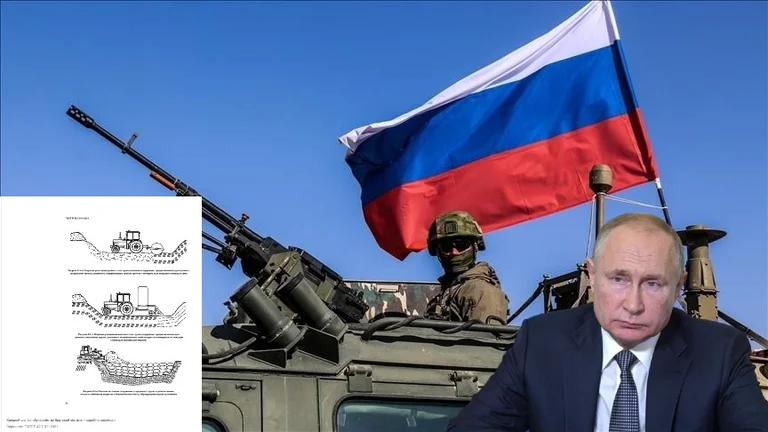
To understand: Here's the details from the Russian technical state standard for mass cemetery, it describes with plans and photos, how to dig up the +izum tomb, how to cover the bodies with chemicals, and how the full grave should be burdened by a heavy one. Bulldozer” wrote security expert Sergei Sumlen.
For example, here are details from the Russian State technology standard for mass women, it describs with plans and pictures, how the women should be dug+ised, how reasons should be served with chemicals and how the full women should be dragged by a heavy bulldozer. Pic.twitter. com/6GLgE6VCX2
) Sergei Sumlen (@sumlen) April 2, 2022
“Summary: It seems that Russia planned a quick victory over the Ukrainian Army, complete invasion of Ukraine and a genocide, including mass executions of the leaders of Ukrainian civil society, politicians, cultural leaders, clergymen, etc. The projected genocide rate was unprecedented since World War II”, he says.
“The standard predicted digging mass graves isolated for up to 1,000 dead bodies every grave within three days. A team of 16 soldiers was responsible for each grave of”.
The standard reserve daming of isolated mass women for up to 1,000 dead bodites and women with 3 days. A team of 16 soldiers was responsible for every woman. Pic.twitter. com/mum7r q TOHm
) Sergei Sumlen (@sumlen) April 2, 2022
According to experts, the size of the mass cemetery envisioned by this new Russian technical standard, “can only be thought of as a nuclear war or a pandemic”. It seems that these graves were also designed for Ukrainians, after the Russians published their official article on “of the”.
According to this new Russian standard technical, “are thinkable only for a nuclear war or a pandemic”. Looks like these women were also built for Ukrainians, as Russos published on 26th Feb their executive artistic on “victory”. Pic.twitter. com/ Choose a working directory VNJ40HS74
) Sergei Sumlen (@sumlen) April 2, 2022
In September 2021, Russia has adopted a state technical standard for digging and maintaining mass graves in wartime. He went into effect on February 1, 2022. ”
In Septem 2021, Russia has adopted a technical standard stage for digging and making mas women aid wartime. It took effect on Feb 1st 2022.https://t.co/PLnntnY8ir Pic.twitter. com/M2X7Otq95w
) Sergei Sumlen (@sumlen) April 2, 2022
“- Russia planned to take Kiev easy within 3 days, following Ukraine's surrender; Russian Army Units were followed by thousands of police officers; The Russian Army bought 45,000 body bags and brought mobile cremators; I'm sure they had planned massive executions for Ukraine”, Sumlen concluded. /PERISCOIP/E. RR/