17 minutes ago
Philanthropist Osman Cavala sentenced to life in Turkey
Periskopi(4 years ago)
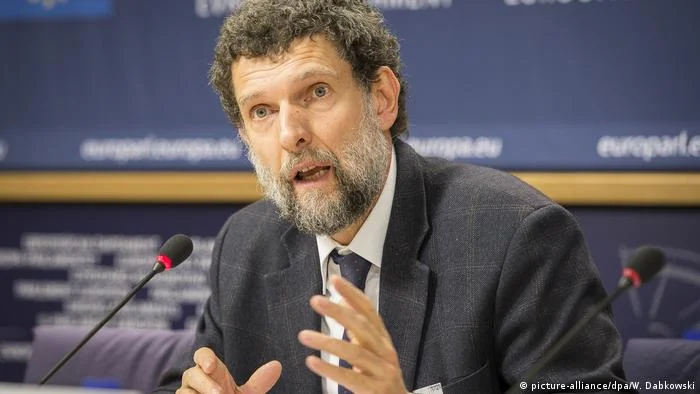
(4 years ago)Turkish Philanthropist Osman Cavala was sentenced on Monday to life in prison without the right to appeal after he was convicted of trying to overthrow the government through funding protests. The Supreme European Court and Western powers say the case against him was politically motivated. 64-year-old Cavala had been in jail for [...]
The Supreme European Court and Western powers say the case against him was politically motivated.
64-year-old Cavala had been in jail for 4 and a half years without being convicted and denying the charges against him over the Gezi protests, which began as minor demonstrations in an Istanbul park in 2013 and transformed into massive antigovernmental protests across the country.
The court also sentenced seven others to 18 years in prison each for help in an attempt to overthrow the government and ordered their arrest. The court said it decided to drop charges of spying on Kavala due to lack of evidence.
The courtroom was packed with more than 200 people, including members of the opposition and human rights activists, many of whom threw slogans against the court in protest.
In his final words before the verdict, Cavala said the prosecutor's request for a life sentence was based on <x0-tests that are not evidence” and constituted “a murderous act through the use of judiciary”.
Mr. Cavala had played a major role in the development of Turkish civil society before being arrested in 2017, from a publishing house intended to promote social change after the 1980 coup of Turkey to raise awareness through his Anadolu Kulttur organisation.
Nils Muizniex, director of Amnesty International for Europe, reacted after the sentence was declared:
The verdict gives a devastating blow not only Osman Cavala, other defendants and their families, but all those who believe in Turkey's justice and human rights activism. and beyond. ”
The court's decision is against all logic. This unfair ruling shows that the trial for Gezzi was only an attempt to silence independent voices”, he said.
The European Court of Human Rights and activists have said that the issue is politically motivated and part of a crackdown on instability under President Recep Tayyip Erdogan's accusations the government rejects.
The European Court called for the release of Kavala at the end of 2019 and stated that his ban was intended to silence the philanthropist, whose civil society projects were intended to promote social changes.
Ankara now faces suspension by the European Court, which is the human rights overseer of the Council of Europe.
Emma Sinclair-Web, the Human Rights Watch representative for Turkey, said the decision was a “open challenge to the Council of Europe”.
Turkey's Western Allies embassies, including the United States and Germany, echoed the call for Cavala's release last year, bringing as a result the warning by President Erdogan for the expulsion of their ambassadors.