20 minutes ago
Council of Europe report: Threats Raised Against Journalists
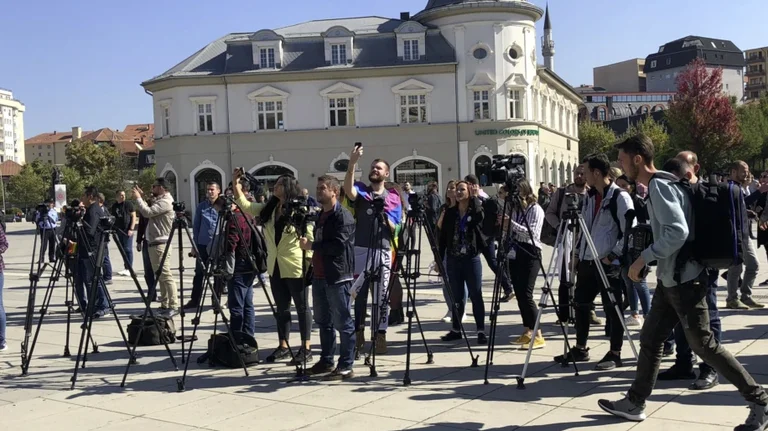
Periskopi(4 years ago)
(4 years ago)The largest number of cases of torture and intimidation of journalists during 2021 and early 2022 were recorded in Poland, Russia, Serbia, Slovenia and Britain, according to the Council of Europe's report “The Protection of Press Freedom in Times of Tensions and Conflicts”, published April 27th. Report of 15 media organisations, [...]
The largest number of cases of torture and intimidation of journalists during 2021 and early 2022 were recorded in Poland, Russia, Serbia, Slovenia and Britain, according to the Council of Europe's report “The Protection of Press Freedom in Times of Tensions and Conflicts”, published April 27th.
The report of 15 media organisations, partners of the Council of Europe, showed that the percentage of threats to media freedoms increased dramatically in 2021 and that 41 percent more serious threats to media freedom were recorded this same year than in 2020.
The majority of threats to journalists were focused on their life, health and physical integrity. The largest number of these threats has been made by strangers, in written and online communication, while as a new trend, threats over the phone have been observed. In that sense, Russia, Serbia, Cyprus and Bulgaria” are identified, the report says.
There have been cases in the Western Balkan region where state officials have also attacked national media journalists and attacks have been particularly pronounced in bribery and protests.
“The security of media staff at these events was as endangered as in some cases media organisations and their staff stopped showing their logo during field reporting”, the report said.
There have been death threats against journalists, particularly in France, Russia, Spain, the Netherlands and Serbia, it is stressed.
Meanwhile, Kosovo is also mentioned in this report, although it is not part of the Council of Europe.
According to the report, the Association of Kosovo Journalists in 2021 has recorded 29 cases of threats and other violations of press freedom.
“These cases include physical attacks, legal threats initiated by prosecutors and defamation campaigns”, the report said.
The Council of Europe also cites the December 6th vote in Kosovo on December 2021 to approve the new board for public broadcaster Radio Television of Kosovo.
The recruiting process and composition process have been praised both within the country and by internationals”, the report said.
The Council of Europe report notes that there have also been positive developments and that some countries that approved plans aimed at improving journalists' security in line with British, Dutch and Swedish plans for the safety of journalists, including Serbia, which reportedly was half successful in this direction.
The report's text says that the Government of Serbia created a task force for the safety and protection of journalists in December 2020, but that in March 2021 five journalists' associations and media withdrew from that group, citing “lack of trust in institutions and the orchestrated defamation campaign and threats to the leadership group CRCICH”.
The emphasis on Serbia's “SLAPP [Strategic Peace Against Public Participation] is a common tactic against independent media in and targeted is particularly the non-profit research network for crime and corruption RCIK”.
“Zaconally, prosecutors ask the court to force journalists and media to scrap publication, apologise, publish correction and commit not to report on a specific topic in the future”, the report says.