18 minutes ago
Greek consul in Marioupol: What I saw with my own eyes, I hope no one sees it again
Periskopi(4 years ago)
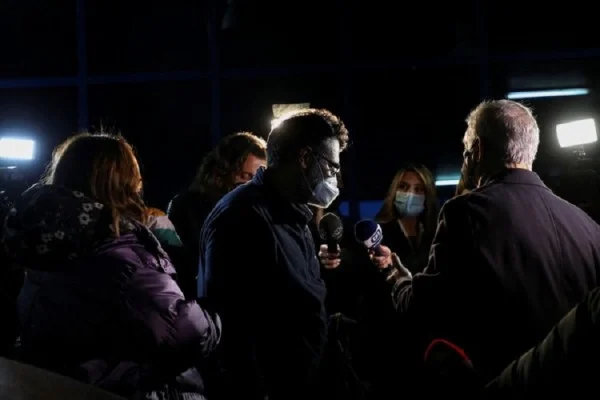
(4 years ago)The general Greek consul in Mariupoli, the last EU diplomat to leave the besieged port, said today that Mariupol was joining the list of countries known as destroyed in war. Manolis Androulakis helped dozens of Greek and ethnic Greek citizens leave the city, which was destroyed by Russian forces. [...]
The general Greek consul in Mariupoli, the last EU diplomat to leave the besieged port, said today that Mariupol was joining the list of countries known as destroyed in war.
Manolis Androulakis helped dozens of Greek and ethnic Greek citizens leave the city, which was destroyed by Russian forces.
He left Marioupolis on Tuesday and, after a four-day trip through Ukraine via Moldova, was transferred to Romania, along with 10 other Greek citizens.
Whatever I saw, I hope no one will see it again,” Androulakis said after arriving in Athens.
The <x0... You shouldn't order them ) Guernica, Coventry, Aleppo, Grozny, Leningrad...”, he added.
According to the Greek Foreign Ministry, Androulakis was the last EU diplomat to leave Marioupol.
The city has been bombed by the Russian Army for more than two weeks. A total of 7,295 people were evacuated from Ukrainian cities through humanitarian corridors on Sunday, Ukrainian Deputy Prime Minister Irina Vereschuk said, adding that four of the seven planned roads were functional.
Of them, 3985 people were evacuated from Zaporizhja. The Ukrainian government plans to send nearly 50 evacuation buses from Marioupol on Monday, Vereschuk said.
Ukrainian President Volodymyr Zelensky said on Saturday that the Russian siege of Marioupolis was “a terror that will be remembered for centuries”.
At least 10 Greeks have been killed and some have been injured since Russia started attacking Marioupolis. More than 150 Greek and ethnic Greek citizens have been evacuated from the region, the Greek Foreign Ministry said.
A considerable number of Greeks live in Mariupol, a city of more than 400,000 people before the war.
They have been particularly active in the region's trade and maritime trade since the Byzantine period.