22 minutes ago
Pfizer demands approval of COVID-19 vaccine for children under 5
Periskopi(4 years ago)
(4 years ago)The US drug company Pfizer and its German-based partner BioNTech requested the Food and Bars Administration on Tuesday authorisation for the use of COVID-19 vaccine in children under the age of five. Both companies asked the FDA to grant emergency access to a low dose [...]
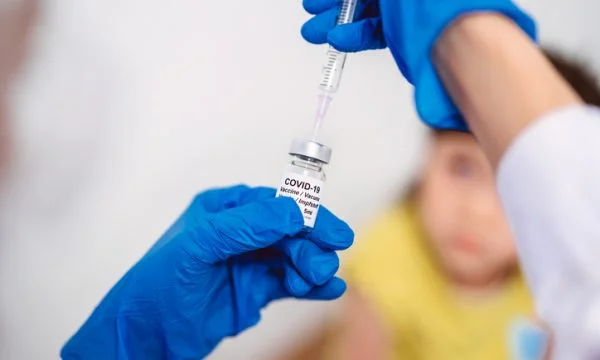
The US drug company Pfizer and its German-based partner BioNTech requested the Food and Bars Administration on Tuesday authorisation for the use of COVID-19 vaccine in children under the age of five.
The two companies asked the FDA to grant emergency access to a low dose of its vaccine by two injections to children starting at six months of age, even though they announced in December that the vaccine did not provide an immune response to children between 2 and 4 years of age, similar to that of teenagers and adults. Both companies had decided to add a third injection to their clinical trials, a move that could have hampered efforts to make the vaccine available for younger Americans.
But health experts asked Pfizer and BioNTech to apply The FDA's regime for two doses while they await test results involving the third dose. The vaccine may be available for use in late February if the FDA and the Centers for Disease Control and Prevention give final approval for emergency use.
Meanwhile, another US-based pharmaceutical company, Novavax, announced on Monday that it had submitted a request to The FDA's approval of its delayed vaccine during COVID-19 for emergency use.
The two - dose vaccine developed with a conventional method that uses proteins to teach the immune system to recognize and block the coronary. Clinical trials revealed that the vaccine was about 90 percent effective in providing sufficient immunity to protect against the initial version of the disease and its variants. Experts say technology can attract people who are reluctant to communicate with vaccines developed by Pfizer or Moderna using advanced RNA technology.
Novavax received $1.6 billion from the US government through the Warp Speed Operation programme, created by former President Donald Trump's administration to develop new coronary vaccines quickly. But Novavax faced numerous delays due to lack of production capacity. The vaccine has already been authorized in Indonesia, South Korea, India and the European Barnas Agency, the drug regulator for the 27 countries of the European Union. It is expected to play an important role in increasing the vaccine for low- and medium-income countries because it should not be preserved at very low temperatures, unlike Pfizer or Modernna vaccines.
A report released Tuesday by the World Health Organization reveals that the coronary pandemic has created tens of thousands of tons of additional medical waste, such as needles, syringes, and bottles used.
The report found that most of the 87,000 tonnes of personal safety equipment (PPE), such as masks and rubber gloves, which were produced through an emergency United Nations initiative between March 2020 and November 2021, have ended up in waste.