13 minutes ago
Osman's comments about the electricity price: Warned Growth, Punishment and Discriminating
Periskopi(4 years ago)
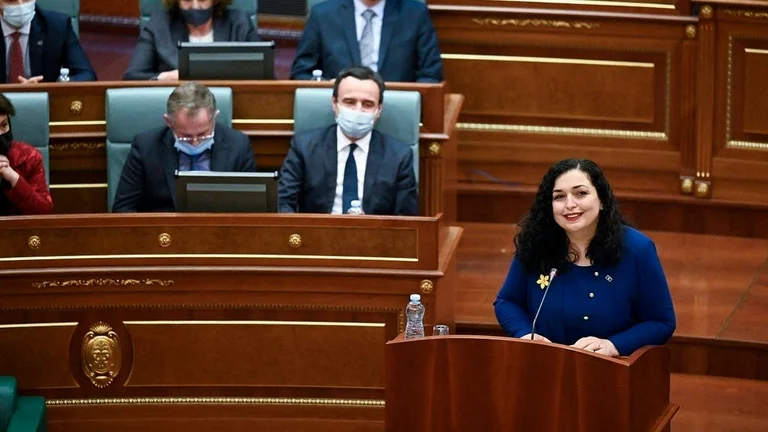
(4 years ago)President Vjosa Osmani has listed a series of recommendations for the Energy Regulatory Office in comments he sent to this body, which on January 17th published a consultative report with the proposal for expensive electricity. The head of state considers that the ZRE's tariff structure is punitive and discriminatory towards only one group [...]
The head of state considers that the ZRR's tariff structure is punitive and discriminated against only one society group, while the responsibility for increased consumption is all. According to the president, with the ZERE proposal, 39% of household consumers will carry the country's expensive electricity burden to the ground
The report in which the ZRR designed the new electricity tariffs is said to have been taken on the basis of respect for the objective of the cost reflection for the service consumers receive. According to the president, this criterion, which requires avoiding discrimination among different consumer groups, has not been met in the ZERE report.
The goal described for the ZERE is to have the tariffs paid by consumers needed, as far as possible, to reflect the costs they charge to the system.
Subtitles by Z RRE, which sets the consumer threshold at 600kWh/months (aside this level of consumption applies to rising electricity prices), risks being directly opposed to this objective. With the proposed tariff structure, 39% of household consumers will carry the country's expensive electricity burden. Even though it is proposed that certain percentages of energy prices increase in each category are covered by the government's subvention (including the group of consumers over 600kWh), the current tariff structure is seen as punitive and discriminated against only one group of society, while the responsibility for consumer growth is common” is highlighted in comments sent by President Osmani.
The President's office considers that a return to three board blocks, such as before 2017, would be a more correct treatment of consumers and that this would more equally distribute the increase in electricity prices.
“Inline, Z PRK proposes that at the actual Z-proposed tariff structure THREE, there is not only one limit of division between consumers but also two new blocks. Such a tariff structure would help make a distinction between consumers who, with electricity consumption, cover the most basic needs, consumers who present a household economy at average expense, and consumers who occasionally use electricity for luxury needs”, the president's proposal says. Vjosa Osmani also wants businesses to be involved in the new fee scheme, which, according to the initial proposal by the ERE, were not affected by the expensive flow. This, according to the president, would ease the burden for home consumers.
With proposal of the three-block tariff structure, despite increased energy prices, growth would be significantly more affordable for all, and thus, the amount of subsidy provided by the Government could be used for covering the burden of more consumer categories more uniformly. On the contrary, in the event of reluctance to return to 3 blocks of tariffs, the possibility of increasing the 600kWh/month threshold” should be considered, the proposal says.
Also, Z. The RRE is also required before the approval of a new tariff scheme to seek the proportion of an electricity exchange plan with Albania, based on the spirit of joining electricity markets.
The ZERE should also do a review of the country's domestic electricity consumption forecasts, and, according to the president, the new tariff structure that it proposed would have to be revised.
“The ERC is seriously invited to address the comments and recommendations of the interest parties and to integrate them into the final document, so that the new tariff structure is not discriminated against certain consumer groups in the country”, it is said among other things in the president's demands.
Finally, the state chief says comments and proposals submitted to the body regulating energy sector activities in Kosovo need additional time and proper treatment. So Vjosa Osmani asked Z The RRE to extend the deadline to implement the new tariff structure, which was originally proposed for February 1 (now).