7 minutes ago
Economic crisis in the country, savings and credit for basics
Periskopi(4 years ago)
(4 years ago)Kosovo Central Bank reports (BQK) show that citizens' deposits in commercial banks have reached 5 billion and 206m euros. The amount of credit, on the other hand, is worth 4 billion and 178 million and 800 thousand euros. Meanwhile, experts say increasing deposits and loans [...]
Kosovo Central Bank reports (BQK) show that citizens' deposits in commercial banks have reached 5 billion and 206m euros. The amount of credit, on the other hand, is worth 4 billion and 178 million and 800 thousand euros. Meanwhile, experts say increasing deposits and loans have resulted from the economic crisis in which the country is located.
Economist Besnik Avdij told Kosova Preress that the reasons for saving money come due to the economic crisis the country is going through.
According to him, during this time citizens are inclined to direct their spending only on necessary goods.
The number of deposits in commercial banks in Kosovo has marked growth, with more than 2/3 of these deposits belonging to citizens, in other parts distributed between financial and non-financial institutions, namely companies, banks. This is an indicator that citizens are saving money. The reasons for saving money are also linked to the crisis they are going through, because in times of economic downturn, citizens tend to direct their spending on unnecessary goods in emergency situations... when we see them on the other hand and the loans have grown somewhat, but mainly from businesses, mainly borrowing from commercial banks have been reached for reasons of crisis. At this time of crisis very few businesses are getting loans to realise new investments”, Avdijaj said.
Avdij urged citizens not to keep money in banks, but to spend it creatively, for in his view, it is in time of loss.
I would extend an invitation to the citizens, especially to the young people in our country, to look at the best, more creative ways to capitalize on that value. Don't keep money in the bank, you do a good deed to the bank in the financial system, but don't keep it because you're wasting your time. See the best ways you can spend and increase the value of what you have”, Avdiaj added to Kosova Prees.
Economist Milazizim Abazi told Kosovo, that the crisis is forcing citizens to take credit.
“Criza forces more citizens to take credit, than in times of crisis, in time of inflation growth, credit becomes more necessary and cheaper, because interest these days is lower than inflation, so this year we have a faster credit increase... until in eight months the loans have increased by 18.6 percent, savings have increased by 11.8 per cent”, said Abazi.
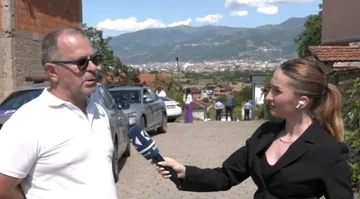
Meanwhile, citizens express concern over the crisis that has engulfed the country with price hikes.
Fatime Dervisi said that despite currently not working, he has been forced to enter loans to pay off household expenses.
I'm out of work and I'm saving, I'm not one of those that I spend too much, but I'm saving... it's still bound to go into loans that buy me wood, pay me the current, water, shit, get up and it's not going to go in without getting a loan to cover the expenses of the house”, Dervis said.
Emine Bytyqi from the city of Prizren said that as an individual, he has the conditions to overcome this inflation crisis, until he added that it is difficult for those with loans to cover it with Kosovo's salary.
It depends on what the budget is, I have a budget, I give too much, I don't save because I have the budget, but it's hard, people in general have to save... I didn't get loans because I have conditions, but it's a priority that lends, otherwise affording loans with these salaries is difficult”, Bytyqi said.
Ejup Tahiri told Kosovo Press that they are trying to save, but they are impossible, until he added that the credit interest rate is not compatible with the country.
We're trying but we can't save because we're spending every day...3:30 while the interest rate (for credit) is too high, absolutely doesn't fit our population to this standard of life, it's too high, over 10 percent”, Tahir said.
Regarding the interest rate, economist Avdij said they move depending on the regulations of the central bank, because Kosovo does not have the personal currency of itself as the state it names and with which it can move.
The interest patterns move depending on the regulations of the central bank, because Kosovo has no personal currency as a state that it names and can move with, I can use it as an instrument for market regulation, depending on the situation. Interest rates mainly in countries like Kosovo can be used as instruments to reduce inflation, with their growth lower flow of money on the market, because borrowing also decreased by businesses and citizens. This forces them to find other alternatives that are mainly related to self-saving, whether in lowering costs for businesses, with the same mind the individuals work, instead of spending money on shopping, they do not come out but only instruct their capital on the goods without which they cannot live, Avdiaj added.