3 minutes ago
Men also want parental rest

Periskopi(4 years ago)
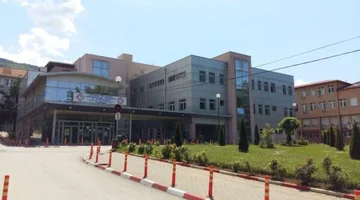
(4 years ago)About two hours before the sun's first rays hit the windows of the University Clinical Centre in Kosovo, Lip Salih's face was lit when it became known to him that he had just become a father for the first time. For this news, received about 4: 30 a.m. [...]
For this news, received about 4:30 in the morning of September 20, last year, he and his wife had been prepared for months.
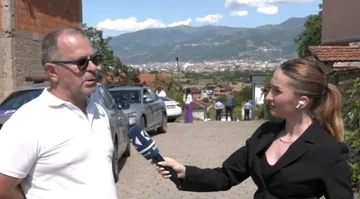
We, in full compliance, on the basis of family policy, plan to lay off our daughter”, confess Salih, from the village of Banu in Lipjan, for Radio Free Europe.
The cause of the labor Law in effect, he has been forced to maintain his annual rest and take another month off free of charge so that he can be available to his wife after his birth and experience the first moments of their daughter, Odeta.
The co-ordinated efforts of parents facilitate the mother's equal role and provide better protection and care for children”, says Salihu, a teaching profession.
Rest, according to him, also helps develop a stronger emotional bond with the child.
The same desire, to enjoy the start of a new life away from the pressures of work and close to the family, divide many other men, according to Igballe Rugova, executive director of the Kosovo Women's Network (RRGK).
Seventy percent of men said [during a research] that they too want parental permission. So this is also a requirement of men to be a fair part of child rearing for a time defined”, Rugova says.
Change in the Work Law Required
RRGK, in collaboration with the United Nations Population Fund (UNFPA), has proposed a change in the labour Law so that this wish of fathers becomes a reality.
On the basis of the Law on Work Relations, one of the two parents has the right to take a nine - month break. The Lehonia mothers in Kosovo belong to 12 months off, of which the first nine months are on pay.
On the other hand, the child's father is entitled only in two days' pay off after the birth of the child and two weeks of unpaid rest. Mother's rest rights may be carried to the child's father only when the mother dies, leaves the child, or the parents agree.
But RRGK has proposed that this scheme be changed. Under the request of the organisation, six months should be set aside as permission for motherhood and a month as fatherhood permit. The second month, named parental permission, can be divided between two parents. However, at least one month is planned to be untransferable by fathers to mothers.
The Labour Inspectorate, operating under the Ministry of Labour and Social Management of Kosovo, questioned by Radio Free Europe, has said he has accepted the RRGK proposal. This proposal is included in the draft working Law and is expected to pass further legal procedures”, the REL Labour Inspectorate reported.
Visare Mujko-Niman, leader of the United Nations Population Fund in Kosovo, believes the proposal for changing legislation should be even more rigorous.
“ [We have] to be more rigorous at fathers' vacation in the sense of going one more step away: if they don't take the vacation, then not get paid that month”, says Mujko-Niani.
Women, also victims of discrimination
The reason fathers are required to take parental rest also lies in improving social well - being for women.
Sandra Horina, chief of the Office in Kosovo of the Austrian Development Agency, believes that the highest unemployment rate in women comes because of responsibility for child care.
In Kosovo, women must decide whether to have children or want to work. If there is no payment for birth or pregnancy rest, those of course will decide to give birth to children and not work”, says Horina.
Furthermore, she adds that parental rest for fathers would affect and the proper separation of responsibilities for caring for family and household duties.
According to the report released by the Gender Development Alliance in October 2020, women in Kosovo and Albania spend 300% more time in domestic activities and family care than men.
Options for the private sector
Changing the holiday scheme because of the child's birth would also reduce the burden on the private sector.
The current law leaves the main burden on paying salaries to employers, which must pay 70% of the salary to lehonia mothers during the first six months of the léhonia vacation.
But RRGK proposes that this amount, during the first six months, be paid by the government, while 70% of the salary during the next quarter is compensated by the employer.
According to RRGK, this model would cost Kosovo's budget only 5m euros annually more than actual schemes.
Lulzim Rafuna, chairman of the Kosovo Economic Ode, says this amount is by no means large.
In fact, when you see the benefits it brings to the country, it [much of the 5m euros] is like a 50-center or indiscreet when we talk about a budget of two billion and 300 or 400 million euros”, Rafuna says.
Kosovo's budget for this year is over 2.7 billion euros. But Syzana Bytyqi Jagxhiu, from the European Union Office in Kosovo, believes that, when it comes to parental rest, the focus should not be on cost.
“The question should be not what it costs to Kosovo's budget to cover parental rest, but how much it costs Kosovo, our society is failing to reactivate half of the population”, she says.
According to the Kosovo Statistics Agency, women make up about half the country's 1.7m-strong population. Of them, employees are about 15 percent.
Similar attempts at changing language vacations and fatherhood permits have been made earlier.
The current Kosovo government, which was elected in the spring of last year, has this part of the governing programme, but no change has yet been made in the labour Law.