14 minutes ago
Frontex: Unfair EU Albanians top the “list by force” in 2021
Periskopi(4 years ago)
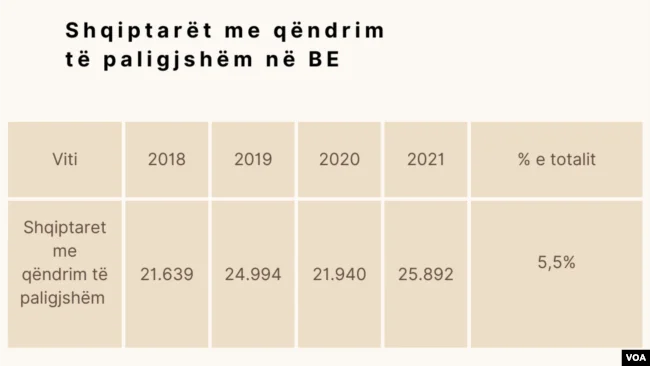
(4 years ago)Albanian miners with irregular stances in European Union countries rank seventh on the list of ten countries with the largest migration flows, according to data published by the European Border Protection Organisation's latest report, FRONTEX. According to the “2022-2023” report, their number came [...]
According to the “2022-2023” report, their number came up in 2021 with 25.892 persons who make up 5% of the total number of foreigners with an illegal standing in European Union countries.
The number of Albanian migrants with this status increased by 18% compared to 2020, marking 21.890 Albanian citizens with an illegal position in EU countries.
In 2021, the European Union reported about 200,000 illegal border crossings to member states. This was the highest recorded since 2017, according to the FRRONEX report. The Central Mediterranean, the Western Balkans, and West Africa's roads were the three main lines with the highest flow of irregular migrants registered during 2021.
The only open choice for migrants is irregular migration, which often results in a serious humanitarian situation”.
Meanwhile, according to reports, the European Union countries' border authorities in 2021 refused entry into EU countries, 17,725 Albanian citizens from 11,653, which was the status rejection in 2020.
Much of the refusal, about 8,000, has come after migrants have had no documents at border points to justify travel to a European Union country.
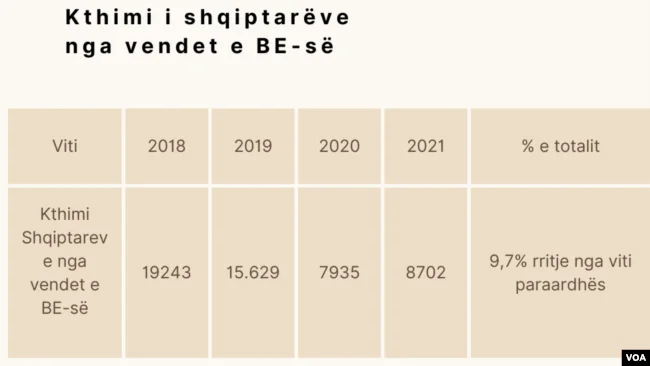
Meanwhile, Albanians take second place, even effective returns from European Union countries through two ways, voluntary returns “” and those “particularly”.
In 2021 the return was for 8702, and in 2020 it had been 7,935 persons.
According to FRONTEX data, irregular Albanian migrants lead the list of forcibly converted foreigners during the 2021 country of origin with 5,398 persons out of 4,801 persons, which was the number of returns in 2020.
Meanwhile, the voluntary return was accepted by some 2,944 from Albania by 2771 in 2020.
Frontex warns on risk analysis that in the 2022s and 2023s, they will likely see a further increase in irregular migration in EU borders, given political and socioeconomic pressures at the national level of major countries, as well as driving factors such as continued global inflation and increasing food prices after the war in Ukraine. / VOA