4 minutes ago
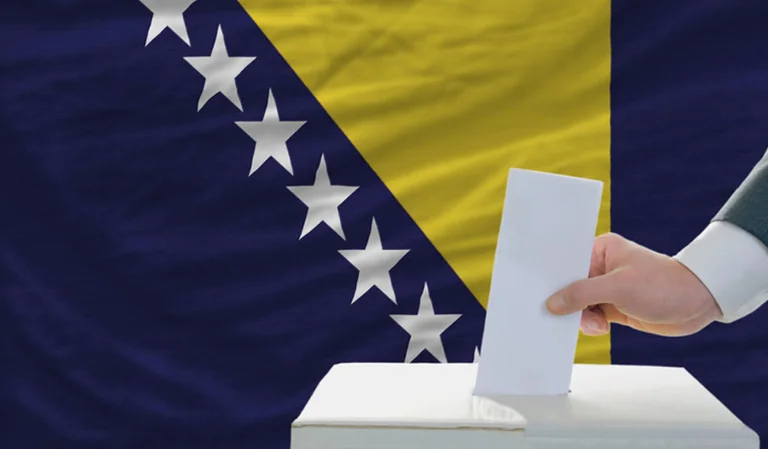
Elections in Bosnia and Herzegovina are held tomorrow, what should you know?
Periskopi(4 years ago)
(4 years ago)In Bosnia and Herzegovina 3.4 million eligible citizens will be eligible to vote on 2 October, they will be able to choose from a large list of more than 100 parties and coalitions. But the post-election landscape in this Balkan state will likely be dominated by many of the same personalities that have flourished in the crisis [...]
But the post-election landscape in this Balkan state will likely be dominated by many of the same personalities that have flourished in the existential crises and auspices for years and have even used their ethnicity in the pre-October 2nd campaign, the REL writes.
Once the votes are counted, experts warn there will be little incentive for increasing interethnic co-operation and carrying out reforms, despite threats by an international overseer against the unilateral and fundamental changes of one of the pillars of democracy in post-war Bosnia.
I do not expect these elections to be transformative”, said Toby Vogel, analyst for the Western Balkans and senior associate with the Democratic Policy Council, which has been critical of the failures in Bosnia and Herzegovina. “At the end of the day, problems in Bosnia are not linked to who is in power and who is in opposition, but how power is structured and the exercise of power structure. These are structural problems dating back to the Dayton peace accords and constitutional structures they contain”.
But that does not mean that nothing of this choice is expected.
There are potentially close races among ethnically divided seats in the tripartite presidency, including an unprecedented challenge for most of the seats among Bosniaks. Also, several races at the High Chamber of the Bosniak and Croatian Federation could dramatically affect stumbling efforts that have paralyzed Government for years. The results could clarify the answer if Bosnia's fate, at least for the near future, remains one of the hottest points in Europe.
What's at stake?
Bosnia continues to be deeply divided on ethnic lines, which have been drawn in the mid-90s to convince <x0-combat nations” Bosnians, Serbs and Croats to stop the bloody conflicts that followed Yugoslavia's division.
The state is organised in the multiethnic central government, which is officially responsible for fiscal and foreign policies. But, the state has also transferred many powers to the Bosnian and Croatian Federation and to ten cantons, to Serb-dominated Republika Srpska, and to the small self-government district called Brcko.
Efforts to include alternatives to the 1995 Dayton Agreement have never concreteised and Bosnian governments at the national level, entity and local levels have become increasingly ineffective, as three of the ethnic groups always seek advantages wherever they can.
Meanwhile, Bosnian Serbs in Republika Srpska have accelerated their efforts for secession. Ethnic Croats, who have fewer populations in election areas sharing with Bosniaks, have called for electoral reforms and have continued with preventing tactics to pressure them to have greater representation in political positions. And Bosniaks have doubled their majority advantage by refusing to reach a compromise that could lower their control in the Federation.
This dysfunctional and frustration has eroded public confidence and fostered an ecstasy, which is one of the worst in the world, with tens of thousands of Bosniaks leaving the country every year seeking work and stability abroad.
Who's racing for what?
These are Bosnia's ninth general elections and those include races for the tripartite National Presidency and the National Parliament, for the new legislature in the Bosnian and Croatian Federation, and the presidency and new legislature race in Republika Srpska.
Three seats in the Bosnian Presidency consist of three constitutional nations, but are selected based on a single electoral zone of Republika Srpska and a double electoral zone, which leaves Croats in a vulnerable position to overvote by the Bosniak majority.
The Croatian member's election has been particularly tense since the last three votes in the Federation, where moderate Croat Zeljko Komsic has been elected, who has defeated rivals supported by the most powerful Croatian Democratic Union (HDZ).
This time, Komsic's only opponent is HDZ candidate Boryana Christo. One analyst speculated that HDZ appears to be not campaigning aggressively for Christo, and its loss to the municipality could help in <x0ndariat victimising” of the party “... because post-election reforms are the ultimate goal”.
It seems the closest race will be for the Bosniak seat at the Presidency, with Bakir Izetbegovovic, who has twice won the elections and is the son of the signatory to the Dayton Agreement, who is facing competition for the third term by university professor Denis Becirovic, who is backed by an unprecedented 12-party political alliance.
The contest for seating for the new Serbian presidency member is among the favourites, Zelka Cvianovich a close ally of Bosnian Serb leader Milorad Dodik and three veteran politicians.
Dodik himself is racing to return to the post of president of Republika Srpska, one of the many political posts he has held in the past.
Close races for Dodik or his successor chosen for the national presidency could signal a developing movement among Bosnian Serbs who flee Dodik's divisive policies and his continuing threats of secession from the state of the Republika Srpska.
Finders, analysts will look closely at the results of key competitions for the High Chamber in elections in the Bosnian and Croatian Federation.
“Polls for federations are particularly tense because the control of a federation depends on one or two crucial seats in the upper legislative chamber, in the House of People”, the International Crisis Group said in a recently released analysis.
Most of the Bosniak parties in the past have made alliances with Croatian politicians in the House of Peoples, and if they manage this time to get more mandates, it would allow them to block or stop Croats from blocking appointments to high government positions at the national level and at the level of ethnicity.
“Gara for those additional seats, which are crucial, is tough”, the International Crisis Group said in analysis.
After the election reform talks, mediated by the United States and the European Union, failed in the spring, no agreement was implemented and disagreements over the results of October 2nd could be challenged by Croats, if Bosniaks manage to gain control of the House of Peoples.
Why are these choices different?
One of the most distinct aspects of these elections is that most real actions will occur only after the votes are counted.
The international community's High Representative in Bosnia, currently German Christian Schmidt, before the elections, had threatened to impose sweeping electoral changes regarding the objections of leaders from three constitutional nations.
But, in the end, he announced preventive measures and threatened to pressure after elections on many of the same leaders and parties that have resisted to push ahead with reforms for decades.
Schmidt is expected to pressure parliamentary parties after the elections to agree on parts of reforms addressing Croatian concerns of sub-representation due to their minority status within the federation. He is also expected to seek the adoption of reforms that make it more difficult for parties to block the federation's level of laws and appointments.
In the analysis of the International Crisis Group, the High Representative could wait until the assemblies of 10 cantons are gathered a month after the elections.
But, this group warned that “when the preliminary results -- one day or two after the elections -- will be clear which party has won, and any intervention will be seen as attempting to change the outcome” of the elections.
Resistance by local leaders and Schmidt's determination did not prevent the change. At the end of July, he imposed what he described as “reductions of transparency” or “Actual integrity” to support certain aspects of the vote. This proposal was less controversial than the proposals speculated by Schmidt, as this package was designed to avoid any side taking advantage.
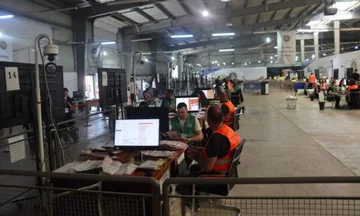
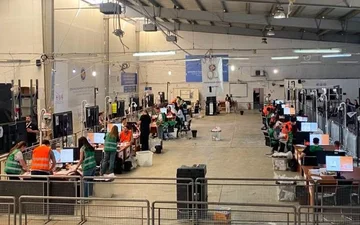
There have been other major technical changes meant to clean up the voting process. The ballots will be sealed and signed by committee members at polling stations to avoid collecting unsigned ballot papers. also improved training and accreditment of observers on Election Day. The voting booths will be in front of election observers and workers, so that they can make sure that voters don't vote more than once. It has also been created e-portal, in an effort to prevent the fraud of votes by mail.
Do not expect young people to save Bosnia
With so many familiar faces at the top of the election lists and after a campaign of intensive ethnic nationalism, which according to some observers was almost unprecedented since the violence in Bosnia in the 1990s, experts have warned that it should not be believed that new voters will oppose the status quo.
Hundreds of thousands of young Bosniaks have emigrated in the past decade, eliminating national resistance and optimism.
But migration is not the problem.
Analyst Toby Vogel said dominance 10, 20, even 30-year-old of divisive ethnic leaders, has caused a kind of cynicism, voter abstention and anger.
“So I can see a generation dimension. But the problem is also that these young people who have been educated in ethnic schools, widely depressed schools with little interaction with children of other communities who are exposed to this toxic propaganda coming from the head of government and from parties for decades”, Vogel said. So I'm not optimistic about the new generations”.
He is not alone in thinking that way.
Samir Bechar, longtime activist who has opposed ethnic division in Bosnia's educational system and at the same time researchers in the Balkan Forum organisation, said that recently not all young people in the country are “directly”, thanks to the toxic ethnic divisions.
“When it comes to young people, we are very idealists for young people”, he said. “Young people are also nationalism-oriented, they are also corrupt, they are involved in nepotism. And I don't know how we expect young people to be different especially from the young politicians from their mothers and fathers who are political persons, if these young people are educated in schools where nationalism and corruption are preached. In some cases not only is it preached but it is also practiced”.
Are there international implications?
All these are only internal forces weighing in elections in Bosnia and Herzegovina.
US, Russia, Turkey, Serbia, Hungary and Croatia geopolitical Rivalries are increasing pressures, especially as diplomatic actions have increased along with tensions since Russia invaded Ukraine in February, which is the biggest conflict in Europe since the Balkan wars in the years of recently.
The Russian invasion of Ukraine has increased fears that violence may be in place if secession efforts continue to destroy the Bosnian state. Fear is also growing after Moscow's readiness to support allies like Dodik in efforts to stop European integration into the Balkans.
Meanwhile, the High Representative in Bosnia also has a great authority to defend the civilian aspects of Dayton. But this post is highly dependent on international support, which has waned, as this post is estimated to be part of a transition system but has now nearly entered the third decade of existence.
Before these elections, the United States and the European Union reportedly pressured Schmidt to make electoral reforms mandatory. But, the international community is not unique enough to impose solutions in Bosnia through so-called Bonn Fuqi “ ”.
Russia has long supported Dodik, who is seeking division and recently Moscow has joined Beijing, threatening to lift the High Representative's competencies.
In the absence of an alternative to the Dayton Agreement, critics fear that Bonja's fate is linked to that of the High Representative, who is the main shield against forces seeking break-up.