17 minutes ago
Why are Russia and China so friendly: New Reasons
Periskopi(4 years ago)
(4 years ago)By James Stavridis “Bloomberg” During the last decades of the Cold War, there was very little cooperation or alignment between the Soviet Union and China. The Russians had a much more developed global military presence, a higher level of ambition to impose their ideology on others, and of course [...]
“Bloomberg”
During the last decades of the Cold War, there was very little cooperation or alignment between the Soviet Union and China. The Russians had a much more developed global military presence, a higher level of ambition to impose their ideology on others, and certainly even a much larger economy than the Chinese.
At that time China was largely self - centered, trying hard to get most of its huge population out of poverty and build an economy that could support it.
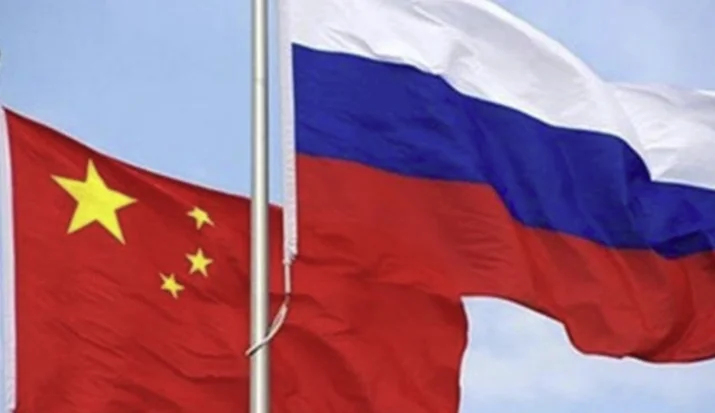
By the early 1960 ' s, the two great communist powers were crucially divided. But since then the world has moved forward, and today we are seeing growing and very fast proximity between Moscow and Beijing. This has recently been seen in China's staunch support for Russia-led intervention in civil unrest that has erupted in Kazakhstan in recent weeks. But how serious is this relationship, and what does it mean for the US and its democratic allies?
Russia and China share a long tradition of authoritarian rule and communist ideology. They have a general antipati for any international action allowing interventions in the internal affairs of a sovereign state, especially when it involves human rights violations.
Thus Chinese President Xi Jinping has assured Russian leader Vladimir Putin of China's “staunch opposition to any efforts by foreign forces to provoke unrest and stimulate the occurrence of “multicolored revolution” in Kazakhstan.
In the United Nations Security Council, China and Russia generally vote in sync, vetoing resolutions of everything, from Syria to Venezuela, and to Myanmar. On the diplomatic level, both powers are interested in building new international organisations, as alternatives to institutions emerging from the US-led Bretton Woods Pact after World War II.
These include the Association of Collective Security Treaty made up of 6 former Soviet states (in the signal of international intervention in Kazakhstan), the Shanghai Co-operation Organization (the world's largest non-governmental group based on the population of member states) and the new Regionally-independent Economic Organization,
A group of Asian states promoting free trade.
Then there are growing military relations between Russia and China. The largest military training since the end of the Cold War took place right at the border between Russia and China in the fall of 2018.
In the “exercise, Vostok-2018-18x1>, over 300,000 Russian and Chinese troops engaged, approximately 40,000 vehicles, 80 warships, and thousands of aircraft, helicopters, and drones were engaged. Xi and Putin both participated in their monitoring.
The propagandistic photos of Russian and Chinese soldiers embracing each other after joint exercises are impressive. Russian and Chinese warships are usually trained together, not only in the North Pacific, where they could be expected.
Their bodies are lined together in the eastern Mediterranean, the North Atlantic, and the Baltic Sea in the heart of Europe. In space, Russians and Chinese recently announced the launch of a joint mission to deploy a moon-led station.
Of course, there are areas among them where there are disputes and competition. For example, these two powers are not in the same line as in climate change. China maintains a more prone stance to move forward in curbing carbon emissions in the atmosphere.
Putin wants to connect as closely as possible with Russia the former Soviet republics of Central Asia, while China aims to enhance economic and security relations with many of these countries. Also, Beijing is rushing to strengthen its influence in Afghanistan after the US withdrawal, while Russia is evidently less inclined to engage in this country, given the bitter story 4 decades ago.
But in the geopolitical sense, both countries complement each other. China has a large population, lack of natural resources, such as oil, a powerful and varied economy, and strong influence in most of East Asia and Sub-Saharan Africa.
Russia, meanwhile, has a rapidly declining population, large natural resources in oil and gas, a diverse but weak economy, as well as a strong influence in parts of Europe, Central Asia and Caucasus. Together, they make up a wonderful couple.
From the perspective of the United States and the West, this expanding alliance provides reason to be alarmed, especially if Xi and Putin will increase policy co-ordination, share military bases, offer each other economic concessions and exchange military technologies such as hypersonic missiles and cyber weapons.
Closer ties China-Russia will have a major impact on a host of important issues facing the international community -- from Taiwan and Ukraine -- up to
to universal human rights, and the spread of nuclear weapons from North Korea and Iran.
In response, the US should push global democracies towards unity of purpose to face unilateral actions by Moscow and Beijing. The main elements of the strategy should include attracting India to the West through trade and military co-operation; strengthening cyber security co-operation between democratic technologies; building new free trade organisations; and strengthening security and multinational institutions like the North Atlantic Treaty Organisation, the World Bank and the International Monetary Fund.
As two authoritarian superpowers draw closer together, the West must respond collectively, starting with building a unified front in the face of Russia's growing threat to Ukraine.
Note: James Stavridis, retired American Navy Admiral and former supreme commander of NATO troops in Europe. /bota.al/