17 minutes ago
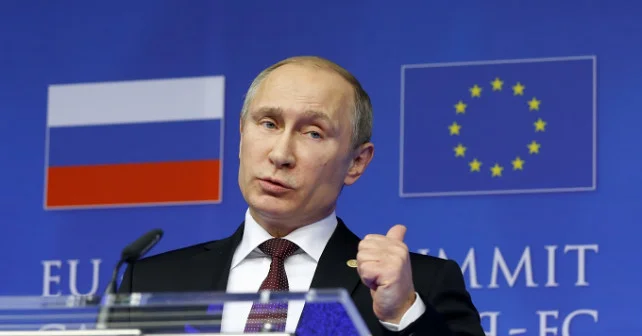
European Union disagrees for meeting with Putin
Periskopi(5 years ago)
(5 years ago)European Union leaders failed to agree on a proposal to hold a summit with Russian President Vladimir Putin, as EU countries bordering Russia rejected the summit, saying the summit would send the wrong message. In a statement issued in the early hours of Friday, leaders said [...]
In a statement issued in the early hours Friday, leaders said they “would review the formats and terms of dialogue with Russia”, not to mention any high-level meeting or plans for any summit with Putin.
France and Germany proposed holding the EU summit with Putin é first since January 2014 after US President Joe Biden met with the Russian president in Geneva on 16 June.
“ “We need to talk, including our disagreements. It's the only way to solve them”, he said.
But, after overnight talks at a summit in Brussels, German Chancellor Angela Merkel told reporters there is no summit agreement.
“was a very comprehensive and not easy-to-easy discussion”, Merkel said.
Discussing the summit, Merkel has told lawmakers in Berlin earlier that recent months have shown that “is not enough to react to numerous Russian provocations in a uncoordinated manner”.
It has called for “establishing mechanisms, to respond in a common and unified way to hybrid attacks from Russia”.
After the summit was rejected, Merkel said that even without one, “would explore the formats, under which the” dialogue could begin.
Germany has strong economic interests in Russia and wants to see the completion of the North Stream pipeline project 2, which would send Russian gas to Germany.
Russia is the EU's biggest supplier of natural gas and plays a key role in issues related to European strategic interests, including the nuclear agreement with Iran and armed conflicts in Syria and Libya.
But the EU and Russia are on the opposite sides of several other issues -- from Ukraine and Belarus to human rights.
They also accuse each other of interference in elections, of spreading deinformation and threatening security and stability in Eastern Europe.
EU summits with Russia ended after Moscow annexed the Ukrainian Crime Peninsula in March 2014, and the West imposed sanctions on it.
The conflict still boils in eastern Ukraine, where Russian-backed separatists are active.
Among the leaders who rejected the summit with Russia was Lithuania's president, Gitanas Nauseda, who sought caution in relations with Moscow.
So far, we don't see any radical changes in Russia's behavior model. If, without any positive change in Russia's behaviour, we start engaging, it would send very uncertain and bad signals”, Nauseda said.
He said the idea of a summit with Russia is like “trying to engage the bear to preserve a pot of honey”.
Latvia's Prime Minister, Krisjanis Karins, said the EU risks rewarding Russia with a summit, despite diplomacy' failure to end the conflict in Ukraine.
The EU leaders' statement warned more sanctions against Russia if it continues “deinformation policy, cyber attacks and efforts to divide the bloc”. Russia denies such wrongdoing. / REL