10 minutes ago
Former Croatian president: Jansha's Non-paper did not destabilise region
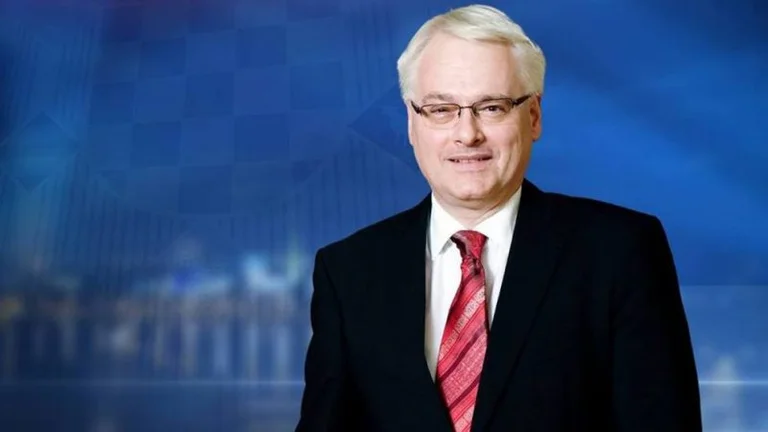
Periskopi(5 years ago)
(5 years ago)Former Croatian President Ivo Josipovic is seeing Montenegrin President Milo Djukanovic's proposal on the instability of borders in the Western Balkans, which did not receive the support of participants at the recent Brdo-Brion summit, as an attempt to prevent all possible conflicts between countries in the region. In an interview for the gradski portal, Josipovic said [...]
Former Croatian President Ivo Josipovic is seeing Montenegrin President Milo Djukanovic's proposal on the instability of borders in the Western Balkans, which did not receive the support of participants at the recent Brdo-Brion summit, as an attempt to prevent all possible conflicts between countries in the region.
In an interview with the gradski portal, Josipovic said Serbia's attitude towards Kosovo is the greatest threat to peace in the Western Balkans, and that Croatia, due to the objective circumstances caused by the pandemic of coronary, did not successfully use six months of the EU presidency, reports Klan Kosova.
The proposal by President Milo Miloukanovic on the invisibility of the borders in the Western Balkans had a good message and was in effect to prevent any conflict, which, history, can turn into armed conflicts”, President Josipovic has declared.
“However, a realistic view of the state of affairs suggests such a proposal was not expected to be accepted”.
Why?
Josipovic: First, because some countries have different opinions about boundaries that should not be changed. We know that the biggest problem is the relationship between Serbia and Kosovo. Serbia, from the instability of borders, certainly means that Kosovo is part of Serbia, and Kosovo, like most of the world, believes it is a newly created sovereign state with borders such as Kosovo had during RSFJ. And some other countries, although acknowledging the principle of inflexibility of borders, have mutual disagreement over where the border is, in fact, actually. Here, Croatia has not yet finally defined the border with Slovenia, Bosnia and Herzegovina, Serbia or Montenegro.
Fortunately, I will not say disagreements but misunderstandings about where the internationally recognised border, which should not be changed, are not the hot “ ”, and the provisional regimes legally established or actually function well. However, I think President Djukanovic mainly had in mind the possible adjustment between Serbia and Kosovo regarding the exchange of territories. It is an ambivalent proposal, which, however, is largely not supported by the international community.
What is Croatia's position?
Finally, has Croatia used the EU presidency in the right way when it comes to the Western Balkans?
Josipovic: Croatia had no luck with its presidency, which fell at the worst moment on one of the tops of the pandemic. Croatia, as a prominent issue of its mandate, called for the so-called Western Balkans and declared it to its neighbours because it wants to help them enter the EU as soon as possible. There has been progress but, of course, not decisive. At a time when EU politicians were busy with pandemic, migration and economic crisis, us in Croatia and the earthquake, interest in the Western Balkans, especially in Bosnia and Hercegovinw, was low. The unwillingness of politicians in Bosnia and Herzegovina's to resolve their disputes by agreement, in the face of negotiations between Serbia and Kosovo, events <x0->emosionary) to Montenegro, and the difficulties North Macedonia has with its neighbours, were not a good environment for some of the key EU steps towards the Western Balkans.
What can we expect from Slovenia's upcoming EU presidency?
Josipovic: I suppose Slovenia will also focus on the Western Balkans as a future part of the EU. Slovenia has serious economic interests in the countries of the former Yugoslavia, as well as significant demographic, family, cultural and other ties to the Western Balkans. In addition, Slovenia will inherit some of the problems of pandemic, migrants, Schengen, relations with Russia, China and the United States.
To what extent has the flow of documents HINA-paperė, the first to be attributed to Slovenia's Prime Minister Janez Janša, contributed to (no) the stability of the Western Balkans?
Josipovic: As shocking as some of these letters may seem to the public, I don't think they had the capacity to undermine the stability of the Western Balkans. I think everyone understood that this is a common political practice of <x0” understanding of the availability of certain solutions.
The alleged shock of Janša's proposal looked like a destabilisation designated because of media publicity, as well as harsh reactions. But the practical effect of that letter is actually almost existing.
None?
Josipovic: Yes, because I don't see that he really destabilized or undermined relations in any country, especially not in the region. He was so unacceptable that, in fact, everyone gave up his authorship. Today, almost no one mentions this letter as important.
How did you interpret the results of the recent local elections in Croatia?
Josipovic: Pretty much everything's been said. There's always been some surprises. But the overall development of the political scene is highly expected. Disgusted citizens with the established parties, largely, even surprisingly, turned to independent candidates and new parties like MOkovMO. The HDZ has remained the strongest party in terms of the number of countries, but the results in larger cities, except Osijek, are devastating to HDZ.