20 hours ago
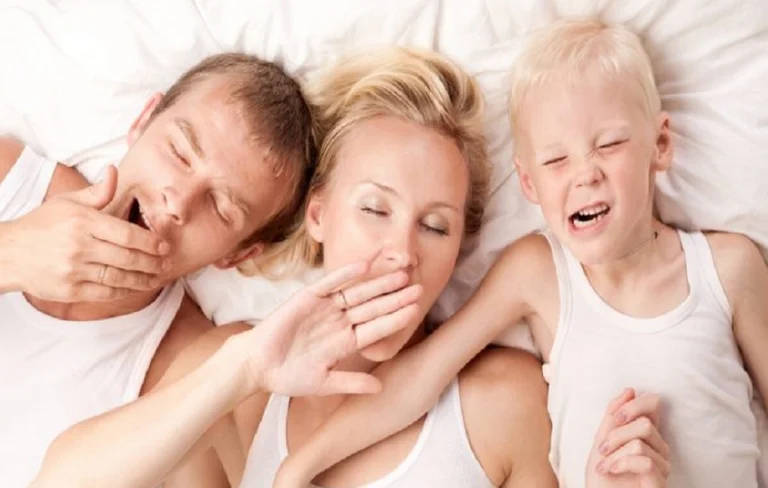
Why do we speak out when we see someone else doing the same?
Periskopi(5 years ago)
(5 years ago)The weirdest detail about opening the mouth is its “attachment”. There are many studies on this subject, so there are some explanations of why we speak out when we see someone else doing the same. The explanation lies in psychology, but first we have to clarify its reasons, writes Real Simple. Studies have shown [...]
Studies have shown that the mouth opening causes <x0werone mirror” in a part of the brain, but it should be noted that this reaction is limited to the fully developed brain, according to physician Rayen Sakir.
This consists of involuntarily opening the mouth and the maximum extension of the jaw, followed by deep inhalation and slow extraction of air”, explains Sakir from Great Britain.
Many assume that opening the mouth comes so we try to get more oxygen and scientists believed up to 30 years ago. However, this theory was rejected by a series of experiments published in 1987 that did not experience any conglomerate between lack of oxygen and opening of the mouth.
Today, one of the most popular theories says that this is because of excitement.
“As we tire out, especially when we look at and hear something uninteresting, the mouth opening appears as a wake-up tool. Studies have shown that this is true, as the number of heart rate rises after that and the peak reaches 10 to 15 seconds after that action, similar to a boost to caffeine”, Sakir said.
The opening of the mouth is also associated with brain cooling, which may be the reason why our mouth is opened more frequently with temperature increases.
When facial muscles relax, this allows for loss of heat through facial veins and inflows of cold air, which helps reduce brain temperature through convection”, the doctor explained.
People often open their mouths when they see others doing it - but not all. According to researchers, the most likely reason for such a thing is sensitivity.
“As people age, they improve their psycho-social and neurological development, so opening someone else's mouth becomes a kind of sign that they have to do the same. This phenomenon is known as ecophenomen, and it also happens to chimpanzees, but also to dogs”, Sakir said.
He says with this we copy unconsciously from each other because our brain is programmed to copy the people around us.
“
Studies show that children whose brains are still developing are still silent only when they are tired but not when someone around them does, such as the case with adults whose brain is fully developed.