13 minutes ago
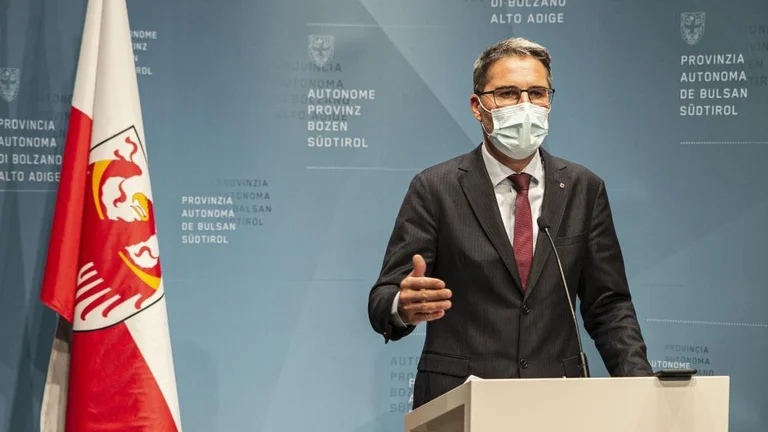
Model for resolving Kosovo-Serbia problems? The governor of South Tyrol
Periskopi(5 years ago)
(5 years ago)South Tyrol's example in Italy is cited as a possible solution to Kosovo- Serbia has repeatedly been repeated in one of the “no-paper” as a solution to Kosovo's north. In an interview for “Kosovo Online”, South Tyrol Governor Arno Komacher claims that many delegations have visited the South Tyrol [...]
He has expressed pride in the fact that South Tyrol is often used as a model of peaceful coexistence.
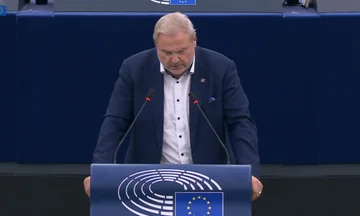
The rapporteur for Kosovo in the European Parliament, Violet von Cromon, sees solutions in a <x0non-paper“regarding the agreement intended to reach between Kosovo and Serbia, which envisions, among other things, the establishment of a “autonomation of northern Kosovo”, with self-government competence.
COMM: Your comment on the fact that the South Tyrol model is cited as a solution to dialogue between Belgrade and Pristina?
Nowadays, instruments for adapting to internal ethnic conflicts are gaining more and more importance worldwide. Therefore, we have noted that there is a growing interest in South Tyrol's autonomy in recent years. The legal framework of autonomy guaranteed the coexistence of three ethnic groups in our territory and calmed the conflict in South Tirol after World War II.
Especially, when we think of the troubled South Tirol's past with Italian fascism and national-Social occupation, I think 50 years after implementing our autonomy statute, we can certainly say that we have a very successful path behind us. Today, South Tirol is often used as a pattern of peaceful coexistence among various language groups and has been mentioned as an example in various cases over the years.
COMM: To what examples do you compare it more?
Crime, Cyprus, Nago-Karabakh, the guard, to name just a few. Many delegations have visited South Tirol over the past decades to learn more from our experience. The most prominent visitors may have been His Holiness, the Dalai Lama and the Tibetan government in exile, but representatives of different minorities in Europe, representatives of states and human rights bodies like the Council of Europe or O The SEU regularly visits South Tyrol. Our experts are involved in consulting companies around the world. Therefore, it is not new to us that our autonomy has received attention, and we are always grateful if we can help with our experience and knowledge.
KO: Do you think that such a thing can really be a solution to the dialogue between Kosovo and Serbia?
We always specify that our autonomy is not feasible on time. In any conflict, there are many specific factors, such as historical and economic situation, legal framework, and social aspects, which need to be considered. Our autonomy is not a cure, but it may be interesting to look closely at some of the successful South Tirol procedures and instruments, such as our proportional ethnic system, our joint commissions dealing with autonomy, or our linguistic and cultural rights. And one of our most important messages remains, that it is worth peacefully negotiating to find a compromise.
KO: Do you believe that Kosovo and Serbia can reach an agreement with EU and US mediation?
We have seen in some cases in the past that international attention can help solve conflicts. Also in Tyrol, internationalization of conflict, and later UN resolutions of the 1960s and the European integration process were important factors. Mediation is always helpful, but real change must be achieved through negotiations between the parties involved in finding a peaceful compromise. The South Tyrol Road has always been the road to negotiations, and negotiations are still key.
KO: Should Western Balkan countries be admitted to the EU as soon as possible?
I strongly support the European project and a united Europe, so I have always been in favour of the European Union's commitment to support the gradual integration of Western Balkan countries with the EU. I think you should take into account the process of applying case by case, even though I'm not an expert in the Western Balkans, my impression is that the situation differs from country to country. However, it is important that the EU maintain regular bilateral relations with the parliaments of the Western Balkan countries and invest in strengthening co-operation.
COMM: How do you see the impact of Russia and China in the Balkans?
I think that in general, China's influence is growing in the world, especially the “one belt, a” road has a strong impact on the world, and also in the Balkans. Of course, Russia's influence is also on the rise, especially in the Balkans. We live in a global world where Europe must protect its interests, especially on the continent. And let us not forget the historic connection between some EU countries and the Balkans.
The rapporteur for Kosovo in the European Parliament, Violet von Cromon, sees solutions in “no-paper“that was recently publicised over the agreement intended to reach between Kosovo and Serbia, which envisions, among other things, the foundation of a North Kosovo autonomation “, with self-government competency.