17 minutes ago
New York Times for Kosovo: In a country dominated by former rebels, women find power in ballot boxes
Periskopi(5 years ago)
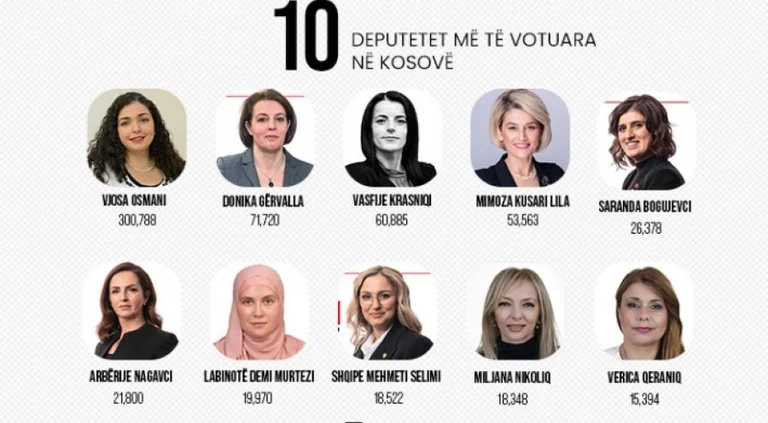
(5 years ago)The prestigious newspaper The New York Times has published an article on Kosovo political women, their stories from the recent war held in Kosovo, as well as the number of seats they managed to occupy by citizens' votes in the February 14th elections. Saranda Bogujevci, Vjosa Osmani, Nazlie Bala, Elife Krasniqi and Doarsa [...]
The prestigious newspaper The New York Times has published an article on Kosovo political women, their stories from the recent war held in Kosovo, as well as the number of seats they managed to occupy by citizens' votes in the February 14th elections.
Saranda Bogujevci, Vjosa Osmani, Nazlie Bala, Elife Krasniqi and Doarsa Kica are some of the women whose names were coveted along the writing of journalist Andrew Higgins.
The New York Times, writing begins by describing the way the deputy from the Vetevendosje movement ranks, Saranda Boguyevci, found a pile of holes in her garden walls, caused by the bullets of the massacre held two decades ago, from which she lost 16 family members.
“I can still smell soil mixed with the smell of blood” says Bogujevci.
According to the American newspaper Bogujevci is a symbol of courage in Kosovo, which has had a high-level determination to testify against those who killed her mother, grandmother and two brothers, as well as other family relatives.
Higgins, a special emphasis, also cost him the part that 35-year-olds have been and remains part of a small group of women who over the years have won seats in the parliament of the Republic of Kosovo.
Higgins, said to be “satisfied” that at last in Kosovo nearly 40% of the total number of MPs are women.
According to him, this increase reflects the discontent of governance so far, corruption, as well as the dominance of male war veterans who were part of the Kosovo Liberation Army.
“These elected women have convinced voters that they can resist Serbia, which has refused to recognise Kosovo as an independent state and also face corruption, crime and poor governance that destroyed the high hopes that followed the end of Serbian rule” is further written in the article.
Nazlije Bala, who Saranda Boguyevcin said:
“Bogujevci, is a symbol of Kosovo's hopes. She's a solid stone survivor. That's our truth. ”
The President of Kosovo, Vjosa Osmanin, has made the writing protagonist.
“Zonja Osmani, who has been acting president since November, when the incumbent president was arrested on war crimes charges, he is expected to eventually assume this governing post. She competed in elections with the same party as Mrs. Bogujevci, and won more votes than any other candidate and also more votes than anyone since Kosovo began holding elections two decades ago, said the report.
Journalist Himgger calls Albin Kurtin the old champion of progressive affairs, while continuing to write about the insult Ramush Haradinaj made to Vjosa Osmani.
“Ramush Haradinaj, a rival who during the campaign, said Serbia would cheer if Osmani won the President's post, because according to him this position would have to meet a strong male leader, rather than a weak “ ” “writes Higger.
The article also discusses the political accession of 30-year-old lawyer Doarsa Kica.
“Kica gave up her job to run an anti-corruption platform, pointing to her court meetings with corrupt judges, as well as anger at politicians “who live in homes worth millions of euros when they have only a monthly salary of 1,000 Euro”, writes the New York Times, broadcast Top Channel.
The American daily, named the show of women in Kosovo politics, as a long and painful process, and cites the fact that the election of the first woman president was an agreement headed by the United States.
Among other things, the article dedicated to women of politics in the Republic of Kosovo, the renowned American journalist, concludes with an opinion of a Podujevo citizen.
Bekim Gashi for Saranda Boguyevci . Of course I will vote, she is stronger than all the men around her.