4 months ago
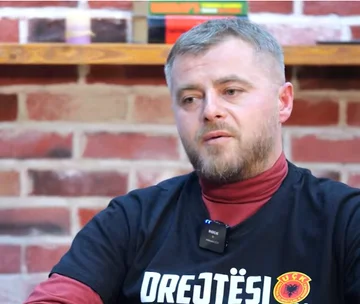
Kraa: Agreements with Serbia are slippers, except for association that puts Kosovo to the throat

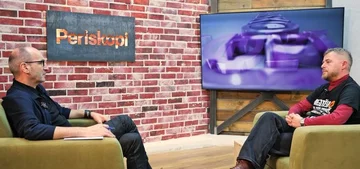
Periskopi(5 years ago)
(5 years ago)The chairman of the Kosovo Academy of Sciences and Arts, Mehmet Kraja, has indicated that this institution has made important publications, despite the difficulties that COVID-19 has caused. In an interview for Klan Kosova.tv, Kraja has spoken about work at the Academy, but also a series of processes facing the country over the years; like [...]
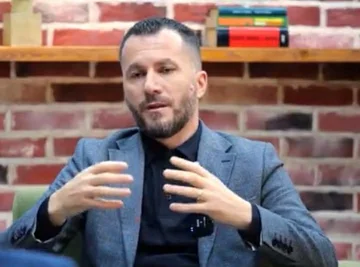
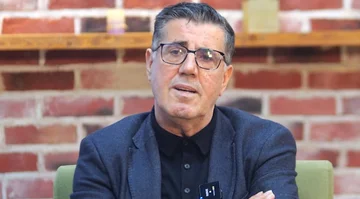
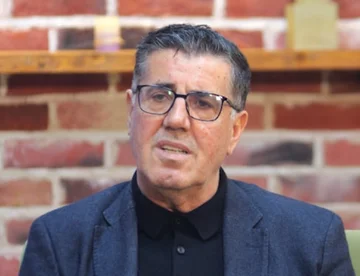
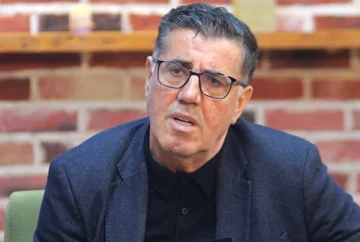
The chairman of the Kosovo Academy of Sciences and Arts, Mehmet Kraja, has indicated that this institution has made important publications, despite the difficulties that COVID-19 has caused.
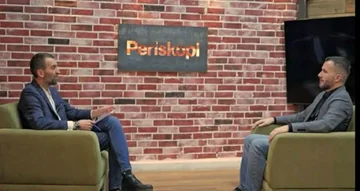
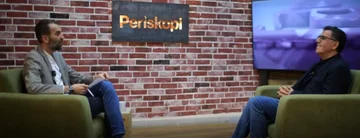
In an interview for KlanKosovo.tv, Kraja has spoken about work at the Academy, but also a series of processes facing the country over the years; like dialogue with Serbia, “Balkan Schengen”, the Kosovo-Albania relationship...
As far as the ten-year process of Pristina-Belgrade dialogue is concerned, Kraja has isolated the agreement to form the Association of Serb-based municipalities, which estimates it has been placed on the neck of the state of Kosovo. Meanwhile, other agreements for Kosovo's head of command are only “cravina”.
“Take the agreements that have been reached with Serbia (Academia has published them), read them carefully, and you will see that they are all “kravina” of no value, except for the one for the “The Association of the Kosovo Serb Communists”, which puts the liquor to Kosovo”, is expressed.
On short, all agreements reached in Brussels have a red line: not to be touched in a word with UN Resolution 1244, and to consider Kosovo <x1 domestic destination>”. Do our people know that in all agreements Kosovo is treated as part of Serbia, at all, without exception! And now it puts Kosovo in the throat of association, it is said to be an international agreement, and that it “exceeds” all constitutional provisions and that it must be implemented at any cost”.
Kraja has suggested that “The Balkans' Schengen mic”, if it were a real idea, it would have to be backed up, but that current one for it was made out of background.
In this interview, Kraja has also warned of the coming of his next book.
INT PLOSE ERVIS:
When you took the lead in the Kosovo Academy of Sciences and Arts, you said this institution should expand its influence on Kosovo's social, scientific and cultural environment. How far has this been accomplished?
Mehmet Kraja: No, it's not done, or done in part, because a year from here was an inappropriate time for any institutional work: there were many pandemics and very little opportunity to create space for more intense communication with a broader audience, to organise public manifestations, such as conferences and scientific table, promotions, exhibitions and other manifestations of this nature.
We have the potential for such a thing, only that the Academy must find the proper shape to be in the power of social and cultural developments. On the other hand, you should have already realized that the Academy is not the institution that <x0brate”, rather, very “legant” tries to suggest that the social and political processes in us this year have gone wrong: it has done some communiqués, with which it is addressed to opinion in critical or inappropriate situations. But we, as friends, have a problem: We are not that accustomed to listening, nor do we listen when we are told that we do not listen.
On the other hand, during this period the Academy has done several important publications, such as the lexicine “The Kosovo subsets” in three volume books, then a series of individual works, including a year-long project for education in Kosovo, which we do not know who we should hand over, those who are leaving, or those who are coming.
Where lies A SHOW when compared with the academy of neighboring countries? What makes it obvious?
Mehmet Kraja: We're both alike and different at once. We are alike because we enjoy the same status within the respective countries, but we are different, because we do not take the same commitments to make scandals and draw attention to the opinion.
Suppose, we don't do “scientist projects”, nor the public statement, to say that Kosovo's territory extends to “The Red Moll”, as the Serbian Academy does, saying that Kosovo is sometimes not part of Serbia. We are not even like the Academy of Northern Macedonia, because we do the “Kosovo Encyclopedia Dictionary” and we do not say that Macedonians are not a people and that Macedonian is a dialect of Bulgarian language, as they say of Albanians, that they are “Abomades” etc.
In our encyclopedia dictionary we also have not said Montenegrins are Slavic Albanian tribes, as the Montenegrin Academy says in their encyclopedia, that Montenegrin Albanians are Montenegrin tribes of “albaned”. We try to stabilise as a serious institution, with scientific and artistic credibility, by respecting scientific ethical codes and being worthy members of the association of European academy (ALLEA).
When mentioning the region, the process of dialogue between Kosovo and Serbia cannot be avoided, where days ago it was ten years since the launch of this process. You estimate that it has been able to do more in these talks than it has been made, and that this issue deserves to be ranked fourth priority for Kosovo, as the incoming prime minister, Albin Kurti, is graded?
Mehmet Kraja: Ten years of dialogue does not mean anything, nor the fourth or fourteen priority, but it is something else more substantial that needs to be seen closely: Kosovo's instability in this dialogue, the continuing lies that have accompanied it, the concessions that Kosovo has done to Serbia, and, above all, Kosovo's inequality in this process.
Take the agreements that have been reached with Serbia (Academia has published them), read them carefully, and you will see that they are all “ckarravina” of no value, except for the one for Kosovo Serb Communists “ ”, which puts the snare in Kosovo's throat. I wonder why political analysts don't read these agreements, but every night on TV spins around bullshit and puts up dust of opinion, as if they are great connoisseurs and experts of our affairs. They're not! Neither are those who have negotiated these agreements nor those who have traveled to Brussels for hours and hours, nor their masters in Pristina. Why, never, no government, nor this last, despite promising, made experts' teams? Because they want to speculate because they want to use dialogue for political gain.
In February, all agreements reached in Brussels have a red line: not to be touched in a word by UN Resolution 1244, and for Serbia to consider Kosovo “internal destination”. Do our people know that in all agreements Kosovo is treated as part of Serbia, at all, without exception! And now it puts Kosovo in the throat of association, it is said to be an international agreement, and that it “exceeds” all constitutional provisions and that it must be implemented at any cost. But do our analysts and politicians know that international agreements to gain corresponding power should be ratified by both countries? Kosovo, under international pressure, has ratified this agreement, but no one turns out to say Serbia has not, only passed it to its parliament “IT”>, because ratification would mean recognition of Kosovo.
On the other hand, why is it not decidably said: if Kosovo should change the Constitution because of the Association, Serbia should do so, because it should remove Kosovo from preambles and if it recognises Kosovo as an independent state, no association, in line with the European Charter of Local Self-government, does no harm to Kosovo.
Serbia's Academy of Sciences Chairman Vladimir Kostic has declared this year that “Kosovo is not ours”, for which it has been sharply criticised in Serbia. Is reflection on the reality of the intellectual elite in Belgrade as far as Kosovo is concerned, and would it have to be accepted by Serbian politics?
Mehmet Kraja: No, it's not, it's not a “reflection on reality” of the Serbian elite, but it's just a promotion of nationalism, what the Serbian Academy does best. It is a moment when international pressure has increased on Serbia, and when Serbian nationalism, due to internal problems, has suffered fluctuations. He in this situation needs an infusion and finds it in the “discussion for Kosovo”, this is the first, and second, Serbia's political class could soon be put ahead of the unaffordable alternative to Kosovo's recognition.
In such a case, Vucinkit needs “r against” The Serbian and the voice of the Academy has already taken its stand through objections to Vladimir Kostic. This is the typical policy of the Serbian Academy, which is put in service of Serbia's traditional political school, regardless of who is articulator and its implementor, Qosqi, Miloseviqi or Vuciqi.
The regional initiative for co-operation, known as the “Balkan Schengen Mufti”, has been viewed with criticism and acceptance in Kosovo by Kosovo politicians, both in power and opposition. For you, should Kosovo be part of this initiative?
If it were a genuine and backward initiative, regional co-operation was to support everyone, but in our case there is an ugly background: to depreciate Kosovo's independence and ensure Serbia's economic and political dominance, thus ensuring Serbia a market without customs restrictions. Suppose this is now trend and that both the US and the EU support it.
So, let's find this an equivalence, which is recognition of Kosovo's independence from Serbia, because no one gives you their territory for free market, without a political countervalue, except Albania's current prime minister, of course, who gives his territory for the market, for a praise he can get from China or Russia, because <x0mini-Shengi Balkan” has this ugly background as well. Let's not forget that Serbia's entry into the Adriatic with railways through Kosovo (without asking it) and by highway through Montenegro has been designed to become Chinese capital.
Kosovo relations too- Albania has often been a media head. How do you view the claims of the last years of Pristina-Tirana relations and how much do you believe this could have happened as a result of the frequent change of governments and prime ministers?
Mehmet Kraja: Absolutely not. No connection has with Kosovo's prime ministers and governments, but comes as a consequence of Albania's prime minister's arrogant patriarchism, which claimed to become Kosovo's <x0-Russian Albanian” and to do Kosovo's policies itself. In fact, all of Albania's rulers have been aiming to use Kosovo for its state or power causes, only that the current prime minister did not respect even the basic rules of courtesy.
One similar thing they claimed would be done with Albanians of northern Macedonia and Montenegro, but it seems that the EU showed the country there. Now with Kosovo, Albania's relations are almost frozen. Again ask the prime minister of Albania why this is happening.
What are your expectations for the Kurti II government and from your point of view how do you see the outcome achieved in the election by the Vetevendosje Movement by over 50%?
Mehmet Kraja: You must know one thing: the political independence of the Academy is a vital matter for the institution. Until recently, the Academy has been used for various political purposes to support one cause or another.
At least for a while, until I am at the helm of the Academy, it will not be used for any such thing: I will try to stabilise the image of the Academy and preserve its political independence.
You cannot close this interview without asking a completely personal question: “Pristina” is your last novel. When are we gonna have our next novel, how long are you working on this?
Mehmet Kraja: I generally write slowly, because in my recent novels, besides a narrative confessional structure, let's call it that, there's also a philosophical confessional structure and to achieve this has to be worked long, with a lot of concentration and lots of references. However, I believe I will be the author of a new book at the Tirana Fair.