4 minutes ago
A More chromosome of Love
Periskopi(5 years ago)
(5 years ago)Leonora Shabanan-Bajraktari became her first mother when she was 20. It was May 18, 1999, when the refugee in Durres gave birth to the girl named Honeylta. Honey was born with heart problems and an extra chromosome. Leonora and her husband had no accurate knowledge of her [...]
Leonora says that Honey made him better, patient and smiling.
And the weather was very loving, it offered a lot of love, and all my classmates loved it, and they didn't have a tear without a love because she's accumulated and donated a lot of love and affection”, says Leonora for Radio Free Europe.
Honey went to school like all the other kids, and as she grew up, she realized it was different and she has Down syndrome. But at home and in large families, according to Leonora, she has always been treated the same as all other children.
I've been treating the music very normal. She was praised at home, she was sentenced to the house when she did things she shouldn't have done. Honey is nothing in the family or society but has been treated normal and equal to”, Leonora says.
But Honey did not live long. Her life died at age 15 due to other health problems. She passed away on June 2, 2014. But even in the last days of her life, Honey was smiling and funny.
Even though she was in intensive hospital, she talked all the time and cared for the nurses and told them they were late at work. One time a doctor came into her room and said hello to the lovely girl, and this gave her back handsome, Leonora.
And she's had the mission to expose children with Down Syndrome or even children with special needs. Now I've set a goal for myself, and that's my mission”, she adds.
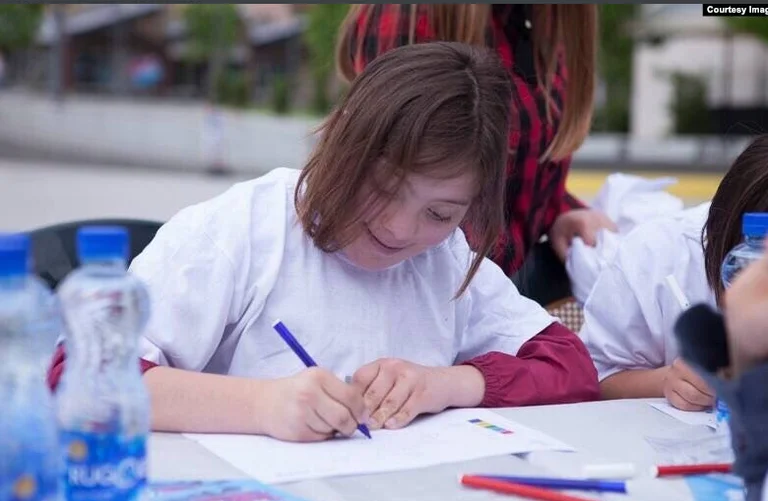
Grace Goden has set a similar purpose for herself. She's a mother of seven-year-old Ben, who's with Down Syndrome. Ben came to life prematurely and was born with many health problems. Down syndrome was the last concern that Grace and her husband had for her.
I thought that a more special gift came to me from God, since I loved so many children, now I have to testify that I loved them with my heart and that I felt them with my soul, or it was just superficial.” REL, Grace Goden.
Every little progress Ben makes for Grace and her husband is a miracle, and this has changed him as a person.
I've come to realize that a smaller move on my child, in this case a very simple move, seems very big. Today, through it, we have realized that sometimes small things in life make the difference”, she says.
Ben has overcome other health problems but is still unable to speak and express himself.
“Fiks is what it says, it's the chromosome of love, definitely. These kids have such a special look, and all these kids do is come out of their hearts, out of their unthinking,”, Gresa explains.
When you see that this child is so fragile, so pure, so angelic, you say we're special since we have Benin in the family”, Gresa says.
Her biggest fear is who will take care of Ben when she is not. Kosovo does not offer conditions for children with special needs, and for that very reason she and her husband have even thought about leaving Kosovo.
This remains a concern that we think about, and the only solution that has come to mind is maybe to live somewhere outside”, she says.
Grace and her husband had the most dignified treatment of doctors when they were told that their first child is with Down syndrome. But it was not the same 15 years ago when Sebahate Hajdini-Beqiri was given news that she is a mother of a child with an extra chromosome.
Prejudice
Do you know that your child is a fool? This is the sentence Sebahate Hajdini-Beqiri heard by a doctor within the Gynecology Clinic at the Neonatology Department at the University Clinical Centre in Kosovo.
This approach from the doctor first shocked her. Because there wasn't so much information about Down Syndrome, she began to investigate and better understand her child's condition.
I've slowly recovered, and every day I've spoken to myself, giving myself the strength that I dare not give up, because I need Gencit”, Sebahat relates.
Genc was admitted. He never intended to change or hide reality.
I never, I never thought in a second if Genc had been without Down Syndrome, or better be without Down Syndrome. I've accepted it that way and often say it's a gift sent by God”, she says.
Her child accepted it as it was, but not even the reality of society. The way her child had been communicated with the news that Down syndrome had to change.
I decided to sacrifice myself because it's sacrifice and to give myself a mission to fight, primarily for Genci's rights, including each individual's rights with Down” Syndrome.
Genc made it change the course of life. In March 2007, Sebahatja decided to open the '%Don Syndrome Kosovo.
“Society now has a different perception of Down syndrome. I'm glad we made it.
According to statistics, there are over 930 people in Kosovo with Down Syndrome, 300 of whom receive service at the KWen Syndrome Kosovo Association.
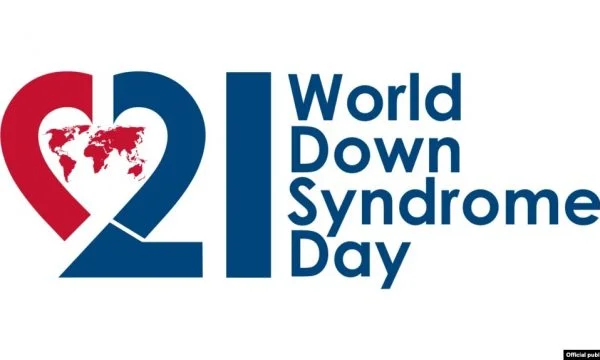
Otherwise, people with Down syndrome have 47 chromosomes instead of 46. They have an extra chromosome 21 and are also known as Trisomy 21. Since 2006, March 21 is marked as the International Day of Persons with Down Syndrome.