14 minutes ago
Swedish MP criticises the EU for not liberalising visas for Kosovo: Even Passive Sweden
Periskopi(5 years ago)
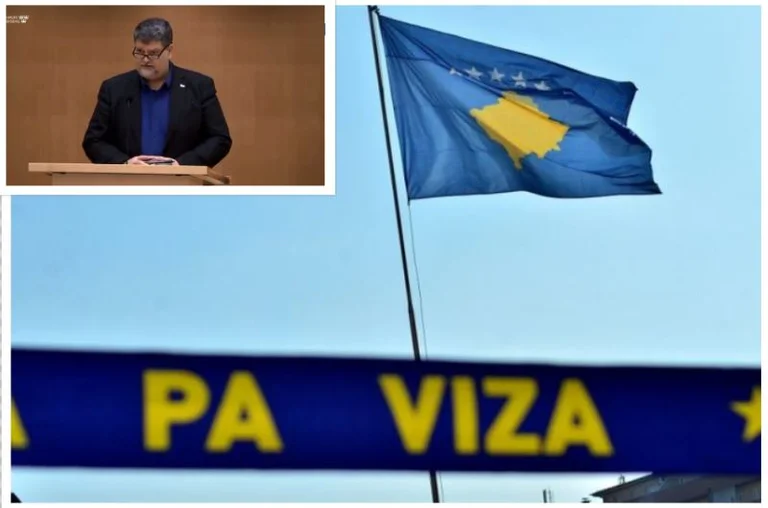
(5 years ago)Swedish MP Magnus Jacobson, during a speech to the Swedish Parliament, has criticised the European Union for its non-liberalisation of visas for Kosovo. Jacobson has said that his country is also playing passive role in commitment to the issue. In his speech, published by Naim Mursel, an adviser to the leader of [...]
Swedish MP Magnus Jacobson, during a speech to the Swedish Parliament, has criticised the European Union for its non-liberalisation of visas for Kosovo.
Jacobson has said that his country is also playing passive role in commitment to the issue.
In his speech, which was published by Naim Mursel, adviser to AKR leader Behgjet Pacolli, Jacobson also cited the Washington Agreement, which he called good in improving relations between Kosovo and Serbia, as it according to him is carried out through trade.
The Swedish government declares that Western Balkan countries are an important part of the immediate EU area. At the same time, it is a little difficult to say first what the government means to this one, since the foreign policy statement does not say more than that”.
The previous US government signed a trade and development agreement with Kosovo and Serbia with the aim of improving relations between these countries. This is good because peace always develops through trade and relations”.
Swedish MP stressed that even Kosovo should have visa liberalisations like all Balkan countries.
Anyway, it's amazing that Sweden and the EU play such a passive role in the job. We have to do more to strengthen peace in the Balkans. I have earlier stressed the need for Kosovo to be given the same exemption from visas as other Balkan countries. We also have to work actively to develop civil society and business throughout the Balkans”.
If we in the West do not support development in a democratic direction, there is danger that totalitarian regimes in Russia and Turkey increase their influence in the region”.
The Nordic and EU countries show that free trade is a good way to create lasting peace. So I hope that we in Sweden, together with the EU, will do more to bring all countries to the Balkans closer to the EU and that we will further improve conditions for trade, student exchange and contact between civil society”.
“Peace and freedom are always worth fighting, so we must do more to strengthen peace in the Balkans, which in the long-term plan will enable all countries to recognise each other's sovereignty”, Jacobson said.