a minute ago
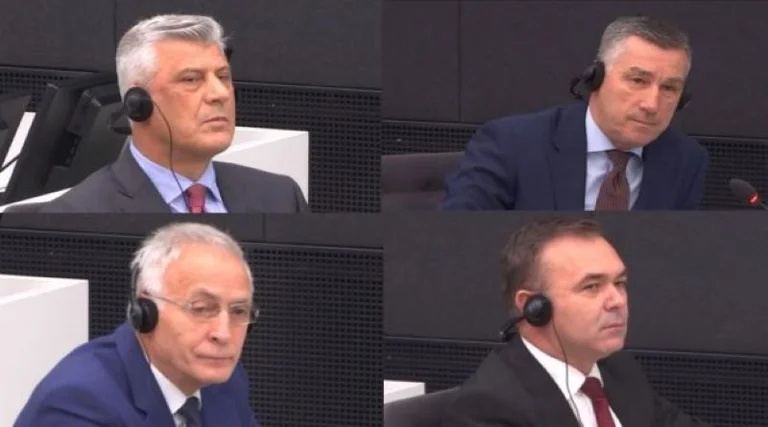
KMDLNJ: Special does not guarantee fair and impartial judgment for former KLA leaders
Periskopi(5 years ago)
(5 years ago)KMDLNJ has asked the Special Court in The Hague to deal with former KLA leaders in accordance with the human rights of persons deprived of freedom, in line with international and national documents, as well as in accordance with the Law for Execution of Kosovo Criminal Sanctions. In a reaction to the media, KMDLNJ remembers that [...]
KMDLNJ has asked the Special Court in The Hague to deal with former KLA leaders in accordance with the human rights of persons deprived of freedom, in line with international and national documents, as well as in accordance with the Law for Execution of Kosovo Criminal Sanctions.
In a reaction to the media, The KMDLNJ recalls that from the very beginning it has reacted to violations of the human rights of the accused, such as discrimination in translating material, which makes it difficult to prepare effective defence and defence co-operation charged.
The “Materials that have been handed over to the accused are only partially translated, while the Special Court states constantly that the materials are being translated. Still, in some cases the accused has not been handed over to full reasoning of the indictment in Albanian, and we have no response from the so-called Ombudsperson of this court that has the mandate to defend the rights of the accused. With the Universal Declaration of Human Rights, with the European Convention for Human Rights, with the European Rules of Prisons, as well as the Constitution of Kosovo guaranteed a fair, politically and impartial judgment by ensuring all conditions for effective protection of the accused, and that in the concrete case you violate all these international documents as well as the Constitution of Kosovo, the earlier that the founder of this Special Court is the Parliament of Kosovo, and that the court is said to be part of Kosovo's justice system. Therefore, it should respect the Law on Using Official Languages, which clearly did not do it only partially or partially, and the needs of the prosecutor or court, at the expense of the accused and defence”, are said in response.
KDMLNJ recalls that the chief prosecutor of the Special Court has, in some cases, violated the principle of presumption of innocence, claiming that the accused could be sentenced to life in prison and that he puts pressure on the courts not to make a decision for freedom protection for any accused and that presents serious human rights violations for the accused.
In fact, it is said further in response, this could be counted as the pressure on the juro by blaming the accused, still without beginning trial.
“The human rights violations of the accused are also contributing to the court's chairman, Ekaterina Trandafilova, who, in any presentation, is demonstrating the accused that they want to abolish the Special Court and as pre-prisoned and that it is nosens and flagrant interference against the accused. After all, if the Special Court was founded by the Kosovo Assembly, under the same procedure could also be abolished”, the KMDLNJ points out.
KMDLNJ seeks to respect the right to use official languages, in full accordance with the Law on Language Use in Kosovo. It also requires that the defendant's request, as well as the defenders, be ignored to be supplied over time by the prosecution and the material courts that help them in effective defence preparation as if they have enough time to organise defence and that accelerated judgment can only be applied with consent and agreement of indictees with the prosecution and the tribunal.
The KMDLNJ invites the prosecution, the court, and especially the court's chief not to violate the principle of presumption of innocence, would otherwise be considered a flagrant intervention in the work and independence of the court, which seriously challenges the accused's right to a fair and impartial judgment.
The KMDLNJ calls on all parties to be reserved from any declaration that violates human rights to those deprived of freedom that may influence the court's decision, which has full responsibility that, after the ongoing evidence, will make a free or guilty decision, and that is the right and exclusive responsibility of the competent court.