6 minutes ago
European Union requirements for new Kosovo government
Periskopi(5 years ago)
(5 years ago)In addition to the internal developments in Kosovo being influenced by the outcome of the February 14th elections, the European Union is also analyzing the effects that it can have on continuing dialogue between Kosovo and Serbia, which is eased by the European bloc. In principle, in the EU they continue to say that “does not belong to us to [...]
In principle, in the EU, they continue to say that “is not up to us to determine who the representative of the parties in the dialog” and that for the European bloc, anyone appointed by Kosovo institutions is acceptable. But given that the winner of the election must translate this victory into the creation of new institutions, then the EU will also wait and not plan any next meeting until things are clarified about the creation of the new Kosovo government.
That the EU expects dialogue to be one of the top priorities was seen even in the first reactions from official Brussels following Sunday's early parliamentary elections.
In a joint communiqué, released by EU High Representative for Foreign Policy and Security Josep Borrell and Commissioner for Enlargement and Neighbor Oliver Varhely, cited dialogue as one of the issues for which the new government's constructive engagement awaits.
Kosovo's European road also goes through comprehensive normalisation of reports with Serbia, and the EU expects authorities in Pristina to engage constructively, with the aim of continuing meetings in the EU-launched dialogue and exploit the opportunity ahead to reach a comprehensive agreement”, it is said in communique.
Some European diplomats in Brussels, who have been contacted by Radio Free Europe, have said that “are aware of the Vetevendosje Movement leader Albin Kurti's statements regarding other priorities, which are more important than dialogue” but have added that despite that, they expect the new government to focus also on the process of dialogue, because according to them, the European community has said that <x2status quo is not sustainable”.
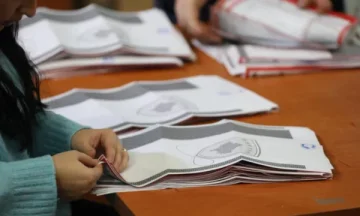
According to preliminary results, Albin Kurti's Vetevendosje Movement has won 48 per cent of the vote. After the voting process was completed, Kurti, who is LV's nominated for prime minister, hinted that dialogue is not the priority of the government he learns to lead.
In the EU, they also say they realise that Kosovo must face other priorities as well, especially with fighting corruption and organised crime, reducing environmental pollution, as well as improving the health and education system.
In all these areas, Kosovo will have the strong support of the EU because we have always mentioned these problems as well. But this will not be taken as a rationale not to engage constructively in the” dialogue, an EU diplomat has said.
Some European diplomats claim that not by chance in the municipality of Borrell and Varhely, the need to elect Kosovo's new president, and not only the constitution of the assembly and the establishment of the government, has been mentioned. These sources say that “only after the president is elected would be said to have established an institutional stability in Kosovo”.
Days ago, on the EU's Committee for Political and Security, where representatives of the bloc's 27 member states were widely discussed for developments in Kosovo and all possible scenarios after the elections. Most participants had agreed that before new meetings are organised within the dialogue, there should be a stable government in Kosovo, which would also appoint a team for dialogue. It was even said at this meeting that new rounds of negotiations would likely not be held until the summer of this year.
But everything can accelerate as the election outcome has created a clearer situation than expected, following the convincing victory of Vetevendosje Movement, on which Vjosa Osmani, the president's task officer, has also competed.
Diplomats in Brussels claim they are also waiting to hear from fellow negotiators from the United States administration, to understand what approach they will have to the Western Balkan region in general, and in particular to dialogue between Kosovo and Serbia.
In principle, support has come from Washington for the EU to continue to have its main role as a facilitator of dialogue, but there is also a curiosity in Brussels to see what reports the American president's administration will have, Joe Biden, with the Kosovo Government expected to be created, as well as the topics to be discussed in the dialogue.
The European Union warns that it will not give up all requirements that all obligations from the dialogue that have been taken so far by the parties should be implemented without considering who is in power. This, in the case of Kosovo, applies specifically to the implementation of the Agreement for the establishment of the Serb majority municipalities. The topic has been one of the reasons for the slowdown of dialogue even when it resumed the summer of 2020.
Meanwhile, procedures are under way in Brussels for continuing the mandate of Miroslav Lajcak, the bloc's envoy for dialogue, whose one-year term expires at the end of March.
Dialogue between Kosovo and Serbia started ten years ago. After nearly two years of impasse, the process resumed last year's summer. But because Kosovo went to early parliamentary elections, new round of talks at high level has not been in place since autumn last year, while only a few expert-level meetings have been held.