13 minutes ago
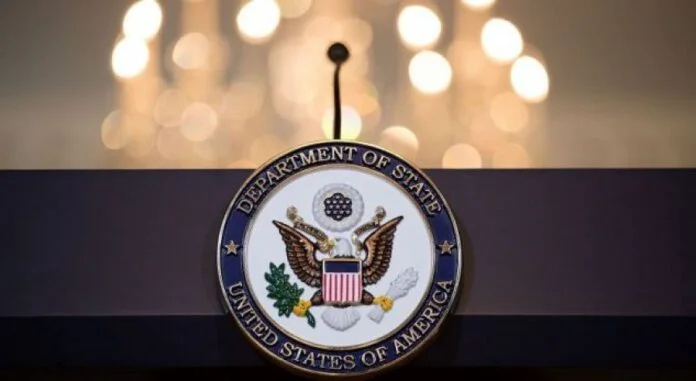
State department releases report, praises Kosovo for fight against terrorism
Periskopi(5 years ago)
(5 years ago)The US State Department has published the report on fighting terrorism, which says Kosovo continued to fight the threat of terrorism through close co-operation with the United States. The report also mentions the abolition that Government had done to the National Coordinator's Office for the Prevention of Extremism of Violence and the Combating of Terrorism, and [...]
The government's abolition of the National Co-ordinator's Office for the Prevention of Violence Ecstremism and the Combating of Terrorism, which had been reactivated by the government Hoti in July last year, where Agim Veliu was appointed its co-ordinator.
“Kosovo is a member of the Global Coalition to defeat I SIS. The Kosovo government is drafting a new combined strategy and action plan for Anti-terrorism (KT) and Anti-Extremism Actual (CVE) by 2025.
The CT Coordinator's office/ CVE was abolished in February. In July, however, the new government Hoti appointed Interior Minister Agim Veliu as national co-ordinator CT/CVE”, the report said.
The report also cites cases where Kosovo has prosecuted its citizens who were part of I The SIS and the repatriation of 106 citizens from war zones.
Full report:
Overview: Kosovo continued to fight the threat of terrorism through close co-operation with the United States. Kosovo is member of the Global Coalition to defeat I SIS. The Kosovo government is drafting a new combined strategy and action plan for Anti-terrorism (KT) and Anti-Extremism Actual (CVE) by 2025.
The CT Coordinator's office/ CVE was abolished in February. In July, however, the new government Hoti appointed Interior Minister Agim Veliu as the national CT/ CVE.
Kosovo continues to address consequences of 2019 repatriation of four The alleged FTFs and 106 members of Syria's family, one of the largest civilian repatriations so far from the conflict zone. All adults have been prosecuted or tried differently from rule forces, and two of the male FTF remain in prison. Women and children continue to receive help for reintegration through US and European-funded programmes and the Interior Ministry's Prevention and Reintegration Division (PRD). PRD and the Ministry of Education assisted 37 of the 74 children returned with enrollment in school and, with the help of international donors, is helping women return to reintegration and employment.
2020 terrorist incidents: There have been no terrorist incidents reported in Kosovo in 2020.
Legislation, Law Implementation and Border Security: Kosovo's legislative framework is among the most prone in the Balkans to prosecuting individuals suspected of carrying out or supporting terrorist activities, but short sentences, early prison release and lack of organised supervision after release raise questions for long-term security. Kosovo supports implementation of Resolution 2396 to fight terrorist travel and is working to put it into practice; Washington's commitments on September 4th signed at the White House codified Pristina's commitment to boost border security and control to prevent terrorists' travel, including US aid and partnership. Kosovo has named Hizbo God a terrorist organisation.
The European Union's Agency for Co-operation in Implementation of Law (EUROPOL) has entered an official agreement with the Kosovo Police in July. In the near future, the appointment of a Kosovo Police Interconnector is planned at EUROOPOL and a secure communication agreement. Kosovo remains excluded from membership in INTERPOL, in part due to Serbian opposition stemming from the lack of normalised relations.
Through participation in the State Department's Antiterrorism Assistance programme, Kosovo Police and especially the Antiterrorism Department have received training for investigations against terrorism and identification and seizure of digital evidence, and have received grants for accompanying equipment. US professors have managed to boost co-operation and exchange of information between the Kosovo Police and the Kosovo Correcting Service.
On December 11th, the Pristina Constitutional Court acquitted all defendants involved in the “Urabani” of terrorism-related charges. This is the second time defendants were acquitted of charges of terrorism, though convicted of possession and trade without gun permits. This case was originally indicted in 2015 by international prosecutors and then passed over to the local judicial system, staying in Kosovo courts for five years.
On October 30, the convict FTF Agon Misini was released from prison after serving 18 months of his four-year sentence for participation in a terrorist group (ISIS). Missin was the first repatriated FTF convicted in 2019; however, the Court of Appeals granted him credit for his time in custody in Syria following his arrest in 2017 by the Syrian Democratic Forces.
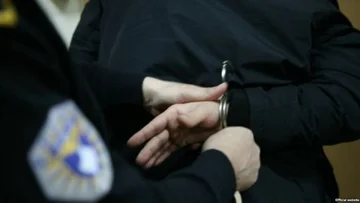
On October 20th, the Kosovo Police Department of Counterterrorism arrested a person who threatened Kosovo's ambassador to France after the renewal of an article by Le Figaro describing a chronology of attacks on satirical magazine Charlie Hebdo. Prosecutors opened an indictment for boosting terrorism on December 8th.
On September 30th, prosecutors indicted Igballe Hudut for inciting him to commit terrorist acts. Hudut was arrested on January 7th for her posts on social networks, criticising Washington for the murder of Iranian Commander Qasim Solejmani and calling for revenge.
On September 24th, the Supreme Court of Kosovo confirmed the five-and-a-half-year prison sentence for the participation of Visar Qukovci into a terrorist group (ISIS), while ordering a retrial on charges of child abuse. Qukovci, one of Syria-reported FTFs in 2019, had filmed propagandistic videos in which he put a suicide vest on his 3-year-old son.
On January 10th, FTF Aryan Kryeziu was sentenced to 46 months in prison for participating in a terrorist group (ISIS).
Of 32 women repatriated from Syria in 2019, 29 were found guilty of participating in I SIS and received short parole sentences. Women will avoid imprisonment unless they commit further crimes, are regularly controlled by Kosovo police and pursue psychotherapy. Since November, seven other women have been indicted for participating in the ISIS.
Opposition to terrorism funding: Its NIF, Kosovo Financial Intelligence Unit, is a member of the Egmont Group. Kosovo has drafted a legal framework for financial sanctions targeted against terrorist organisations, which after approval by the National Assembly will improve NIF's available means to limit terrorism financing.
Opposition to violent extremism: Kosovo's previous strategy for CVE, a five-year guide for curbing the growing threat of terrorism through an approach of the entire government, stressed the critical role of local parties and civil society. Implementation has been uneven to the government ministries and challenges continue, due to lack of capacity, insufficient resources and an overly directed approach to the CVE. An interministerial working group is drafting a new strategy and action plan aimed at uniting the CT and CVE into a unified strategy; the government expects to find out the strategy in 2021.
Kosovo's Correcting Service continued to implement a programme assisted by American experts to improve terrorist management in prison. This programme includes collecting, analyzing and sharing prison information within policymakers and other relevant law enforcement bodies, and managing rehabilitation and eventual reintegration of convicted terrorists. The PRD continued to implement programmes for reintegration of individuals who suffered prison sentences on charges of terrorism, returns from FTF and members of their families, while lacking staff and insufficient financing.
Kosovo continues co-operative activities via G CERF, a global public-private fund to support local efforts, base, radicalisation against terrorism and recruiting in endangered communities. Thirteen Kosovo municipalities are members of the Strong Cities Network.
International and Regional Co-operation: The Kosovo government works closely with officials in Albania and North Macedonia to support the construction of CT capacities and regional co-operation.