4 months ago
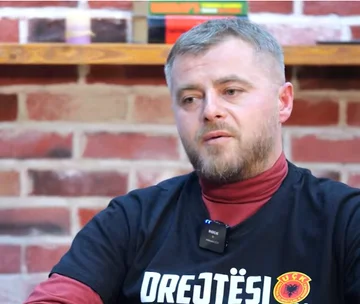
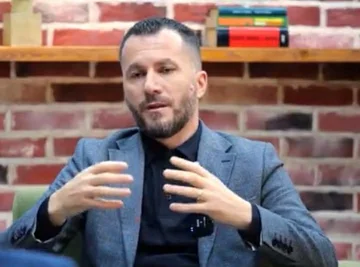
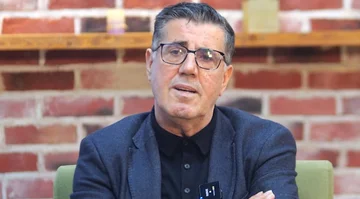
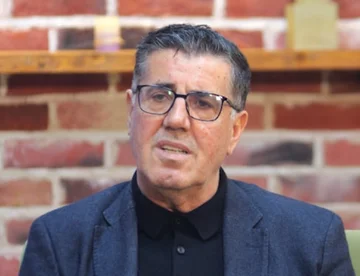
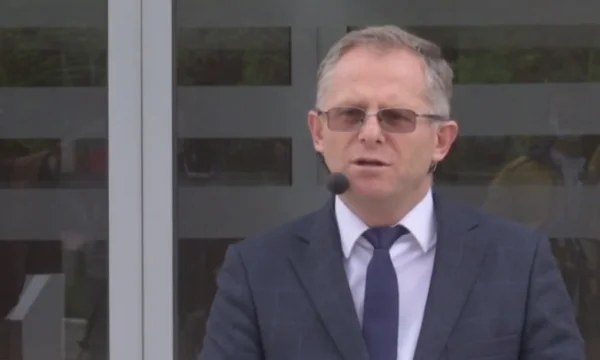
Bislimi: If Serbia does not respect agreement, we will be forced to intervene
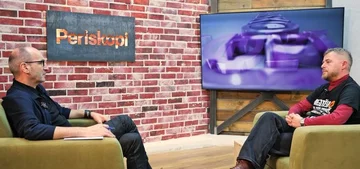
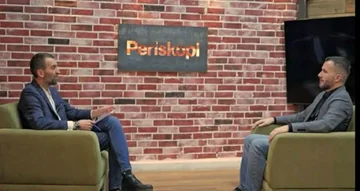
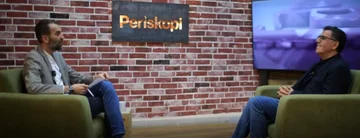
Periskopi(5 years ago)
(5 years ago)The Kosovo government has said that on 2 October, first KFOR soldiers will be deployed at the border checkpoints in Brnjak and Jarinje before leaving Kosovo Special Police Units and removing barricades from local Serbs. Speaking in an interview for Radio Free Europe, Kosovo Deputy Prime Minister, simultaneously chief [...]
The Kosovo government has said that on 2 October, first KFOR soldiers will be deployed at the border checkpoints in Brnjak and Jarinje before leaving Kosovo Special Police Units and removing barricades from local Serbs.
Speaking in an interview for Radio Free Europe, Kosovo's deputy prime minister -- simultaneously Kosovo delegation chief in Brussels Besnik Bislimi -- has said Kosovo already has 300 thousand packages of four sticky letters that will start placing cars from Serbia since 4 October. Bislimi has said Serbia has created tensions in the north, which have alarmed the international community. He has said it is logical to expect further reciprocity measures in the future. He added that license plates KM) will not exist after April 21, 2022. Speaking of the gas project supported by the US administration Bislimi has said that Kosovo has not withdrawn from the gas process. Kosovo has taken time to make a qualified” decision.
Radio Free Europe: Mr. Bislimi, can you tell us how the unlocking of the border points will happen? Who wants to withdraw first, the police or the barricades?
Faithful Bislimi: The deadlock is set for tomorrow (Saturday, October 2nd). It is nevertheless necessary for KFOR units to deploy at border crossings and in co-operation with Kosovo Police Special Units to be informed of all the elements necessary to ensure the stability of border crossings and their security.
Then, after all these proceedings have been carried out, at 8: 00 p.m., it is pre-empted to begin the one-time shift of both the barricade and the special police, and with this complete. It means there are no sequences that one side has to be dragged forward, but the shift is done simultaneously. The only difference is that KFOR forces should be deployed several hours before the shift of the barricade and special feeling begins, and also, what's important to remind each time what it looks like is a source of deliberate misinterpretation, this has nothing to do with the position of border police and regular police. This arrangement does not affect them. They keep working. Their jobs and functions have not taken over special police units, they have had only the preservation of border points and tranquillity there.
Kosovo has 300 thousand packages of four sticky letters
Radio Free Europe: Could there be any moves earlier, or will everything start tomorrow at 8:00?
Faithful Bislimi: There is no tendency on our part to move the deadlines. What's important to say is that if deadlines are not respected, then the agreement is considered worthless and the side that shows non-co-operative will be the one that will be identified as the blocker of dialogue, but there is no reason, at least on the part of the police, to begin moving. Barricades is illegal. It can be withdrawn at any moment and only because it would facilitate work then for tomorrow, but otherwise by special police units there is no reason, and there is no reason for the process to start logistically before all of it is carried to KFOR and before even the withdrawal of the barricade or barricades begins.
Radio Free Europe: Is Kosovo technically ready to implement the agreement? Are the sticky cards ready to be placed on the license plates?
Faithful Bislimi: Kosovo has been ready since. Kosovo has about 300 thousand stickers (v.j. If I say 300 thousand stickers, I'm thinking 300 thousand packages, because a package has four stickers, so much so that they need each car to cover the signs of citizenship and symbols. And that's enough to cover the six-month cross-border cycle. Even the interim agreement has a six-month deadline, so our side is fully prepared.
Our side has information on daily, weekly, monthly and annual circulation of cars at each border point, and therefore has the capacity to design the amounts needed for the actual functioning of each border point. It is also ready and has decided to accommodate additional police staff in order to reduce the maximum time needed for citizens who will be equipped with stickers or stickers.
Bislimi: International community alarmed by tensions created by Serbia
Radio Free Europe: The opposition has accused you of asking Belgrade for the removal of special units that is Kosovo's internal issue. How do you respond to such criticism?
Faithful Bislimi: We have not negotiated with Serbia at any moment for the withdrawal of special units. The artificial creation of tensions in the north on the part of Serbia has alarmed the entire international community and it has been their request that we give our share of the situation's calming and therefore agree to the withdrawal of special units. I have talked to God (EU envoy for dialogue Miroslav) Lajcak, and not Serbia. And it's also important to say that it's not in the task part of special units to be positioned statistically to stay there, because they wouldn't be special anymore.
Special units (of the Kosovo Police) have carried out their task exemplaryly, have achieved control at border crossings with full success, without causing any single incidents. Despite the fact that the provocations they were constantly subjected to have been very large, I'm saying again, the last route Kosovo special units have made, and for us it has been important that their waiting at any moment not to create vacuum that would endanger our staff's safety at the border points, but also our own objects, our assets at the border.
But it is very important that even the criticism from the country be dealt with in context as to who says it and why it says it because, in fact, all the arguments that come from them are arguments against them, for example, the subject of the legitimacy of license plates KM.
Those plates. KM) operate free in northern Kosovo from 2008, therefore we have not established any legitimacy, in fact de-legified it, because in this agreement they are treated only as Serbian license plates not recognised in Kosovo, and Serbia's license plates, which we do not know, covered with stickers. By September 30th, these plates have moved free to the north, and the argument is therefore unstable.
If Serbia does not respect the agreement, “is required to intervene”
Radio Free Europe: Could reciprocity have another measure in the coming days?
Faithful Bislimi: I don't think this has anything to do with this move. We hope Serbia will implement the entire agreement reached in Brussels. If we observe deformities in the field, then we will be forced to intervene. But that neither limits nor opens room for intervention in other areas.
We sent a letter to governments of the European Union and United States of America, Switzerland and Great Britain, where we informed them of all the uneven export treatments of Kosovo towards Serbia. We've got answers from some of them.
In the future, it is logical to expect other decisions that show the full establishment of the principle of equal treatment of parties in agreements or in mutual relations.
Paper tape, free
Radio Free Europe: From Monday, drivers from both states will pay the five-euro tax as it was so far?
Faithful Bislimi: On Monday, at 8:00 a.m., the introduction of the sticker system is introduced and therefore no payment applies anymore. The stickers are free and distributed to drivers at the entrance of the border points. What's important is that they place stickers themselves and cannot get inside Kosovo's territory without covering all the symbols and elements of mutual citizenship of the state.
Radio Free Europe: You mean, the same are Kosovo drivers coming in?
Faithful Bislimi: This is waiting.
Bislimi: Targets KM) will not exist after April 21, 2022
Radio Free Europe: What will happen to the license plates? KM) and other similar plates that have circulated so far in Kosovo?
Faithful Bislimi: The plates that have circulated so far to the north, from Monday (October 4th), are considered as Serbia's license plates of a state that we still do not know. The treatment is valid for six months, because within six months, the Workers Group is tasked with finding a permanent solution according to the European Union's best standards and practices. I don't think there's a standard or practice of a European state, where they're sending license plates to other cities. This, therefore, logically implies these plates will not exist after April 21, 2022.
Radio Free Europe: There has been criticism from the opposition over this deal, saying the government has equated Kosovo Police with protesters who have blocked roads. What is your comment?
Faithful Bislimi: There is no single decision the Government of Kosovo has made since the date of taking office on March 22nd of 2021, which the opposition has not considered very harmful, very wrong, very dangerous. If there were only a little truth to such criticism, then it would be strange that the state exists even further after those months. Take care and treat only as criticism of those who have signed all those agreements, who are now a burden to us for any process of dialogue.
Bislim says no secret agreement
Had their agreements been good, they would have been implemented so far. The main problems we face, and one of them is tension in the north, are the product of all those good decisions and wisdom that they've taken for ten years. Meanwhile, what we've done is slightly trying to minimize the damage and establish the principle of equality that these have violated since the first day of negotiating with Serbia.
There is no agreement where the Kosovo side is treated equal to the Serb, and now they find it strange the way we negotiate with Serbia.
You have to understand that the September 30th deal is different, it's the other way out of previous agreements. Someone who thinks the arrangements have already been good, as if he doesn't think that's bad. Those who think that the agreements have already been harmful do not think that the September 30th is good, because it is the other part.
Radio Free Europe: Are there other parts or only parts published? Why don't you publish the deal as a whole?
Faithful Bislimi: There are no secret points in Kurt government, no secret deals. What Mr Lajcak has made is the only deal he has agreed to, there is nothing else. They are all conspiracies and are attempts to downplay the role of agreement and importance. But it will never happen that we reach an agreement not to be made public, to be safe.
“
Radio Free Europe: The opposition is also accusing the government of undermining its partnership with the US by saying no to the gas project. Is Kosovo jeopardising US support by saying no to this project?
Faithful Bislimi: It is good for the Government of Kosovo not to try too hard to address this opposition. The opposition has definitely lost their way, or I should say, are on their way to extinction.
There is no problem with partnership with America, agreement with the MCC is continuing, there are co-operation and ideas of relocation of tools. Kosovo has not withdrawn from the gas process. Kosovo has taken time to make a qualified decision.
We're not talking here about a 300 thousand euro investment or 500 thousand euros, but we're talking about investments of hundreds of millions of euros, and here we can't make small mistakes, they can only be made big mistakes, and each American official has understanding and even assessment of a government that is careful when it comes to decisions affecting the state budget, because they're the taxes of Kosovo citizens and the US taxpayers.
What we've said is that transition is long, transition is costly. We are obliged to ensure that in the period of energy transition, we guarantee continued, sustainability and energy at affordable prices for citizens.
This year alone, the price of gas on the European market has tripled. This shows that the need for government to be as careful on such projects as possible is to be present.