4 months ago
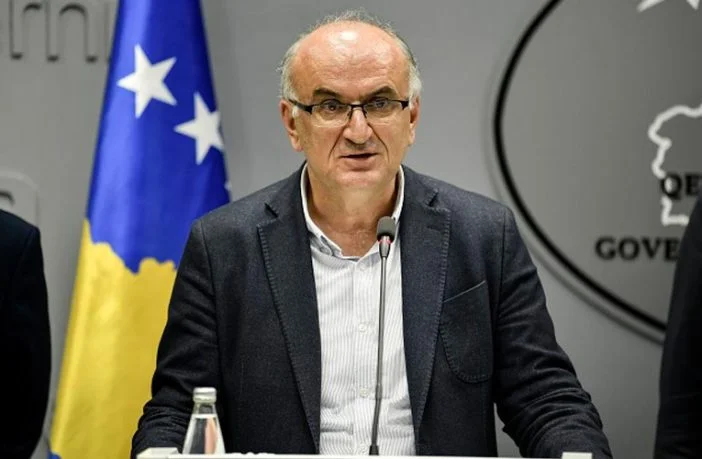
Anti - Vaccina CO VID, the impact of changing governments and wearing masks- Ramdani talks about meeting COVID-19.
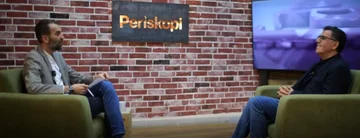
Periskopi(5 years ago)
(5 years ago)For director of the Kosovo National Institute of Public Health (IKSHPK), Naser Ramadanin, COVID-19's pandemic is a global crisis in a giant dimension unprecedented to date since the beginning of the last century. “Throughout the year, the whole world is facing the common challenge of easing isolation and restrictions, trying to [...]
Over the course of the year, the whole world is facing the common challenge of easing isolation and restrictions, trying to offset various health, social, mental and economic concerns. At least 186 countries have implemented different levels of restrictions on population movement to slow the spread of the virus and prevent overloading health systems. About 82 states have implemented complete isolation. These measures have marked a serious socioeconomic cost, but have saved many lives. These definitions have given countries time to reduce the incidence of disease and prevent and control the spread of the disease”
Because preparations for prevention have started since January of this year, we immediately made the readiness plan, either strategy or possible predictions in conveying the epidemiological situation. What has been done in the readiness and response plan so far, with lines and contributions to what is planned, in the prognosis has coincided with developments in the periodical situation. Already, when we are spending a full year in the pandemic and rounding up a year of constant work, without a day's rest, we are on the verge of doing a huge public health work in protecting and preserving the health of citizens of the Republic of Kosovo. But given that infectious diseases, and in particular COVID-19, do not know the limit, our contribution is no doubt considered a contribution to global health protection”, he has said of Telegrafi.
Professor Ramadani, in your professional history, have you faced something like this in the past?
RAdan: Given that my professional history and confrontation in the past is part of the inseparable mosaic of the National Institute of Public Health of Kosovo, I would first like to present a mirror of the Institute's history at short points.
Since the National Institute of Public Health of Kosovo is a front for public health, in the continuation of the landmark results in public health should be mentioned that with the implementation of the expanded immunization programme, evident successes have been noted in combating many infectious diseases, vaccine-preventive, listing Kosovo among countries with the highest success in protecting children with vaccines.
Under the IKSHPK, modern accredited and certificate labs of microbiology, the Centre for Laborators Testing. The National Gripit Centre and the already well-known COVID-19 diagnostic labs.
IK The KPS has also realised a series of scientific projects and has a broad and close co-operation with international health institutions. At its event I The KSHPK provides for implementation of all recommendations of WHO and ECDC in public health issue. We have always maintained close co-operation with international organisations and institutions and highly appreciate their support and support at this time of no time.
Kosovo's National Public Health Institute with its activity can be viewed without modesty as a bright point of Kosovo health.
Even today, the National Institute of Public Health as Kosovo's top health, professional and scientific institution with its own activity, along with its Regional Centres and other health institutions throughout Kosovo, is successfully implementing the prevention and protection strategy from the COVID-19 pandemic. My professional experience of about four decades in epidemiology has faced many challenges. If mentioned, it would take more than one book. I have faced many epidemics of infectious diseases, but not just them. Many problems in Kosovo's disease epidemiology have been solved successfully. We've been confronted and we've come up white with prevenable diseases. We're free of child paralysis. In Kosovo, 2003 you cannot meet children in a wheelchair that causes child paralysis. Over three decades we've been facing <x0Roks for chest” with Crimean-Congo Hemorracious Ethet, with multiple casualties that are the result of being bitten by belts.
On the ground constantly with epidemiologists' teams we've done our best since identifying the first cases in Nisor of Suhareka. And so, from 2013 to today only one instance of The EHKK has been reported and diagnosed in Kosovo. It is considered one of the greatest successes and achievements in the history of Kosovo health. Being epidemiologist in preventing and controlling disease means courage and experience. Epidemiologist is somewhat considered “disident” of health and all regimes. He is an independent and neutral professional, with judgment and logical thinking in the best interests of human well - being, with unique altruism, a sacrifice of himself for the welfare of mankind. Epidemiologist has no rest. He tracks and searches at all times day, night, hourless.
For good reason, the epidemiologist's symbol is an empty - tray shoe. Thus, even in this pandemic, it can be said that Kosovo epidemiologists have challenged the impossible, combining the classical soil epidemiology through mud, rain, and snow, with modern age technology epidemiology. Public health professionals, epidemiologists and microbiologists of I The KSHPK is working part - time, with an average day of 15 hours and times to 20 hours a day, without interruptions, throughout these weeks and months, throughout the year.
Therefore, it can be said without hesitation that the National Institute of Public Health remains a front for the health of the population, just like yesterday and tomorrow!
Epidemiologist is the health professional who sees and functions in a holistic light. Health professionals view both as microscopic and macroscope. Epidemiologist, besides these two visions, sees and observes phenomena as a telescope. The client has a well - defined and far more precise target if he operates under a microscope. Epidemiologist, meanwhile, studies phenomena and health problems and tries to solve them through all the existing factors in society, not only of the health system but also of the non-health system, which includes all the branches of the economy, and not just its own. So all dictatorships of a state.
It should be noted that at the National Institute of Public Health, teams of trained professionals have already been trained in and out of the country, each better than the other and created in a context of expertise in public health, where classical and modern epidemiology, even virtual, blends in combating infectious diseases. These teams, from the beginning of the pandemic, are on their own level of office, giving recommendations to the Ministry of Health and working over and over and over time to meet with the pandemic.
Were we ready as friends to deal with this kind of pandemic?
Ramadan: It's a very comprehensive question, and when such a question is asked, the answer is not only optimistic, but realistic is yes, sometimes it can be done better, but what we've done, we've done in so-called soybeans, even with other states advanced in this direction. Given the many characteristics of prevention work, in this regard, it can virtually be done more, but it does more, in a way related to the capacities not only health, but also the invisibility, that connects with the functioning of the state as a whole and the behavioral mentality of everyone anyway. And in this regard, given that our health system is fragile, not only in a pandemic like this, but also in treating other diseases, we have the problem of limited health capacities.
It is very difficult to define willingness in the entire social concept, where many elements, such as sociological, anthropological, medical, ethical, moral, law, economic, etc. It is now evident that no society in the world has ever been willing to face this new virus. It should not be forgotten that Kosovo already has a considerable experience in preventing infectious diseases. Only in the post-war period, we have faced from the beginning two epidemics: Tularemia and the debacle of the Congo, and then continued with the H1N1 flu pandemic of 2009, following the various epidemics of food poisonings, gastrointhestial lesions, seasonal flu, and finally confronting this pandemic with all other dimensions, which have surpassed the expectations of many advanced states in the world.
Actually, the experience already achieved is remarkable. We have come in with a preliminary experience of other pandemic viruses, and other bacteria or epidemics caused by bacterial microorganisms. So this is an extraordinary, special experience, which is associated with the unique features of modern Kosovo-Albanian epidemiology, because actually, epidemiologists of the National Institute, such as teen epidemiologists who have worked in the classical soil epidemiology with me, which are called red - shoe epidemiologists, and who walk on the ground with mud cizmies, and those who are younger, have applied the classics, modern virtual methods, and through the National Institute's Operational Center, we have managed to combine these methods in the best possible and most efficient, and by reaching every time we get to the virus.
On the other hand, since the start of the first case appearance with COVID-19, citizens have been attached to calls for the National Institute's measures and recommendations with a high citizen.
Illustinably, it could be said that this pandemic has blended the action of two images: health professional (“commander overloaded with commitment to convey and prevent the spread of pandemic and citizen (“ustrator”) tasked with implementing “commands: Carrying mask, keeping distance and hygiene!
The COVID-19 Pandemia has exposed all the problems associated with the inadequacies of team organisation and creative co-operation. Everywhere, solidarity and global response were tested.
Throughout the year, the flow of citizens throughout the world and to us was a problem. The neglect of some citizens during movement and activities increases the risk of spreading infection, while the SARS-CoV-2 virus is present. So the health system is overloaded with unprecedented effects to the explosion that can pose a danger to the lives of citizens. Furthermore, the failure to wear masks can endanger the health of citizens and aggravate the general epidemiological situation.
Kosovo's National Public Health Institute and the Ministry of Health have repeatedly recommended that safeguard clauses and recommendations be respected rigorously. It has been repeatedly appealed to citizens, businesses, gastronomia, so that they strictly respect physical distance, use of masks, perform disinfectation and ventilation of locals, unable to sustain the eventual spread of infection and avoid spread in closed spaces.
Today, even in spite of the increasing number of cases, it can be said that the epidemiological situation is under control and is sustainable and affordable, continuing to investigate epidemiology in all suspicious cases and contacts. There has already been a preventive phase over a month and a half, in which the National Institute has raised the alarm of what will happen when we start with the relief of the first measures achieving vaccines, and their application remains much work to be done.
Can you share with readers a moment when you thought that the situation was out of control and could no longer be able to get back on track?
Ramadan: After the first cases were reported to Wwan, China, at the end of December last year when it was reported for an unknown pneumonia following WHO's information, the National Institute has immediately upgraded the alert from the beginning of January 2020 and we are still in this alert situation. Still with the same working schedule, the same teams of public health experts, from morning to midnight, and often after midnight, continue to work, not even for a day off, not for a weekend or for a holiday. Even though we've been through difficult and serious times all this time, preoccupied with the non-stop work and direct commitment and with a great will, as if we've faced the risk of seeing the situation with scepticism, and in working and doing it directly as if we have found the power and strength that has given us a determined and committed hope in this sacred human battle, trusting in results and successes in the face of pandemic.
How do you evaluate today's overall situation with pandemic?
Ramadan: Overall, the situation is still serious in view of multiple multiple challenges in dealing with pandemics, where there are many existing factors. The epidemiological situation is followed by an extraordinary dynamic, unperceptive to others who do not know the intensity, and the complexity of the performance that involves every port of life. It is up to each one to contribute as much as it can, to facilitate the work of epidemiologists and health professionals wherever they are and act. The implementation of the National Institute's recommendations should make every citizen of the Republic of Kosovo to preserve itself, relatives and others.
AUV and municipal inspectors, along with municipal headquarters, must apply the Law on Inspectorate, the Law to prevent infectious diseases, and Anti-COVID Law by relying on the Manual for Combating COVID-19 and take responsibility measures in any case not to implement the recommendations. No one has the right to risk the lives of relatives, elderly people, and chronically ill ones because of their carelessness and lack of recommendations.
It must be seen that the biggest war is not in hospitals, the biggest struggle for fighting COVID-19, is in every individual, citizen of the Republic of Kosovo. They will win the battle with us and us with them. To be clear, even though we are together, our roles are divided, we have the role of health professionals, we recommend, we diagnose, we diagnose, we treat, we treat, we treat, citizens have the biggest role, because there are 2 million, and we are much less. But, in this case, the greatest benefit of the situation is that we can help the population if they listen to us, and therefore they are guided to hear us, and to apply our recommendations.
To overcome the situation, we need to remain self - sufficient and listen to the recommendations of the National Institute, otherwise we cannot succeed, and disobedience can cause human victims. The epidemiological situation is kept under control as long as citizens want to adhere to recommendations and will not be controlled if citizens do not comply with the recommendations of the National Institute. These are two concepts the citizen must understand. It's so simple to understand strategy and implement measures.
How hopeful are vaccines that have already begun producing for patients?
Ramadan: Vaccines are biological preparations considered the best, cheaper, and most efficient tool in fighting infectious diseases. It really worked hard and with a new technology in producing new vaccines. Time will show how hopeful they are. Currently, tested vaccines seem to be safe and efficient. How much protection and how long the immunity will last will be seen in the coming months. Kosovo is already on track to vaccinate the population according to priorities next year, starting with health workers, chronically ill people and the elderly.
What are your predictions for the coming year regarding COVID-19, when you think the world will start to breathe freely “minus mask”?
Ramadan: The world has not been in a similar situation of confrontation with a pandemic in its history since the Spanish flu. No one has been able to deal meaningfully with the pandemic and still has great difficulties in fighting it. These difficulties will continue to appear in various countries even for a time depending on the implementation of measures in each country and the covering of vaccines and the creation of collective immunity. But we have to get used to living with the virus, because this virus is definitely going to continue living with us.
Whether or not of masks after large-scale inoculation will be individual decision-making in relation to the health of everyone, unless there is any risk of mass distribution of cases. Given that we have already faced pandemics since January this year, and we have obvious and measurable successes with epidemiological indicators, however, that in this time chronology we have gained new experiences and made the necessary preparations to be faced with yet another wave of COVID-19.
The epidemiological situation could deteriorate in the event of new cases, but all health professionals should be in charge of duty by fulfilling all legal, professional and ethical obligations, as well as meeting all recommendations for fighting COVID-19. This is the big historical twist which is sometimes for study and analysis by all carefully.
History is not in vain the teacher of life, and our short - term history is a life teacher. The professional issue of media management, media information, population information should be left to epidemiologists and public health professionals. Next year is expected to be the year of the broad application of the vaccine, and along with other broad measures taken in the exchange, we have to see how the flow of pandemic will go further.
Two governments were changed during the pandemic, how much has the change of governments affected your work but also the institution you run to confront the pandemic?
Ramadan: To measure any phenomenon, much less an impact of factors on such an pandemic with many unknowns is very difficult. However, the political factor can have an impact on all of life's ports, depending on the approaches and perspectives of everyone, which sometimes come out of the contexts of logical thinking and slide into myopia and bias. I The KSHPK has had close and excellent co-operation with the Ministry of Health and Government throughout the year, as if you came with all other institutions at the country level and local levels.
It should not be forgotten that we are professionals and have done our work independently. The National Institute of Public Health as Kosovo's top health, professional and scientific institution with its activity has a mission to successfully implement the public health strategy, and at this time in particular the prevention and protection strategy from the COVID-19 pandemic.
Health has been and remains one of the most sensitive social sectors. Facing a weak economy and insufficient budget, the investment in health has so far been with a historical budget “-sha within “. In this situation patients have not always been able to obtain complete quality and quality services, and professionals seem to have been overlooked in their true values in relation to the situation, where there are substantial differences in the reward of wetman and on the other hand, lack of basic conditions for work.
After the end of the pandemic, there will surely be opportunities, and all of this will be the motivation to sit down with neutral approaches to discuss how to improve the quality of services further by prioritizing health, as one of the most relevant branches of the economy.