4 months ago
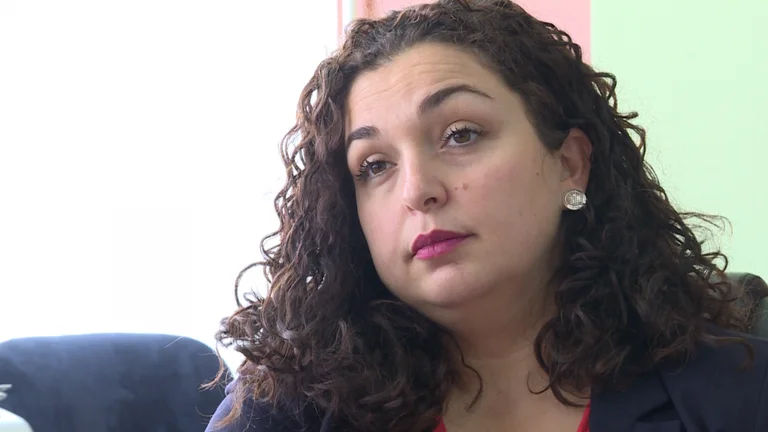
Osmani: In LDK I would return if reformed
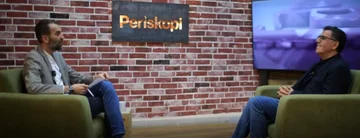
Periskopi(6 years ago)
(6 years ago)It is important that there is already a much more active role of the United States of America in talks between Kosovo and Serbia, but Kosovo has expected more from the meeting held at the White House, says in an interview with Radio Free Europe Vjosa Osmani, Kosovo Assembly Speaker. It expresses [...]
It expresses the opinion that the Kosovo delegation in Washington has failed in parts of the agreement dealing with the country's constitutional name, with mutual recognition with Serbia, as well as the question of mini-Schengen. But, according to her, the main concern today is what is happening with the dialogue in Brussels, because Kosovo Prime Minister “has agreed to reopen the topic of the Serb majority municipalities' association”.
Osmani has stressed that on June 21st he has been excluded from the Democratic League of Kosovo and that he is already, considering the idea of a new political initiative, as a temporary “angation”. According to her, the idea of this initiative is commitment to “the state's collapse, democratisation of the country and the opening of the way for true professionals and integrity keepers”.
Ms. Osmani, after the delegation of Kosovo and Serbia to the White House, you have expressed disappointment with Kosovo's achievements there. However, at the White House, the day the agreement on economic normalisation has been reached, historically estimated. Did you expect more?
Vjosa Osmani: I think it is extremely important for everyone in Kosovo, but also outside Kosovo to make the clear distinction here, between assessing the role of the United States on the one hand and assessing the role of the Kosovo delegation on the other.
Of course Kosovo has expected more, because the Kosovo government itself has raised expectations. If you look at each report of the current prime minister in the Kosovo Assembly, you will see that at any moment, he has guaranteed that he will not sign just mutual recognition agreements, has guaranteed that he will not be affected by the country's Constitution, has guaranteed that he will not accept the mini-Shengen, he has guaranteed that he will not give up on the constitutional appointment of the Republic of Kosovo, he has guaranteed that he will not give up on Kosovo's right to have recognition and membership in the organisation, as provided in the Declaration of Independence, but also in the Constitution of Kosovo. In the end, however, it was the Kosovo delegation that signed, due to, of course, the demands of Serbia, where the Republic of Kosovo does not find mutual recognition.
I think the Kosovo delegation lost a great opportunity here, because if it is a country where Kosovo has been able to push its own interests, but also the region, then, as a result, before, it was exactly the US, because it was historically witnessed.
So, while my healthy and necessary criticism in a democracy, it's about the lack of experience of our delegation and therefore their failure to accomplish what it promised, it's in no way about the US role.
On the contrary, the US has offered a document where the parties are referred to as the Republic of Kosovo and the Republic of Serbia. As a result, it has shown once again that its expectations are both countries to know each other.
The second, the United States has not put forward border-related issues or association issues. These, I think, should make the difference clear. Just because our delegation has failed to do its best, we would in no way have to say that this criticism of the Kosovo delegation that can in fact help him to do better to act as critical of the United States, which, I am always saying in the two decades I am in politics, has irreplaceable role and has a existential role for our citizenship and for the success of this state as far as our international subjectivity is empowered.
Miss Osmani do you think this agreement has touched the Constitution?
Vjosa Osmani: There are issues directly related to the Constitution. Article 17 of the Kosovo Constitution imposes our institutions, like Article 8 and 9 of the Declaration of Independence, to be joined in international organisations. The Kosovo delegation, through these unilateral pledges, says that for a year it will pause this part of the Constitution and the Declaration of Independence, which is unprecedented.
On this issue, I say here for the first time, the reconciliation of the Kosovo side has been granted since February. I have been reported as head of the US Parliament, that Kosovo officials appointed -- not then prime minister, but others have given reconciliation for Kosovo to give up a period set by its right to join international organisations, which then necessarily affects the issue of recognitions, because they are linked.
Our bilateral and multilateral agenda naturally affects each other. This has been proven since 2008 onward. So these are issues that naturally concern the Constitution.
Second, the Kosovo delegation has agreed to refer only to Kosovo (Pristina), while the US has offered a document called the Republic of Kosovo. Now, the concession is made because Serbia has requested, but what our delegation has had to do is quite the opposite, so it requires that this be one of the key points remaining in the agreement.
I think these are some of the issues, then there are other issues like mini-Shengen, which I'm seeing from the statements of officials that have signed the agreement and others who stand behind it, is that they still don't even know how this issue of mini-Shengen will apply, and it's a pity they accept something they don't know what it contains.
I think we should also talk about successes, and here success, as I said, is the fact that the U.S., unlike a policy that has especially existed around 2018, now clearly does not allow the issue of borders to be discussed.
On the other hand, they don't even ask for the issue of Association to be discussed, and this is extremely important as the United States policy in relation to Kosovo, which has been several months, at least since I was elected head of the Assembly, and in every speech in the Assembly, I have suggested that we should believe the US in terms of our borders.
Those we've had in doubt are the two presidents (Hashim Thaci and Aleksandar Vuciq), who had opened the subject of border correction or even exchange, as they called it from time to time.
I think it's successful and extremely important that we have a much more active role in the United States. Even the economic part is an important part, which is welcome for our entire region, but, where our delegation has failed the very parts, I said, which concerns the country's constitutional name, with mutual recognition and mini-Shengeni.
The fundamental hold today, I think, won't have to be what happened in Washington. Our fundamental concern today is what is happening in Brussels, because the information that comes to us every day from Brussels officials is that we have a lot of reasons to worry.
Unfortunately, the current prime minister is the only public official in Kosovo, who has agreed so far to reopen the topic of Serbian (most) municipalities' association. Second, it is the only public official to date that opposes the Constitutional Court's decision on Association of 2015 and has publicly declared yesterday (September 10th) in the European Parliament that it will fully implement the 2015 Association Agreement.
This deal as a whole has fallen down by the Constitutional Court, has been rejected, and sometime from the title to the final point of point nearly every part of it is considered contrary to the Constitution. Now the current prime minister comes out and says we should implement a document that is signed in Brussels, which is, according to the Court's decision, in full opposition to our constitution.
I think this is the biggest challenge our constitutional system made to him by a prime minister over the past few years, because every prime minister from 2015 onward, has said that we will respect the Constitutional Court's decision, therefore the 2015 agreement cannot be implemented. You must choose between your Constitution and the 2015 Agreement, or the document, because the court has considered it an intermediate document and not an agreement.
Now we have a prime minister who says he will implement it as a whole, and why he knows that according to our own court, he is in complete opposition to the Constitution. It creates executive competencies for that association, which is a kind of step, towards a territorial autonomy with executive competence for Serbs in the north and, which is a kind of preludi, kind of a preliminary step for separation, because we know what is happening today in Republika Srpska.
So, more or less, it is the same model targeted by Serbia, to be built north of the country. Therefore, now so easily say yes, we will, and we will even establish it as part of the final agreement, which will be reached in Brussels between Kosovo and Serbia, I think it is one of the biggest failures, if not the largest in the entire negotiations between Kosovo and Serbia, that took place under the European Union's mediation from 2011 onward.
Does this mean that preconditions for new agreements are being created in Brussels?
Vjosa Osmani: Yes, that's what's happening, because what we're hearing, because concrete information in writing still doesn't have anything about what's going on in Brussels, but from the statements being issued, it's said that the issue of Association, which has been closed to our Constitutional Court's decision.
Also, the property issue -- which has been closed to the Republic of Kosovo since February 17th 2008 -- has been reopening and minority rights issues -- issues we have closed with the Ahtisaari Pack and with the Constitution of the Republic of Kosovo. This, because you know, with all those concessions being made in the Ahtisaari Pack, Kosovo had come to the edge of full defunctity. Now if steps are taken further into practice, it will mean a new Republika Srpska in the north, and defunct our state, will create successive crises, and this is actually not good for us or for the region, because the region will continue to be in crisis, as is producing the Republika Srpska crisis, which is part of Bosnia, and it will need the European Union and the United States to contribute to stability.
The time has come for the chapter with Serbia to be closed through mutual recognition, but it is not mutual recognition. Period. It is mutual recognition, at the current borders, without affecting the Constitution of Kosovo, without touching our domestic state arrangement and maintaining Kosovo functional state with full sovereignty. Then there is mutual recognition, and not by calling for mutual recognition, to be irreparable damage done within the Republic of Kosovo.
For these things, the Kosovo delegation must be extremely careful. To me, it is surprising how the political spectrum today is taking the prime minister's statement yesterday so calmly that it will implement the 2015 Association, despite the fact that the Constitutional Court has brought it down.
You know there have also been violent protests in the Republic of Kosovo, there has been a major political and security crisis for nearly two years due to that agreement. The Constitutional Court finally brought it down, and now we have a government that wants to push it forward, even though I know that the model that gives executive competence to a body that can eventually be divided, is too dangerous for our country, and that much more is contrary to the Constitution.
So, it's so easy to say that, yes, I'm renegotiating a subject that is contrary to the Constitution and then to come before the Kosovo Parliament and without any shame to say I never talk about the Constitution, it's really something that would have to be unacceptable to anyone who thinks about it, for anyone who thinks how our state will survive in the coming years.
You mentioned mutual recognition between Kosovo and Serbia. But do you think these expectations are real in the phase in which the current reports between Kosovo and Serbia are in?
Vjosa Osmani: Current reports between Kosovo and Serbia are how they are due to Serbia and never because of Kosovo. I think that one mistake, that our institutions have made over the years, is that we have constantly swallowed up and not told the truth of Serbia's crimes at that table. Now, this so-called process of normalising relations between Kosovo and Serbia has more served to normalise (the president of Serbia, Aleksandar) Vuciqi as a politician, from a former Milosevic propaganda minister, to a person now considered to be pro-European, open and otherwise.
So it has normalised Vucinqi in front of the world, but at no time has it normalized the reports between Kosovo and Serbia, because Serbia does not want normal reports. Serbia lives causing the crisis. Look at her story. Even now, the very story. It means, causes crisis with Croatia, causes problems even with Bosnia, causes problems with Macedonia and (North).
As for the church report, it causes problems even with countries beyond. It causes problems with minorities, causes problems with journalists, violates human rights in such an extraordinary way, and still survives. Why? Saying “are compromising”, simply sitting on the table. Serbia is not making any compromise by sitting at the table. Take it and look at the list of concessions the Republic of Kosovo has made from 2007 onward and then look at Serbia's list of concessions. I assure you that the Kosovo concession list will take you days to read it. As for Serbia's list, you will read it in two seconds, because it is small and for more, it has not applied even the few it has done. So Serbia is not making any, no compromise.
Kosovo compromises with itself the fact that it sits in front of an aggressor who has committed genocide in Kosovo has never apologized and yet hides the bodies of our most beloved. I still hide bodies of murdered children, entire families in Kosovo. And Kosovo, simply, has been silent before such a reality, so that we have an aggressor who is holding the bodies of our citizens hostage and has accepted some kind of situation that tells Kosovars that “you also have to give something”.
We've given our most expensive. We've given our people, many of whom are still unknown where they are, because they've been in mass graveyards in different parts of Serbia. When you give your most expensive, up to a thousand children, of course it is completely the wrong approach for Kosovo to sit at the table with the claim that you have to reward Serbia with something additional, for the crimes it has committed, whether with territory or with autonomy for Serbs, which it will use if it is formed, to destabilise Kosovo for more decades.
Mrs. Osmani, we're going to another topic. Are you part of the Democratic League of Kosovo (LDK) or is this already only formal?
Vjosa Osmani: The Democratic League of Kosovo has made the decision to exclude me, on June 21st of this year, from the positions I had on that political subject, in which I have been active for 20 years and this has been their decision. It wasn't my decision at any moment. It was the decision that I rejected, because during the entire period, that a majority within the current LDK structures has opposed me. I was the one who defended the principles of the LDK and the principles we've stood by our citizens in the last election.
Those who expelled me, however, have made the opposite. So neither the principles of the LDK nor the values of the LDK, nor the less the word given to citizens. That was their choice to expel me. So, the division of the streets, it was their decision and of course they didn't leave me any other way, because the moment you get kicked out, you can't just stand by the door and wait until that door opens again.
So you're outside the Democratic League of Kosovo?
Vjosa Osmani: I was excluded from the democratic League of Kosovo on 21 June. This is the reality that many people are trying to relativize. But the truth is this. It's the only truth and there's no truth. Call it an exception or a discharge or whatever you want. It's an escape. I've been taken away because they don't want my contribution. I've been taken away because they don't want my attitude, they don't want my ideas, they don't want my presence. In fact, they only loved them in times of choice, but now they are not loving them anymore. So it's been their decision to continue the course they've chosen, which is a course contrary to the will of the October 6th citizen. They've chosen another path and wanted to walk without me. It's their chosen way.
Did you have an offer to switch to the Vetevendosje Movement?
Vjosa Osmani: Even the Vetvendosje Movement, but everyone else knows that I'm not a bidding person, with transfers, with such cases. We sit down and discuss how we can cooperate in the future so that we can help this country deal with the number one challenge, which is the capture of the state. So my cooperation with them is in this context.
With every man in Kosovo who has such a good purpose, I cooperate. But I made it clear that I don't have any intention of moving into any of the other subjects.
At the moment, together with my associates I'm analyzing what my political commitment will be, if there are elections soon.
You have warned a new political initiative. Do you see this as the only way to remain in politics right now?
Vjosa Osmani: Now, the odds are many. But I have to choose the best opportunity to contribute to my country moving forward. As long as the LDK doesn't want my contribution, I'm forced to see how this contribution is channeled in the best way.
Initiative is something we're discussing. So, we're just at the stage of the discussions on how this could work out, with intellectual people, with people raised, with people who love this country, with professional people and integrity.
Many times in Kosovo, the impression is that any political initiative or any ideas you want to advance even nothing without the initiative should be done only with people who are currently in politics.
No. Believe me, the best people, the professionals, we've been out, because they've had so much of what's happened in our institutions for 20 years, that they've found themselves more working in the private sector, even in other ways, even abroad, our diaspora and continued their contribution to the country, but not within institutions. So, now, to assume that any new initiative should definitely just do some kind of grouping and reorganizing of the current people, I think it's wrong.
We must finally make sure that the doors of our institutions open to professional people, to people of integrity, to young people and people who have what they give to these institutions and to the country. But, I repeat, these are just ideas that we discuss right now. Whenever new elections are announced, then we will see it concrete.
So you don't know who's going to be part of this initiative, do you?
Vjosa Osmani: Maybe it's even known, but it's a matter that's concrete a little later, because, as I said, it's still on the level of ideas and when we're discussing ideas, it's too early to talk about people. It means that only when such an initiative was to be consolidated would it be formally registered and then it is worth speaking with names. For now, we're in the process of discussions, so there's no point in talking about names right now.
What's this initiative going to do?
Vjosa Osmani: For the purpose of the state, the democratisation of the country and the opening of the road to real professionals and people of integrity, to make this state the way our citizens deserve and make this country a place they'll boast of, not a place they want to leave.
When it comes to your commitment to the party, do you see yourself in the future only in the Democratic League of Kosovo or even in any other party?
Vjosa Osmani: I will wait to see what happens in LDK over these years. If there really is a reform movement that highlights people who keep their word public, they have responsibilities for the public word, they don't mix with parties that are prominent for crime and corruption, but are really interested in making Kosovo a state where there is hope, especially for our youth, then of course I will return.
Therefore, I also make the commitment to these choices that may come soon, I see it as a kind of temporary commitment, and it is also a vote for reforming the LDK, because it will be a message that LDK really needs to reform, needs to change, it has to be opened for people who keep their word and not to consider, what has happened from October 6th and beyond is normal.
It's not normal to stand up to citizens with something completely different and now to serve by completely diverting their will, something completely opposite. In a democratic society, it is not normal and we should stop and not try to normalise it further, to reason with the fact that each party enters the elections only to govern. No, not to govern yes, but to govern well, to govern with proper partners, to rule with people who are not involved in crime and corruption, to protect your country's interest, giving example that when you tell citizens something, you are responsible for the public word.
That's how it's governed in a democratic country, you can see, every single one of us that we've lived in developed democratic states for a period, we've seen what good governance means, not just saying the goal is power. It can't just be the power of purpose, it takes the political party, governance or power to use it to achieve something good for citizens, not to achieve something good just for itself. So, I'm also saying, this is a temporary commitment to me in order to help from abroad, others to help from within the LDK restore its true values.
President Ibrahim Rugova remains our historic leader for many reasons, for strategic orientation and much else. But the most important thing they never mentioned is that he loved his people, loved his own people, never lied to them, that's why they loved him, that's why they never turned their backs on him, that's why he remains the most popular leader in our history, that's why he was president of all, not only of the party, because he had public responsibility to the word he gave citizens. So, he hasn't entered the election just to get some power, but he has entered the election so he doesn't turn his back on his citizens. So, even now when I hear these ideas, not somebody will get so much and so much, I say one thing: the good thing is that citizens will finally decide about it.
Through the initiative, which you are warning him of, will there be red or green lines of co-operation with certain political subjects?
Vjosa Osmani: Of course there will be. However, a little bit slow down because I'm saying, the initiative has not been formed, it's just an idea, it's an idea that aims to enable a group of professional people to become part of politics and help the country, institutions, by making professional and integrity contributions. If this is to be done, I've made it clear earlier and I repeat, we see it as a coalition partner, or at least so I think, but other collaborators we discuss, as one single partner and uncontainable to this phase we see Vetevendosje movement, along with which I believe we could build a principled coalition, which is meant to deal with the most impressive problems of our citizens.
Despite the fact that I continue to believe in centre-right values, they're a centre-left party, we have numerous examples around the world, for example in Germany, but other countries, when for greater reasons and causes they've put on common schedules, and ideological differences will see in the meantime. But it's a far larger cause that could bring us together to rule in case we can, of course, consolidate something that I repeat, is at the moment at the stage of ideas.
Mrs. Osmani, during your term as Kosovo Parliament Speaker, in many cases has been marked the degradation of parliamentary language and parliamentary behaviour, on the part of the appointed deputies, including you. Why, you think, has it come to such degradation, and is there sufficient effective sanctions that can prevent such language and behavior?
Vjosa Osmani: Not unfortunately, there are not enough sanctions, but we are working in this direction with the new Kosovo Parliament regulation, which is still a draft. It's a bad situation because you only hear those on the microphone. What happens there means the number of insults in relation to me every time I go into the microphone, every time I'm running the session in order to completely degrade the guidance of the hearings, I'm talking about certain MPs, it's huge. But I'm used to ignoring most of them because, first of all, many of them show their own manners and the second point is that they haven't come there, some of them, to contribute to issues that are in civic interest, but to show behavior that, unfortunately, as those years witnessed, often even are bandisque conduct. So, such ones should never be allowed in the Republic of Kosovo's Assembly, but as I said, response opportunities exist, but the problem is that for their implementation it is a major complication of how it is envisioned in current rules.
So, often there are deputies there who have told me I'm harsh, but the problem is, they have to understand it once and for all, as head of the Assembly I have clear duties. If an MP prevents the management of the session is my duty, it's not my job to warn that deputy. I just do my duty. But there's been various attempts, as if someone deceived them, that I could be afraid. Let them forget that with the attacks, the tryst-denigation, with their insults, that they can scare someone, let them forget.
Ms. Osmani, Kosovo President Hashim Thaci, has prosecuted in the Kosovo Assembly a request for the Constitution's adoption concerning the continuation of the mandate of Specialised Chambers and the Special Prosecutor Specialised in The Hague, who is known as the Special Court for War Crimes in Kosovo. Before this is prosecuted for voting by the Parliament's deputies, you as speaker of the Parliament, must submit this proposal for assessment to the Constitutional Court to assess whether the proposed amendment reduces any right or freedoms defined in the Constitution. When are you gonna send him?
Vjosa Osmani: The Kosovo Assembly has not yet been collected and since 14 September, as envisioned in the Constitution of the Republic of Kosovo, the entire Parliament administration will return, all MPs will return and only from that date we will be able to accept documents -- proposals -- from Monday onward. As soon as that document is protocoled, the moment the Parliament returns and starts working, because in the period of rest set forth with the Constitution, the Assembly does not work, so it does not meet to examine any of its troops, I will consider it as the head of the Parliament, I will actually take that document and act as the Constitution requires, as the 24th Constitutional Amendment requires, and as required by the Law for Specialised Chambers.
On the other hand, of course I will carry out my constitutional task, but a glance at what has been proposed as much as I have seen in the media shows there is an amendment to an issue already resolved, because the mandate of the Specialised Chambers continues automatically as you know, in accordance with an agreement that has been ratifieded in the Kosovo Assembly, envisions that a kind of announcement is needed on the part of the Council for the outcome of this mandate. That announcement has not yet come, therefore the mandate and very little, the amendment to the Specialised Chambers continues yet to operate on full mandate. /REL