4 months ago
Rukiqi: Up to 50,000 citizens can lose their jobs because of pandemic
Periskopi(6 years ago)
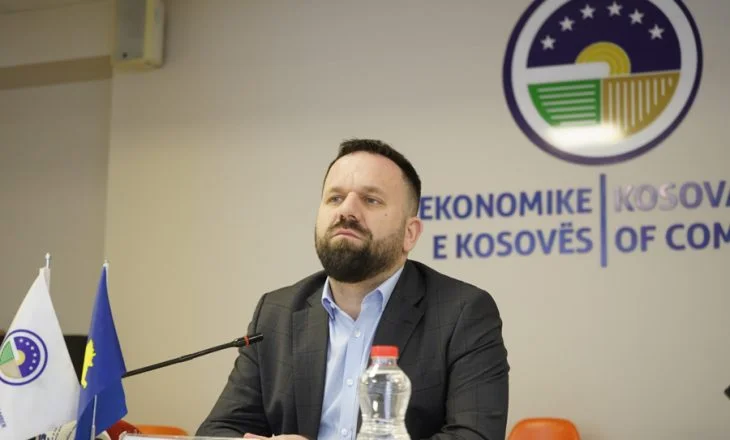
(6 years ago)As a result of the COVID-19 pandemic, up to 50,000 Kosovo citizens could lose their jobs, says in an interview for Radio Free Europe, the chairman of the Kosovo Economic Ode, Berat Rukiqi. In order for jobs not to disappear, the Kosovo Government's intervention to support businesses is [...]
In order for jobs not to disappear, the Kosovo Government's intervention to support businesses is necessary, Rukiqi says.
Kosovo's economy, according to OEK, has marked losses of up to 10m euros a day during the closing months of March 13th, while losses are continuing as austerity measures continue to continue to be restrictive in the power.
What situation is Kosovo's economy in today?
Berat Rukiqi: Today, Kosovo faces the worst crisis since the post-war crisis, it is an economic crisis that is not due to any ordinary movement, either in macroeconomic indicators or in developments in global markets, but has resulted from a health crisis, which in this case relates to the spread of the COVID-19 pandemic.
If we analyze the cause of the crisis, it's unusual. It's something that countries aren't used to dealing with, even developed countries, and on the other hand, for developing and developing countries, such as Kosovo, these kinds of crises affecting the entire economic chain, are more difficult to deal with knowing the limitations, whether in resources or finance or in policy instruments.
For us, it is a crisis that creates many problems, as it is difficult in a country like us, that we are going through various political crises where we are facing political instability, to manage successfully both the health crisis and the economic crisis at the same time.
It is more important to deal with these crises properly now, because they can leave irreparable consequences, not only for specific companies, but for the entire sectors of the economy.
What are those irreparable consequences?
Berat Rukiqi: We can easily lose many companies, which may be forced into bankruptcy procedures and perhaps even full bankrolling, and at the same time lose many jobs, which are hard to create in Kosovo, even when the economy has had a growth trend.
These may be the two main consequences, and this in the sectors that are mostly hit since the first day of imposing restrictive measures, but even when the economy has opened that has been facing the apparent decline in circulation.
Which economic sectors in Kosovo are mostly affected by the coronary pandemic?
Berat Rukiqi: From what we are seeing right now, we have a negative impact on the part of tourism and gastronomy, on transportation, but in the medium term, many problems may arise in the retail trade sector, but even on the construction sector because of the decline in purchasing power, it directly affects these sectors.
Any estimates from the Kosovo Economic Oda have been made of what could be the losses caused to the Kosovo economy?
Berat Rukiqi: We may have an exact estimate that is up to 10 million euros a day of losses in the period where the entire economy was closed, so we're talking about March 13th through June 1st, but we don't have accurate data for the period after June 1st and until now, when we formally have the opening of the economy, but we have an obvious decline in circulation.
Perhaps at the end of September we will have a more accurate mirror, and we will also see financial reports of businesses and business assessments.
But, we can say, that we have a drop in circulation, we have a lack of consumer confidence that lives in Kosovo that doesn't spend, either it doesn't come out to spend, with fear of infection, or there's some kind of uncertainty about the future, so they are reluctant to spend. But we also have a lack of circulation that comes directly from a lack of diaspora visits, so the decline in purchasing power has affected every sector.
We may not have an accurate estimate of losses, but if we see these predictions discussed in international financial institutions and market movements, Kosovo can face an economic contraction of up to 7 percent. Kosovo's government has gone to a more positive version of 3 per cent, but if we speak in certain values, losses can bring no less than 500m euros to the local Bruto Product and may be even higher unless adequate economic recovery measures are taken.
Many businesses have claimed to have suspended workers because of restrictions on business? What could that number be?
Berat Rukiqi: If we consider potential economic contraction figures, of course we can talk about a number of up to 25 thousand jobs that could be lost as a result of pandemic. This is in the most positive version and may go up to 50,000 and more depending on the length of the pandemic, but at the same time from the management of pandemic in general, from restrictions that the pandemia can create and the government will take.
In order to reduce the number of job losses, there is now a role of intervention of the State in supporting business, especially in the share of access to finance, the share of production, in increasing purchasing power.
Has the state of Kosovo had adequate business support during this time of pandemic?
Berat Rukiqi: As a result of a political crisis that is following us even during the time of pandemic, we have delays offering state support for businesses. Mostly, there is a focus on the emergency part of that endangered category that was private sector workers and designated companies, especially small and medium-sized enterprises.
In all these possibilities that have been to support business in the emergency part, we have failed and this has lost meaning. Emergency assistance unless provided in an emergency period does not achieve its effect. Now all expectations are in the phase of economic recovery and are the last moments that must be intervened in order to save the private sector.
How long can economic recovery take?
Berat Rukiqi: With this trend of spread of the virus and all restrictions, we cannot expect a recovery of the economy before the end of 2021. / REL