4 months ago
Italian medical professional addresses Kosovars: Don't underestimate the symptoms
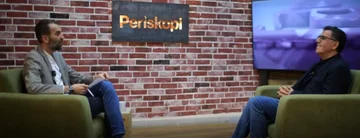
Periskopi(6 years ago)
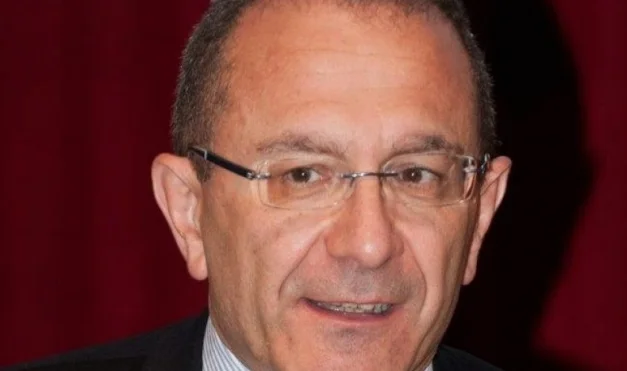
(6 years ago)Giseppe Ruocco, Secretary General, Chief Medical Officer at the Italian Ministry of Health and a member of the Scientific and Technical Committee's Consultative Organization for Civil Protection, one of several subjects with a crucial role in managing COVID-19 in Italy. Because Italy was one of the first states to face evala [...]
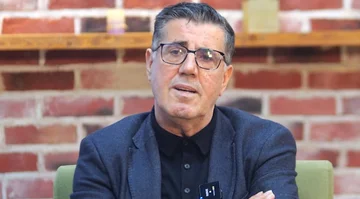
Giseppe Ruocco, Secretary General, Chief Medical Officer at the Italian Ministry of Health and a member of the Scientific and Technical Committee's Consultative Organization for Civil Protection, one of several subjects with a crucial role in managing COVID-19 in Italy.
Since Italy was one of the first states to face the first pandemic, we asked Giuseppe Ruocco to shed light on the situation with COVID-19 in his country and to give some advice for Kosovo.
What is the current situation in Italy regarding the COVID-19 pandemic? How is the State reacting?
The situation in Italy has improved greatly compared with what we had in the spring, although it still cannot be said that the virus no longer circulates within our country. However, we have had a number of smaller explosions, which, up until now, have been successfully isolated and did not lead to further expansion of the pandemic. The virus is still present, it is still being transmitted, and during the past few weeks, its presence in Italy has also increased by the arrival of people from abroad who are either sick or carrying the virus from countries that are currently experiencing the worst stages of the so-called first wave. Therefore, other precautions have been taken regarding arrivals from a number of states. It might be said that the reaction of the Italian population is at the moment two-phase. On the one hand, we're mature, we're aware of what customs to adopt (such as social distance, use of masks when social distance is not possible, frequent and complete washing of hands), and we're all aware of these rules. On the other hand, the desire to reverse normality and reduce the number of cases moved people to do things that they normally would not do, given this critical moment, such as approaching other individuals without masks in certain situations in the evening including festive locations where there is a increased desire to resume normal social life. In such situations, we must somehow resist impulse and restrain our desires.
What are some of the strategies that are most useful in isolating the epidemic (considering governance and communication)?
As far as governance is concerned, what is certainly evidenced is that our operational monitoring system is very useful, which gives us a weekly table with an array of indicators that gives us a general view of the epidemic, numbers and response of the system. However, this system was not fully functional from the start, since it required the dedication of regions, local health authorities, central government, and scientific organs. Moreover, the system helps people and other relevant subjects in the operational chain to feel that there is a responsible institution, motivating them to do their part, while helping to quickly identify possible viral returns, which certainly cannot be disfellowshipped, given that this kind of viral pandemic in the past has shown ʼvals of return even to a lesser extent. As such, this is our first effective tool. The second tool at our disposal is to resist unlimited and hasty reopening. We had started reopening the state into various stages starting on May 4th, yet a number of activities are still not allowed, especially mass gatherings such as those seen at sporting events. We also delayed reopening schools, given that the effects of pandemic have not yet been clearly identified. Surely, measures preventing unconditional reopening come with a number of goods and evils, however, remain the second strategic factor. The third strategic factor was investment in a series of state-funded improvements that are slowly taking place, bringing about the possibility of better implementation of contacts related to infections, improved monitoring of patients at home, and supervision of individuals who have to stay at home. The fight against Avid-19 is also fought outside the hospital.
What message or advice would you give to Kosovo public institutions/subjectors, and state medical staff, given the increasing number of cases of COVID-19 there?
Although they currently face a serious situation, the positive side is still seen, they have access to collective experiences of countries that have already gone through the worst moments of pandemic. I can guarantee that the harsh application of measures mentioned earlier really works, and although they may not finally solve the problem, they serve a dual-positive function. First, these measures reduce the spread speed of the virus, which then results in reducing serious cases, and reducing the impact of pandemic on the health system so Kosovo buys time to deal with this emergency. Second, this should be accompanied by major diagnostic skills, such as strands, where more fast and standardized laboratory tests are now available. Kosovo certainly has some advantages available to them that it uses in the best way, the most important thing is that they do not hesitate to take tough measures if necessary. It is essential that the measures mentioned above be combined with precise communication initiatives. In my opinion, it is of great importance to keep the clear chain of communication in handling such emergencies. That means knowing the individual who distributes information, reasons, and ensuring that they constantly convey that communication with maximum transparency, without distorting information, and as necessary, they admit they do not know all the answers. This is especially true when the situation is still under study, since false sense of security is dangerous, and subsequent failures can cause individuals to lose confidence in the authorities who are dealing with the pandemic. As a result, transparency, intellectual honesty, clarity of communication, and the deadline of communication, I believe they are essential elements in dealing with all types of emergencies.
What advice would you give the Kosovo population, and what can they do to help improve the situation by defending themselves?
I would advise Kosovars to follow instructions given by their health authorities. Do not underestimate the symptoms, for even if someone shows mild symptoms of COVID-19 (as often occurs), it does not guarantee that those infected with them will have mild symptoms. As a result, individuals have double responsibilities for both themselves and their community - irresponsible behavior like walking out of the house when the person is not feeling well is not a good idea. To that end, all can and should contribute to resolving pandemic by adopting appropriate precautions. This should be accompanied by preemptive measures mentioned earlier: social distance, use of facial mask in closed environments, or social distance is not possible, as well as frequent and complete washing of hands. I want to point out for individuals who may be sick: do not try to bypass isolation because it is not wise to act wisely, rather respect elderly or chronically ill individuals who, as we have all seen, are more vulnerable to the virus.
Interview: European House