4 months ago
Haradinaj: In Washington, Kosovo must go for final agreement with Serbia
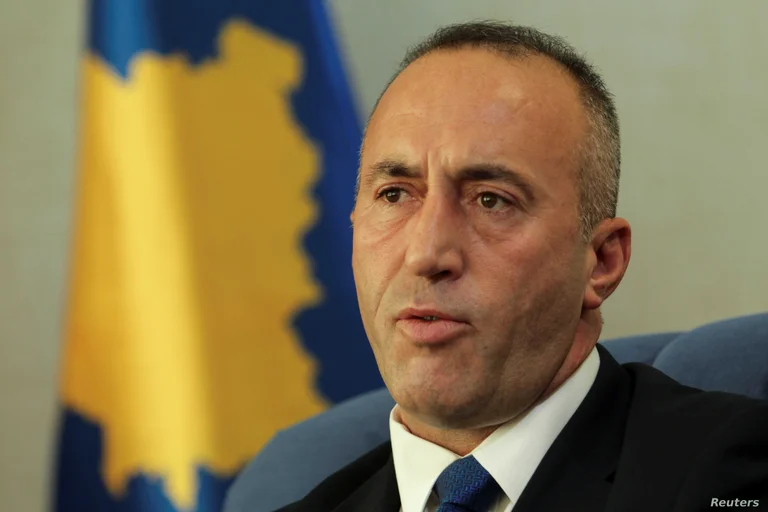
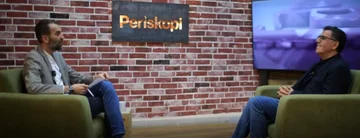
Periskopi(6 years ago)
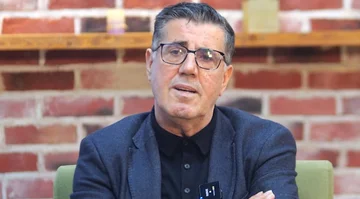
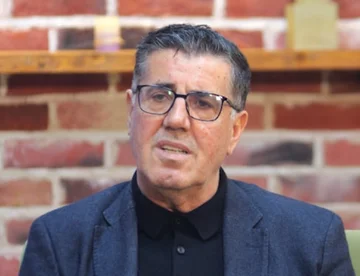
(6 years ago)Alliance for the Future of Kosovo Chairman Ramush Haradinaj says that at the September 2nd meeting in Washington, Kosovo must go for final agreement with Serbia. In an interview for Radio Free Europe, former Kosovo Prime Minister Haradinaj says the US is giving attention to resolving disputes between Kosovo [...]
Alliance for the Future of Kosovo Chairman Ramush Haradinaj says that at the September 2nd meeting in Washington, Kosovo must go for final agreement with Serbia.
In an interview for Radio Free Europe, former Kosovo Prime Minister Haradinaj says the US is giving attention to resolving disputes between Kosovo and Serbia should be used. Haradinaj also tells of his claims to become president of the country, as well as about the possibility of expanding the current ruling coalition.
According to him, as the PDK gets into government, dependence on the Serbian List is halted.
Radio Free Europe: Mr Haradinaj, a meeting between you and the ruling coalition partners has been warned, which could probably happen in the days ahead. What are you gonna talk about?
Ramush Haradinaj: I was insistent that Washington's return to the issue of dialogue be required. We have seen a contribution in the past from the EU and welcomed this contribution to the EU, but also the separate countries, such as Germany, France, Chancellor (German, Angela), Merkel and President (French, Emmanuel) Macro.
But we also realised that the EU delegated the issue of EU-level dialogue, in this case to Mr (the EU Foreign Policy and Security Representative Josep) Borrell and Mr (EU envoy for Kosovo-Serbia dialogue Miroslav) Lajcak.
Both are ungrateful, coming from non-recognition (of Kosovo independence). With that, the EU in a way dimmed our hope of expected success, namely the need for a final result in the long-standing dialogue process. In view of this situation, we have correctly realized that hope now remains only in Washington. We have always had confidence in Washington, but we have hoped that the EU will invest more in this process, directly closing the capitals like Berlin, with some senior official or even France and others.
Because it didn't happen like that, so I've asked the prime minister (Avdullah Hoti) to step back into this delegated agenda of dialogue to Mr. Borrell and Mr. Lajcak and look for Washington. So it was extremely welcome news from me to return Washington, the September 2nd meeting. However, we have a concern for the preparations we need to make. So the themes, the identification of subjects, the identification of matter that we can say yes to, but then the dating format.
It's no coincidence that AAK wants to ensure that it's safe. I'm calling it that for every sequence of conversations because we want to know that we've made the best for Kosovo.
Why do we have to trust someone else every time we can help? It was the occasion of meeting with (Serbia's president, Aleksandar) Vuciq. I am surprised by the decision, even though he is in the discretion of the prime minister, to leave out of the meeting, Justice Minister Selim Selim Selimin, who has sworn in to parliament as minister, who in the past has been in charge of dialogue, therefore, has consciousness, has institutional memory and has received a person who has just begun his work, chief of staff. So there will be reasons for us to treat them carefully.
If the question is asked: What are we going to Washington for? ) We're going for deals, for mutual recognition at the existing border. If circumstances bring this agreement, we are going to this agreement, but if there is progress, we also get progress.
Radio Free Europe: You have no hope in the European Union, that a final agreement can be reached without the presence of the United States of America?
Ramush Haradinaj: The EU has always been slow and this is not new. We too have a timeout. Here's an example: The EU, when I was chairman of the government, has asked me to ratify the Kosovo-Montenegro border agreement, which we have made with the public promise of EU officials that we will grant them visa liberalisation. Three years went by.
So such a very slow approach of the EU is highly unequivocal for dynamics, for developments in Kosovo, in Serbia and our region, especially given the fact that other countries' agendas. We see other countries, such as Russia, China, their dynamic interest in the region. I don't think Europe has shown a desire to resolve soon, so to reach a Kosovo agreement soon- Serbia has also delegated the subject to Mr. Borrell and helped Mr. Lajcak.
In my opinion this does not prove a desire to do this work in an opimal timeline.
Here's the difference. I believe Mr. Robert. O'Brien, in this case, has the right authorization, because he's the president's security adviser, and he has the backing of the president in this case of Ambassador (Richard) Green.
He has the support of the State Department, he has the support of the American administration. He also has the confidence of the parties, in this case Kosovo and Serbia, and respect.
So it's a real possibility and we shouldn't go with pessimism. We must ask that at this meeting, mutual recognition agreement be reached on the existing border. Under this agreement, there may then be topics for review because states even after a mutual recognition agreement until the establishment of diplomatic relations, but even after the establishment of diplomatic relations, discuss, negotiate protocols, and agreements.
We still discuss and negotiate protocols and agreements even with the Republic of Albania. You see, every time we meet, we reach new agreements, new protocols and this is something that goes on.
So, reaching an agreement on mutual recognition of Kosovo-Serbia, as if it were now on September 2nd, does not mean it will solve the entire list of topics between Kosovo and Serbia. So he can solve what's ready.
Radio Free Europe: So, do you think we can reach a deal now?
Ramush Haradinaj: We need to aim for this and search for it and it doesn't make us hide. Kosovo does not have to hesitate to say that we are coming to this meeting for final agreement on mutual recognition at the existing borders because this is the topic. If the Serb side is not yet ready, there is a demand for a different approach to the dialogue, they too can say what they are for.
However, Kosovo I think it should be clear to show honestly what it wants: We come to Washington for the final deal.
And to reach that agreement, there are certainly subjects that perhaps some of them are willing, some may even be addressed in the future. But, I tell you once again, mutual recognition is not done after completing all matters, I call it, of bilateral relations, because these bilateral relationships continue for eternity and in eternity there will be subjects and subjects, of discussion of subjects, protocols and bilateral agreements.
Radio Free Europe: Some analysts say American President Donald Trump needs another victory in foreign policy on the eve of the elections. Do you expect substantial deals, quick?
Ramush Haradinaj: Yeah, I see hope here. Look, if the president of America and his administration, in times of choice, have time for us, this is a big victory. We need to understand what that means.
So we've managed to enter the presidential candidate agenda, which is also current president (Donald Trump), and we need to understand that this is really a given opportunity and we have to aim to use this opportunity. Under other circumstances, we will wait many more years. It is an ideal moment, why not give a victory to all who achieve it.
We, at the time of the administration (President Bill) Clinton have been released at the time of administration (of President George W.) Bush has met, in the time of President Trump Serbia may even recognize us.
So why don't you close this cycle in such a good way, and I hope so.
So, it does not rule out the possibility of a final agreement on mutual recognition at the existing borders between Kosovo and Serbia at this meeting. It's not impossible, impossible. Both Serbia and Kosovo should provide epilogue to a bilateral relationship. There's also this opportunity, to call it, of pre-communication, an economic aspect, another aspect that is being spoken of.
Maybe this is a hit too, but why not ask for the final deal? What needs to happen in the world or in the Balkans, so that we and Serbia can't move forward. To understand Serbia cannot move forward without good neighbourly relations with Kosovo, without mutual recognition.
I don't think we have to condition Washington's meeting with forms. It would be a bad approach for us, and we would in a way free Serbia because Serbia expects some of our mistakes before this meeting.
Even this fear that a bad solution is being prepared in Washington, never in Washington is a bad solution prepared for Kosovo. We can make bad proposals and agree on bad ideas, but Washington has neither bad ideas nor proposals for Kosovo. We can make those mistakes. We should be careful, but not afraid of Washington.
Radio Free Europe: What will be your concrete demands for Prime Minister Hoti?
Ramush Haradinaj: I've talked to the prime minister over and over. I have liked the question of shaping principles, of maintaining integrity -- that is, not violating territorial integrity, of borders, of the unitary character of Kosovo that implies not a third power and constitutionality.
So these are solid principles on the basis of these I believe will move forward.
Reaching a Kosovo-Serbia agreement, not violating territorial integrity and borders, not violating the unitary character that includes preserving constitutionality, in this case that our Constitution makes us unitary state.
So, we give strong support to the prime minister, the Kosovo delegation, which in this case should be complete, no experiments should be done in these cases, people who have just received responsibility. The prime minister is new on this subject and to take over the new staff chief, with respect for the many recognitions he may have.
There are no experiments on these cases. Serbia is a state that has its own institutional memory, expertise and mechanisms.
We need to make good use of our capacities, the help of our allies, experts and friends.
During my time of government, we have had a group of experts as well as assistance from our allies, but people in the country, in this case (current Justice Minister Selimi), Selimi, who may think I have some specific intention of why I insist he should be there. It is not just AAK's, it is Kosovo's, it is the memory of the last three years in dialogue.
Radio Free Europe: Your party's Steering Council has given you confidence, eventually to hold talks on reconfiguration of the government, including the president's case. What does that mean?
Ramush Haradinaj: Now we see that the situation in Kosovo can also be difficult, so in terms of policy following the proposal of charges for president (of Kosovo), Thaci, for the (Democratic Party of Kosovo) chairman, Wessel, so we can come to an institutional crisis if the president is accused.
Finding a solution to that would then imply a bilateral negotiation, in this case of us being coalition partners, with whom we have an agreement, for example with the LDK, with the AKR Initiative, and communities to govern.
“With the PDK coming to governance, suspension of Serbian List”
However, opening this agreement will now be required on the president's case. In concrete cases, a new partner will be requested. This new partner could most likely be The PDK, and we welcome finding a common agreement.
However, a change occurs here. The truth is that with the PDK coming to governance, it breaks down its dependence or dependence on this government and the Serbian List, but we also lose a crucial role that we have, to call it, at hearing our voice on decisions on national interest.
But even with LDK, in certain cases with Prime Minister Hoti, we have some strange situations when he has made some decisions without prior consultation. So that worries us.
Then, we listen to Mr. Haziri's first or the second vice president, Mr. Haziri, when he speaks out publicly that we should give Leposavicin of 18 villages. Being this, we no longer care to grant legitimacy to a country government and institutions just because we have little power and no decision-making, and then we become participants in the decisions of these political forces with respect for most of them but who have given evidence of instability on national interests.
It would be a burden he cannot carry on his back or his conscience. We also have bad experiences with demarcation with Montenegro, with the matter of the municipal Association, where unconstitutional was found by our court.
The alliance is ahead of two solutions, both very difficult. The first is to continue being a part of power and decision-making, but to condition it on taking a decision-making position of the president, and that's the logic of why the AAK Steering Council has authorized me to negotiate even on the president's case so that we are not excluded from the decision-making desk.
So we don't grow power with the president, but we just keep the possibility of being at the table where the decisions are made.
If we don't get the president now, since we're the smallest party, The PDK and LDK, on behalf of a majority in parliament, can overdo us in any situation and on national interests topics. In this case, the situation is now sensitive not to the LDK, because the LDK cannot have the first two responsibilities as well as the chairman of government and president. Even the LDK, in fact, has not expressed ambitions.
Former Prime Minister (Isa) Mustafa has not expressed ambition for the presidential post. He is not interested in opening the package, so to dismiss this government, nominated a mandate, to wait for those two famous weeks to send letters to Vetevendosje, to fall into disparate procedures.
And which is that we, I am in a difficult position with the PDK, because the president was once in the PDK. But I also think about The PDK, I hope, will have understanding from them as well, because in these sensitive situations, if the Alliance should be a partner, it should be possible to make decisions. Otherwise, just to keep a government alive for a bit of power, for the Alliance we know the way to go home, because we've known in the past, we're going to go to the elections.
Radio Free Europe: Now you don't have the power to decide, are you part of the coalition?
Ramush Haradinaj: While we are like this, still the government depends, most of this government depends on us and for that we still have access to decisions. When we have LDK, The PDK in the government and the president to assume it is one of those parties from the PDK, the prime minister from the LDK, have majority votes. Then we will be really unnecessary for any vote in the government or in parliament that does not require two-thirds, but national interest is affected. And based on that, we even vote like the opposition will be late after that, while experiences are not so good, so we have many cases where we really happen to be in bad positions with (the ruling coalition), not with the opposition. There have been cases when the opposition had principled attitudes, but we had problems within the partnership.
Radio Free Europe: How is the inclusion of the Democratic Party of Kosovo in the coalition supposed to expand this government?
Ramush Haradinaj: It's connected to going to the election or not. The PDK is the formula for whether to go to the elections or not. If we don't want to go to the elections, then we have to find a common language with the PDK or with Vetevendosje. But as seen in today's coalition, so LDK- AAK-Nisma and others, the mood is more with the PDK than with LVV, at least that's how it's seen.
But I welcome this coalition. But I also don't feel the Alliance ready, only to be a supporter of a coalition, power tomorrow, in which the Alliance has no decision. So the Alliance fades decision-making into a majority of LDK- The PDK, especially fears, is on national interest themes, as has improved borders or similar. Because there is the danger of the two big partners' deals, which make the position of the smallest partner unnecessary and insignificant, in this case the Alliance.
Radio Free Europe: If the PDK refuses to enter this ruling coalition, what will happen?
Ramush Haradinaj: If (the PDK does not enter the government), in this case going to the polls is alternative. So the choices are, unless the LVV offers any formula or option even if they are not to go to the elections, they can propose a certain formula.
Radio Free Europe: How do you assess the work of the ruling coalition so far?
Ramush Haradinaj: It has attention, its focus on daily governing topics. It's also what they really expected, a government of normality that will work intensively, restore normality to the country. He's in a challenging situation. I see some government decisions are criticized, such as the Trust's 10 per cent or any other decision. It's under a lot of pressure.
This government is bound every time, I say that every three months a budgetary analysis should be made, and all the free funds, or the free budget, that has not been spent, has not been invested, relocation to citizens, in people because it is a very serious economic situation.
We're finally hearing the consequences of the construction sector. The construction sector connects many, extremely many people in Kosovo, many families. Not only do they work but even small companies working for them.
The situation with the pandemic is also tragic. However, there is great local mobilization, even of the ministry, government, of the rule institutions, law and security, it is a serious dynamic at work. The circumstances what they are because I don't say that the situation is perfect. I know it's a challenging situation, but the circumstances we see are really, I'm calling it a responsible government, a government that is focused, a government that engages, a government that, with its own capacity, really engages to deal with the situation.
Radio Free Europe: This government is stable, can it last long?
Ramush Haradinaj: The government and governance are stable in Kosovo. We're talking about decoupling national interest themes, which if they take the wrong direction, each of us has a constitutional duty to stop. So it's like protecting our homeland or other times when we can't make mistakes.
Radio Free Europe: Kosovo Government Prime Minister Avdullah Hoti and the chairman of the Decani municipality, Bashkim Ramosaj, have agreed to suspend the work on Decani-Plava Street, which in a part affects the particular protected area of the Decani Monastery. What is your opinion on this?
Ramush Haradinaj: The road is a necessary project for the community, for Decani population if so, but it also connects a region that is truly isolated - the Plav case on the other side of that mountain. The road is meant to bring people, cultures, beliefs, and we believe that there will be a right solution for this path to come back to life, and it offers, I say, once again, people, cultures, beliefs and ease the unreasonable prejudices that exist.
I think there'll be a way out. So I see no reason for a very simple, very routine issue of life to be artificially political, and these situations that are usually being created before major political developments.
So, whenever we approach the hope of a peaceful Kosovo-Serbia political agreement, mutual recognition that is important, there are always some mechanisms, who find such themes and exalt these topics to prevent peace. I believe that those who love peace, in this case Kosovo and Serbia, have the interest they occupy most on these topics because the people of Kosovo and Serbia need mutual peace. And Kosovo will not err in its steps and help achieve peace.
If you go where Christianity is in the West, go to Vienna Square, it's an old cathedral surrounded by asphalt and shops. If you go to Rome and look at all of them (catedral and church), thousands and thousands of years old, they have asphalt around them, people circulate, life circulates, auto-way. If you go to Strasbourg, Paris, London, Washington wherever you travel.
Christendom's Christianity and Christian values are not preserved by isolating themselves, hindering the life of the local community. On the contrary, religious communities help the local community, express respect, provide support, establish needed human and emotional ties.