9 minutes ago
Were prosecutors entitled to the charges against Thaci?
Periskopi(6 years ago)
(6 years ago)The announcement that Hashim Thaci and Kadri Veselini had brought war crimes charges caused a political storm, but continued questions of whether prosecutors at The Hague were justified in publicising those charges. It says: Dean B. Pineles on June 24th, The Hague's Specialised Prosecutor's Office issued a press release [...]
It says: Dean B. Pineles
On June 24th, The Hague's Specialised Prosecutor's Office issued a press release that posed throughout the Western Balkans, the European Union and the United States.
Was the Special Prosecutor's Office authorized to do so? And what was the point?
The press release cited that on April 24th this year, the Specialised Prosecutor's Office filed a ten-point indictment near Kosovo's Specialised Chambers, with which they accused Hashim Thaci, Kadri Veselin and others unnamed of a series of terrible crimes -- crimes against humanity and war crimes, including about 100 murders, forced extinction, persecution and torture -- all involving hundreds of known victims.
The statement cited the indictment as just one charge, yet it reflected the determination of the Specialised Prosecutor's Office that it can prove the charges beyond any reasonable suspicion. A court of preliminary procedure is currently considering the indictment to decide whether to confirm the charges (and has six months to make a decision).
The text then offered the reasoning for this extraordinary and unprecedented maneuver of the prosecution.
“The specialised prosecutor has considered it necessary to make this public announcement of the charges because of Hashim Thaci's repeated efforts and Kadri Veselini to prevent and undermine the work of Kosovo Specialised Chambers”, it said.
Mr. Thaci and Mr. Wessel are believed to have carried out a covert campaign to bring down the law that created the court and thus prevent the court's work in an effort to ensure that they do not face justice. Taking these actions, Mr. Thaci and Mr. Wessel has placed their personal interests before the victims of their crimes, rule of law and all of Kosovo's people. ”
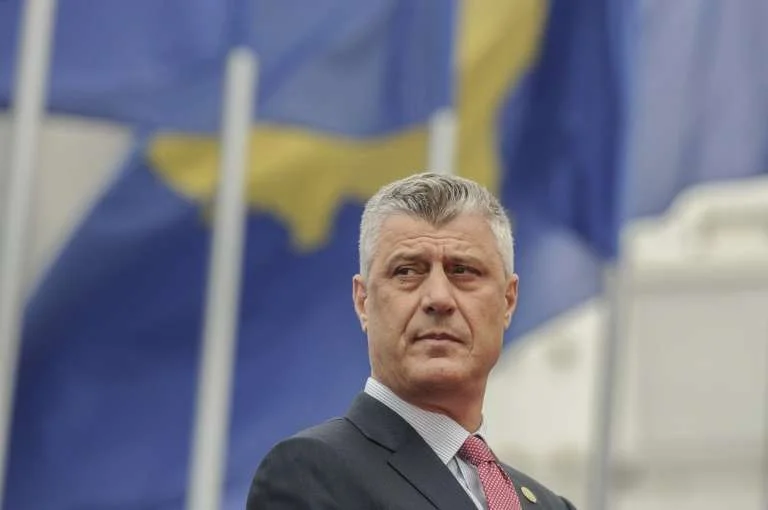
Thaci, of course, is the current president of Kosovo, and Wessel is a prominent political figure and former head of the Kosovo Assembly. Both are former high-ranking commanders in the Kosovo Liberation Army who have been on the radar for at least a decade, but they have consistently denied any criminal responsibility, as Thaci did again before his questioning by Hague prosecutors began Monday.
Unfortunately, the press release raises more questions than answers and leads to great speculation.
The first question is: Under what legal authority was this Egyptian press statement made? The statement did not say.
It is helpful in this direction to review the relevant provisions of the Procedure Adjust and evidence regulating procedures in front of Kosovo's Specialised Chambers, as well as the Professional Conduct Code of Chambers that regulate the way prosecutors should carry out their official work ethically.
Article 86 of the Procedure Adjust says: “The Specialised Prosecutor must present the indictment with privacy... before the preliminary procedure judge makes a decision” if he is to confirm the charges.
Article 88 predicts the confidential indictment to be made public only “following confirmation by the pre-cedial procedure judge”. However, the specialised “Procuror may reveal an indictment or part of it to authorities of a third state or another entity if this is deemed necessary for the purposes of an investigation or prosecution”.
Thus, for example, this provision will seem to cover a situation in which a person mentioned in an indictment is residing or hiding in another country, and that country is officially announced through judicial or diplomatic channels. It would also cover a situation in which the prosecutor contacts an entity such as Interpol for an international arrest warrant.
This article does not mention that any authority can make a press release to the general population before the indictment is confirmed and made public.
Specialised Prosecutor Jack Smith signed the statement before Kosovo Specialised Chambers Secretariat Fidelma Donlon after taking office in September 2018. Photo: Kosovo Specialised Chambers.
Referring to the Professional Conduct Code, according to Article 11, prosecutors “will respect and care for protection of the privacy of information” and “will not reveal any classified information as confidential”. This, of course, involves the accusation.
Furthermore, Article 13 says that “Councillor and prosecutors should not be consciously -- a. make statements in social media, the press or the public, which... reveal confidential information, including persons involved in the procedure; or b. They publish... any material that involves procedures in front of the Special Chambers, which... reveals any confidential information, including people involved in the procedure. ”
And according to Article 33, prosecutors “commit violations if they knowingly violate or attempt to violate any essential ethical or professional duty imposed by... this Code”.
In view of these provisions, it would appear that the press release clearly reveals confidential information, such as the nature of criminal charges, but more importantly, the identity of two persons involved in the process -- Thaci and Wessel -- and their attempts to undermine the court, all of this before the indictment is confirmed and made public.
Even if there is a legitimate argument that the press release was properly authorized, according to Article 30 of the Code, prosecutors should fully respect the presumption of innocence when making public comments or speaking to the media about the merits of special cases”.
Thaci and Wessel are now officially identified as persons charged with war crimes, including hate killings, who are allegedly trying to undermine the tribunal to defend themselves.
The other thing is to be mentioned as suspects in investigations, as has happened before with these two men. It is obviously very different, though, to be mentioned as officially accused of crimes, but prior to confirming the accusations and discovery of any evidence. And here, in addition, the prosecutor claims he can prove the charges beyond any reasonable doubt the high level of evidence required for a criminal punishment.
Even the famous and powerful people accused of terrible crimes have the right to this assumption: it is a fundamental principle of Western criminal jurisdiction. And this is certainly one of the reasons why the charges are confidential before they are confirmed by a neutral and independent judge.
And confirming an indictment is not something that is done automatically. The judge of the preliminary procedure may dismiss one or more of the charges, one or more of the defendants or all of the indictment; or he could reverse the prosecutor's indictment for further investigation.
In fact, in the matter of organ trafficking of the Medicus clinic in Kosovo, in which I participated as a member of the three-judge court, the court of preliminary procedure refused to confirm the indictment because of an alleged illegal police search for evidence. (This decision was subsequently overturned and the case passed. )
Donald Trump's envoy for the Kosovo-Serbia dialogue, Richard Green, in Belgrade in January. Photo: EPA-EFE/ANDRE CUKE.
Even if the specialised prosecutor could be justified legally, the fundamental questions remain: Why was necessary “”? Why the suspicious moment? And what did he hope to achieve by making this explosive statement?
Perhaps the press release was intended simply to bring attention to these two prominent defendants, to discourage them and many of their associates from pursuing a secret conspiracy to abolish the law on court creation or otherwise prevent its work.
And there could have been a lot of urgency in spreading this information, which was: “We know what you and your friends are doing and that is a warning to end this right now. ”
But why June 24th? Was this date intended to warn Americans of Thaci's uncertain legal status prior to the long-awaited meeting in Washington, where Thaci and Serbian counterpart Aleksandar Vucic were scheduled to participate on June 27th, just three days later?
The prosecutor may have believed that Thaci would try to negotiate an amnesty agreement for himself, a rumor that has been circulated for some time. But that doesn't make sense.
In Article 18 of the Law for Specialised Chambers and the Specialised Prosecutor's Office signed, as ironically, by Kadri Vesil as parliament speaker in 2015, it is said that “any amnesty given to each person for an international crime... will be no obstacle to prosecution or sentence” by the Specialised Chambers.
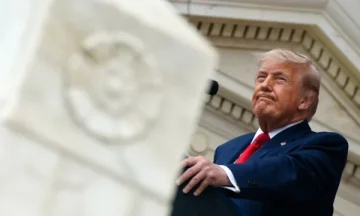
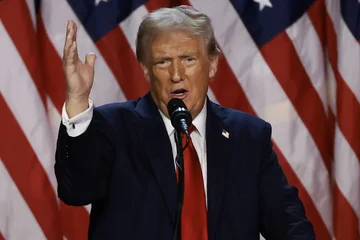
Perhaps the prosecutor was concerned that President Donald Trump would publicly praise Thaci and criticise Kosovo's Specialised Chambers.
The meeting was organised by Richard Green, Trump's special envoy for Kosovo-Serbia dialogue, in an effort to get both sides to speak again and, hopefully, reach a mutual agreement, especially on economic issues, thus paving the way for a more comprehensive agreement that would come next.
But Thaci withdrew from the meeting after news of the indictment arrived, even though he was on his way there. Prime Minister Hoti also withdrew and Grenelli cancelled the meeting, which is not yet scheduled when it will be held again.
Thus, because of the press release, prospects for an agreement and heating of the relationship between Kosovo and Serbia were marred.
The time when this indictment was made public did William Walker, former American ambassador and head of the O Verification Mission. SEU in Kosovo to say in an interview for RTK in Kosovo on July 9th that he was “very disappointed by the time the prosecutor made that statement”.
“Now I too question the timing of the declaration because President Thaci was traveling to Washington to attend the summit organised by the White House, as part of efforts to find a final solution. The time of the declaration and the contents of the charges, I think it raises questions about the true motive behind it, Walker added.
But what would have happened if the meeting had been held? The US, of course, has no authority to bring down the Kosovo law that created the tribunal or to grant amnesty to foreign citizens. But President Trump has a post that allows him to speak up on a certain matter.
Thaci has always been a favourite in Washington and Trump could be persuaded to make a strong public statement supporting Thaci and criticised the tribunal, especially if an essential agreement had been reached. This would hardly be unusual, since Trump often criticises American courts and judges and does what he can to support his friends who are in legal danger.
The United States is admired in Kosovo and any critical statements from Trump for the tribunal could have had an effect on further deterioration of its legitimacy among Kosovo citizens, who are already sceptical because of its unilateral mandate.
But I wonder if a highly respected and experienced American Special Prosecutor, with the support of the U.S. State Department, would have the courage to get involved in such high cars.
However, this sudden, dramatic and non - Orthodox declaration deserves to be clarified in the interest of justice and rule of law.
Judge Dean B. Pineles graduated from Brown University, Boston University Law School and Kennedy School of Government at Harvard University. He has been an international judge with EULEX from 2011 to 2013. In addition to Kosovo, he has experience in rule of law in Russia, Kazakhstan and Georgia.