a few seconds ago
Three Kosovo scenarios for new school year
Periskopi(6 years ago)
(6 years ago)Remote learning, learning from different platforms, but also combined learning, are some of the scenarios the Ministry of Education has prepared for the purpose of finding an adequate solution for the start of the new school year in September. As officials of this ministry say, the learning process will continue based on recommendations [...]
Remote learning, learning from different platforms, but also combined learning, are some of the scenarios the Ministry of Education has prepared for the purpose of finding an adequate solution for New School Year's Beginning September. As officials of this ministry say, the learning process will continue based on recommendations of health institutions for protection from COVID-19 disease.
School institutions in Kosovo have been closed since March 12th, following measures the Kosovo Government had taken to prevent the spread of the coronary. Then the Ministry of Education decided to continue teaching from a distance.
For 1-9 classes, learning is accomplished through Teaching transmission on public television as well as through the Ministry of Education Channel on YouTube. While high school level, distance learning has developed decentralisedly, where teachers were the main carriers of
Enver Osdautaj, senior political adviser to the cabinet of Minister of Education, Science and Technology (MASHT), Rame Likaj, says the ministry has already established a working group, which is implementing preparations for starting learning under pandemic circumstances. This group, Osdautaj says, has prepared several scenarios, but students' health will remain a priority.
Several modalities of countries in the region and the European Union have been taken over. Teaching is supposed to be in some ways: Remote lessonTeaching from different platforms, through television, but also combined teaching, depending on the epidemiological situation in Kosovo. It means all options have been considered and documents have been created so that students are offered what is best under pandemic circumstances”, Osdautaj tells Radio Free Europe.
Combined Teaching
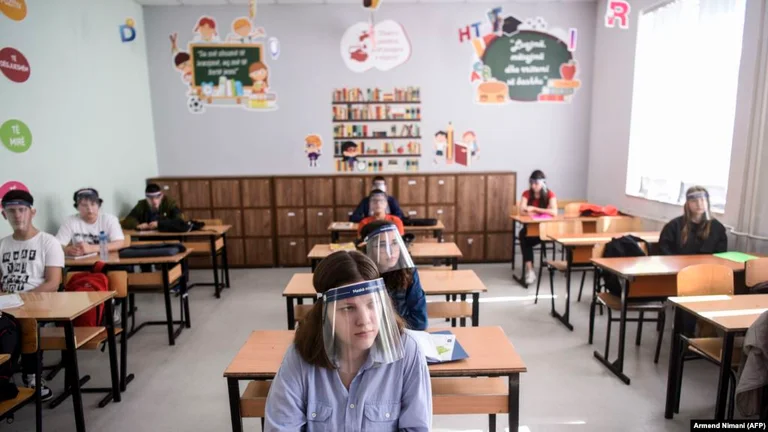
Speaking of combined learning, Osdautaj says that because of the limited number of students who will be in class, there will be times when students, if they allow opportunities, to develop it in schools, the rest that are not accomplished, will be met with Online class.
It's supposed to have as many as 10 students, respecting social distance. Plans on how classes will be organized are already being prepared, taking into account measures for protection and anti-security. COVID. Because of interactiveness and access, if possible, will be tested in this variant”, Osdautaj says.
Bee, it's the number of students in class.
From 30 to 45 comes the number of students in one class, both in elementary and high schools. The number of students in pregraduate education institutions, however, is estimated to be over 300 thousand.
But connoisseurs of education matters appreciate that the decision to start the new year should have a priority on the welfare of students. Whatever decision is made, according to them, should be based on recommendations from the Kosovo National Institute of Public Health.
ehaja: Combined teaching does not contribute to the health of children
Youth Qehaja from Institute “Edgood”, says the Ministry of Education should not decide for combined learning.
No matter how many different scenarios of the ministry, I think there are two options, or go on learning from a distance like the previous half-year, or we go back to schools, carefully added and with good protocols defined by the relevant institutions. On the contrary, any intermediate option, I don't believe it will contribute much, even to the health of children or to the prevention of the” situation, Qehaja estimates, adding that the government's decisions should also be based on the practices of European countries.
Returning children physically to school is the most acceptable way, but with added caution, one should analyze the situation with pandemic, putting children's health first, says sociologist and psychologist Besnik Peci.
He points out that distance instruction also affects children socially.
“The sociological area of socialization has been affected, the development of interpersonal skills has been affected, the development of skills for life, indirectly affected by the physical, psychological and organic health of children because life in quarantine prevents physical activity from melting the calories they earn”, Peci points out.
Otherwise, one of the measures of the Government of Kosovo, on July 28th, is to impose the National Institute of Public Health that, in co-operation with the Ministry of Education, Science and Municipal Education Directors, by 15th of 2020, draft the guide for teaching the new school-academ 2020-2021.