5 minutes ago
Joseph: Actaza to Thaci complicates dialogue, I see no path towards Kosovo- Serbia
Periskopi(6 years ago)
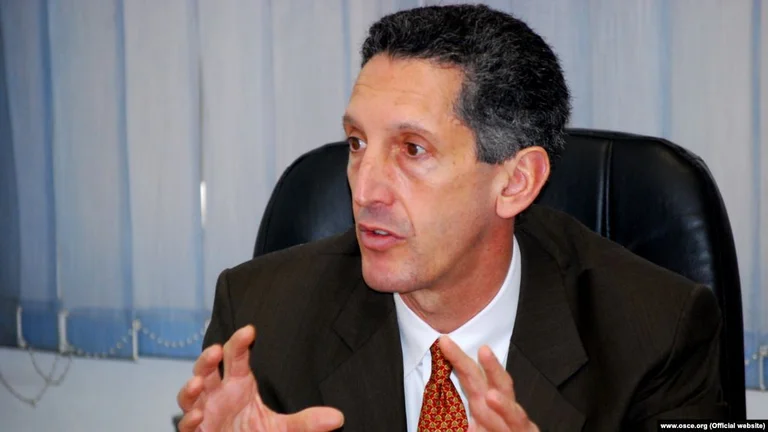
(6 years ago)Edard Joseph, professor at Johns Hopkins University in Washington, says that at the July 12th meeting between Kosovo and Serbia, steps can be expected, such as improving trade or increasing investments. In an interview for Radio Free Europe, he says he sees no way towards a comprehensive and binding agreement. [...]
Radio Free Europe: Mr. Joseph, Kosovo and Serbia seem to have a busy week ahead. On July 10th, leaders of the two countries will meet virtually with the mediation of France's president, Emmanuel Macron, and German Chancellor Angela Merkel. Meanwhile, dialogue mediated by the European Union Relaunch on 12 July. Can we expect clearer steps towards a solution to relations between the two countries?
Edward JosephIt's a good question. But what you say needs to be divided. You say steps and then solutions. Let's split them up. The steps, of course, can wait. We can expect many, even positive ones. But can we expect steps that will really lead to a solution, a real solution? I think that's impossible. Right now I don't see a path to a final solution.
Radio Free Europe: What is expected to be the most urgent issue at the negotiating table, given that the parties have not met since the end of 2018?
Edward Joseph: I think they'll see ways to rebuild trust and some concrete improvements. [The European Union] spokesman said that we want [the dialogue] to lead to a comprehensive binding agreement, which will solve the problem about Kosovo. That's the purpose, that's necessary, but is there a path to that? I'm not sure. I hope and I expect that there will be some positive steps, which are good, even if they don't lead the parties to a certain solution.
Radio Free Europe: What are these steps, can you give more of them?
Edward Joseph: There are steps. They can move towards increased trade. This is certainly an opportunity. This is a vision that has even had [Richard] Green [White House envoy for Kosovo-Serbia dialogue]. It's good to improve trade and investment. Then there are steps that are stuck in the existing dialogue. Let's get back here. This dialogue is not new, it started in 2013 and has emerged from very close diplomatic co-operation between the US and the EU. That has also led to the 2013 Brussels Agreement. But the problem is that the process, step by step, is stuck. And there are many concrete practical steps that can make changes in people's lives, that can be addressed, that would be positive and improve the atmosphere and potentially relationships. But do they achieve what the EU has said to be the goal -- the comprehensive and binding agreement? Is that possible? I don't see the path to her, maybe the others do, but I don't see the path.
Why would Vuchy accept something less than territory?
Radio Free Europe: Kosovo is determined not to talk about territorial integrity and says it is entering this process for recognition. On the other hand, Serbia's president, Aleksandar Vuciq, says Serbia will not recognise Kosovo's independence. Where do you see the compromise between the two sides?
Edward JosephI don't see it. And that's the problem. I see no compromise. It should be stressed that it is not just the Kosovo side that has said there is no compromise for territorial integrity. Even the European Union's special envoy, Miroslav Lajcak, has said so. Even EU foreign policy chief Josep Borrell, who will be the host of the meeting, has reiterated this. So not only the Kosovo side says there is no compromise for territorial integrity. That's what the middlemen say. The issue is now in Belgrade. What would Vuchy accept, and why would he accept it? Let us remember that he has been offered territory by the previous EU leadership. You should ask why he'd admit something less now.
Radio Free Europe: Why?
Edward Joseph: I have no answer.
Radio Free Europe: So, what's the point of dialogue?
Edward Joseph: The goal is to be declared. The goal is very serious and appropriate. I think it is positive and encouraging that the EU has set these very high standards and criteria for purpose, which is the comprehensive and binding solution to this dispute. They may have said we want a negotiation process, but they haven't said it; they've made the right call for purpose. The question is, what is the way? How do you reach that goal?
Radio Free EuropeAnd how do you see the solution to this problem?
Edward Joseph: All capitals that are truly concerned about the matter should ask themselves that question seriously. The danger of this dialogue is having the illusion of a process and having the illusion of progress. In fact, there may be some progress in terms of improving commercial relations, and this should be encouraged. Anything that can improve relations, reduce tensions, improve the economy, improve trade, create jobs, is good, is positive and should be encouraged by all. But do you answer these fundamental questions? I'm not sure it is, I'm not sure it leads to the achievement of the ultimate purpose.
Radio Free Europe: How do you see representation in dialogue? Kosovo Prime Minister Avdullah Hoti has a majority in the assembly with only one more seat, while Vuciq has celebrated the convincing victory in the elections just weeks ago. Does this play any role?
Edward JosephI think it's an additional complication factor and it's very serious. You have two aspects here. There is not only imbalance and discrepancy in each side's ability to negotiate. It's not just a lot with one seat. Pristina now has the indictment against President Hashim Thaci [v.j. The indictment for war crimes was submitted by the Special Prosecutor's Office, but was not confirmed by the trial judge. This situation overshadows Kosovo politics. This situation greatly complicates Prime Minister Hoti's ability to engage in serious dialogue and negotiations. So there is a very uncertain political climate in Pristina, and this makes it even harder for Prime Minister Hoti. It doesn't mean that nothing will be discussed, it doesn't mean that there will be no reconciliation for nothing, but it is certainly an additional complexity.
Radio Free Europe: And how did you comment on the fact that Kosovo President Hashim Thaci is not invited to Brussels on 12 July?
The Act is Serious
Edward Joseph: This is normal. We have seen that because of the announcement of the indictment, he has not been able to attend the planned meeting at the White House with Vuciqi and his team. And being not able to keep this meeting, there is no reason why he would follow the matter in Brussels. The act, even though it hasn't been confirmed, is serious. These are not minor issues. In one respect, you might say that he is innocent until he is not found guilty. The charges here are so serious. The prosecutor has announced that the indictment includes charges of over 100 murders. Even though it has not been confirmed, it is of such a serious nature that it is not possible to have some sort of direct relationship with Thaci.
Radio Free Europe: Some have said that publishing the indictment was his Political motivei. You agree?
Edward Joseph: I would say that the time of the charge is a mystery for which we have no answer. Me and a lot of other people have asked this question, and we've tried to find the reasoning. There are a series of explanations, from those not related to the meeting at the White House, to theories that say they directly relate to it. So you have a number of theories on this. And for me, at this point, that's all they are. They're theories. We have to wait and see what information comes up.
Radio Free Europe: As you said earlier, the indictment against Thaci has led to the annulment of the meeting between Kosovo and Serbia at the White House. Some have described this as a blow to US President Donald Trump's foreign policy. How do you see it?
Edward JosephI think it's true. It is important to understand why it is true. The announcement of the indictment, of course, has been a surprise to all, including the White House. But what was no surprise was the architecture built by the White House around President Thaci, including helping create the pressure that has brought down Prime Minister [Albin] Kurti, with whom Thaci has been at odds. We can see this as an announcement coming from heaven and unfortunately cancelled this event. We need to see this [even] in terms of architecture that is fully arranged and built around President Thaci on the side of Kosovo and entirely around Vuciqi on Serbia's side. When you build such architecture and you have such an unexpected event, where there are elements that look dark, and that architecture collapses, I think the characterization you made is right. This is an obstacle to Trump administration. The rest of this is that the administration has promoted this event, calling it historical, I'm quoting Ambassador Green.
Now, the question is what are they gonna do? On the one hand, there have been signals that there will be some economic ties that will advance preliminary road, rail and air ties. These are very positive and good. But is this history? Kosovo and Serbia already trade. There's no trade. The tariffs are removed and there is trade among countries. So if you invest in something and you call it historical and focus all your efforts on a person, including helping to follow his political opponent, then it is an obstacle when an act comes and the event collapses.
The White House has two choices
Radio Free Europe: Do you think the U.S. will insist on a leading role in dialogue because Ambassador Green Has warned. I'll reassign a meeting soon...
Edward Joseph: That depends on the White House. It has two choices: to try to revive this arrangement with Prime Minister Hoti, not with President Thaci, and to try to reach that economic agreement, or whatever it was, or to co-ordinate closely with Europeans and support European efforts to lead. Both are complicated for the White House, because it is difficult to collect all the parts of this event, and because the administration and Ambassador Green in particular has emerged from its path, making relations with Europe in general and with Germany in particular. So the White House is not now in a strong position to move forward on any one of the roads. It may be hoped that she has learned from these mistakes and will try to act properly, coordinating with our European allies to resolve this dispute.