6 minutes ago
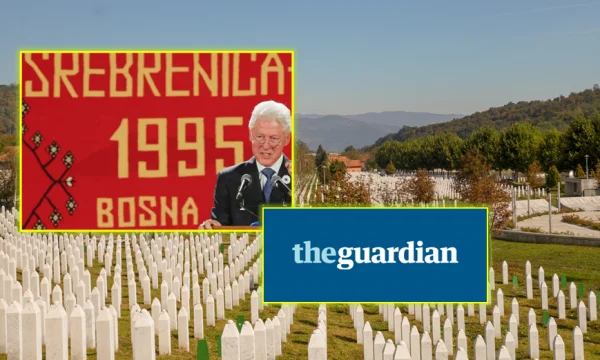
The Guardian: Bill Clinton was willing to split Bosnia after Srebrenica
Periskopi(6 years ago)
(6 years ago)Britain's renowned newspaper, The Guardian, wrote that according to declassified documents, former United States President Bill Clinton had pushed the Bosnian government led by Muslims to make territorial concessions in 1995. When Srebrenica fell into the attack by Serb separatists 25 years ago, the Bosnian government led by Muslims [...]
When Srebrenica fell into the attack by Serb separatists 25 years ago, the Muslim-led Bosnian government was wavering from the mass killings that were continuing in the small enclave. For this reason, Bosnian officials were shocked when Washington's immediate reaction was to persuade them to make new concessions, including admitting their country's possible division on ethnic lines
Declarated documents of that period and interviews with some of the protagonists reflect the determination of Bill Clinton and his foreign policy team to find a solution to the three-year conflict before the election campaign, even if it meant that Bosnian Serb leaders would be rewarded for their policy of ethnic cleansing by offering them the target of partition.
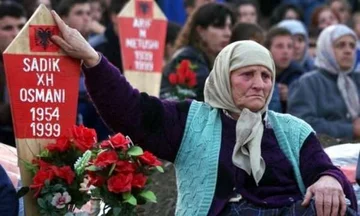
More than 8,000 men and boys were killed in Srebrenica after being seized by Serb forces in what the United Nations had declared a safe area. This was the first genocide in Europe since World War II.
However, in telephone conversations with foreign leaders at the time when mass executions were continuing, Clinton had repeatedly expressed his disappointment with the Bosnian Army because of his failure to protect Srebrenica. And in the same week when Srebrenica surrendered, the National Security Councilman of the time, Anthony Lake, had pushed towards a <x0-track strategy for the end of the” game to safely remove the US from the disaster in Bosnia.
This strategy, launched by the Adviser Lake team weeks before the Srebrenica attack, was to make efforts to postpone a peace agreement based on an almost equal division of territory. If that failed, the plan was to withdraw the United Nations peacekeeping force, remove the arms embargo on Bosnia and offer the Muslim-Croat Federation some initial support with air attacks until it was powerful enough to fight Serbs themselves.
However, the price of such support was high. Bosnians would potentially be forced to overcome other concessions, including the surrender of the territorial integrity they had fought for to protect him. According to the first annex of the game's final strategy, titled “Plan for diplomatic agreements in 1995”, part of a group of declassified documents from Clinton's presidential library, the first step was that of heart-heart “with Bosnjak to convince them that after the results at Srebrenica, “ta should think more realistically to form a” solution.
The Federation could be obliged to accept agreements with less than half of the territory, and the United States would consider the possibility of pressure on Bosniaks agreeing that Serbs organise referenda for division after two or three years, the annex said.
“If Bosnians cannot convince the Serbian population that its best future lies in reintegration, there is no point blocking Union's peaceful division according to the Czech model” lines, the proposal is further said.