4 months ago
Former EU representative: Territorial exchange idea is no longer at the EU table
Periskopi(6 years ago)
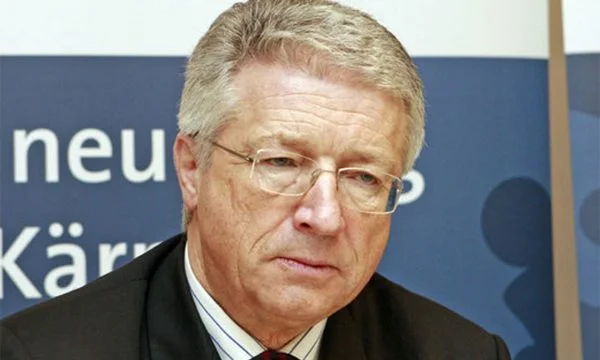
(6 years ago)Wolfgang Petritsch, former European Union representative in talks between Kosovo and Serbia during 1998-1999, says the change of borders between Kosovo and Serbia that was supported by former European Union senior representative Frederica Mogerini and her negotiating team appears to be no longer at the EU table. Petritsch had previously spoken [...]
Wolfgang Petritsch, former European Union representative in talks between Kosovo and Serbia during 1998-1999, says the change of borders between Kosovo and Serbia that was supported by former European Union senior representative Frederica Mogerini and her negotiating team appears to be no longer at the EU table.
Petritsch had previously talked about exchanging borders between Kosovo and Serbia.
“will have small corrections (“commatic”) affecting a small number of villages in the district of Bujanoc and Mitrovica. It will not change the ethnic makeup of any state, and thus there will be no such major effects as described in your assessment, which otherwise is excellent, “is the new “realism” in the Balkans”, he had declared.
In an interview for Kosovo, Ambassador Petritsch estimates Greenell's latest statement is important, and there is a clear indication that the US wants a European solution for Kosovo.
He recalls how difficult it was to gather all Kosovo's political groups before Rambouillet. And it says that, but once this was achieved, negotiations had progress. This should serve as an example for a united approach today.
Total interview:
Mr. Petritsch in the past you have been deeply involved in Western diplomatic efforts to resolve Kosovo's status. I know that even now you are in the course of developments. As you can see, the European Union has intensified efforts to resume dialogue, and you have been a supporter of talks that will be brokered by Brussels. From your point of view, how do you view developments about negotiations between Kosovo and Serbia?
PET TRI SCH: After the special court's early publication in The Hague, things in Kosovo -- namely, the future of the Belgrade-Pristina dialogue -- have changed. The Washington summit was postponed and is in doubt that it will ever take place. I have always been a strong supporter of the EU-mediated dialogue, and I am still convinced that only a European compromise will be successful, supported by Belgrade and Pristina will bring normalisation. I'm also convinced that the United States has a very important role in this. But since the final decision will be on the UN Security Council, where Russia and China have veto, Moscow and Beijing should also be kept informed. I support renewed EU mediation with Mr. Lajcak tops and I am also happy for the French and German initiatives. A sustainable solution should be comprehensive, politically, economically, and whether a high standard of human and minority rights is involved in this compromise between Belgrade and Pristina and supported by the EU and GDP.
Direct Activation of top European leaders such as President Macron, Chancellor Merkel and EU foreign policy chief Z. Josep Borrell in the dialogue process certainly creates a much more serious expectation of results. As diplomats, what are your impressions of this dynamism, please tell me what you expect?
PET TRI SCH: I am very optimistic now since great European powers have become active. Let them find common ground in Brussels and Washington with the help of Germany holding the EU Presidency. The next six months will be crucial to finding a solution.
Tanni, for the June 27th meeting scheduled to be held at the White House, has failed, but Ambassador Green made a statement yesterday in support of European efforts, does that mean that Brussels will eventually be the focus of dialogue between Kosovo and Serbia?
PET TRI Mr. President. Green is important and there is a clear indication that the US wants a European solution. Let's try to bring Washington into a solution that truly brings peace to the region.
Relations between the US and Europe marked the lowest point since World War II, due to disagreements on how to develop dialogue, given Ambassador Green's statement, do you expect the US to support dialogue according to the European model?
PET TRI SCH: Now there is reason to believe that the United States and Europe will again join forces. We've seen in the past that when Europe and the US were together, they were able to achieve a lot. This formula must be restored.
The European Union has strongly rejected the idea of exchanging territory between Kosovo and Serbia as a “opportunity to reach a” peace agreement between them. Now that the talks seem to have taken another turn, do you think that idea is already dead?
PET TRI SCH: You are right, the idea of a mutually reconciled border demarcation, supported by Mrs. Mogherini and her negotiating team seems no longer at the EU table. But let me tell you one thing: Only if there is a fair compromise agreement between Belgrade and Pristina, the solution will have a chance to succeed in the future. So let the negotiators do their job. In fact, they must work hard because peace will depend on their commitment. It'll be difficult, but it's accessible. Just think of many agreements that have been reached over the past few years. Of course, many of them still have to be implemented, and the Association of Serbian municipalities is still pending. Let us now use the time and implement already agreed pieces of dialogue. This will create confidence and help all citizens feel safer in their homeland.
Mr. Petritsch, a few months ago Mr. Albin Kurti was prime minister and was shown the impression that he gained great sympathy, especially from the European leadership. Now that talks seem to be mediated by the European Union, do you think Kurt's image will be lacking in these negotiations?
PET TRI SCH: To be strong you need a common position in dialogue. There, Mr. Kurt is important, but he too must find common ground with other political forces in the country. I remember how difficult it was to gather all the groups before Rambouillet. But once that was achieved, negotiations had progress. This should serve as an example for a united approach today.
The Kosovo delegation is being led by Prime Minister Hoti in the talks. Part of the opposition in Kosovo did not consider it legal and reliable, as it came to this position following the collapse of Kurti Government at the height of the pandemic, while they were in coalition with Mr. Kurt. Now what I want to ask you is, do you believe that the current leadership is able to reach an agreement with Serbia, given that they have a simple parliamentary majority and it is difficult to ratify the agreement in the Parliament in this composition of forces?
PET TRI SCH: Past riots were not useful for Kosovo and have demonstrated deep domestic divisions. However, Europeans have recognised Hoti's government and recognized him as his country's representative. Yeah, you're right, the current government doesn't seem to be too strong. I don't know if it would be better to make new choices soon so that we can have a fully legitimate and stronger government. Kosovars will have to decide if they want a politically united government representing all its citizens. But for that, the main politicians will have to sit together and make such a decision.
Since the day Germany took over the presidency of the European Union, a perception has been established in Kosovo -- or rather, a hope for visa liberalisation. Could this happen within this six - month period?
PET TRI SCH: In Germany many support visa liberalisation, some in the EU still oppose it, despite the fact that Kosovo has met EU requirements some time ago. Clearly, the pandemic has made such a decision even more difficult. But let us hope that the German EU presidency will actively pursue visa liberalisation. It would be an important first step towards the integration of Kosovars into broader Europe.
Wolfgang Petritsch is an Austrian career diplomat. In the Balkans he was engaged in 1997-1999 as Austria's ambassador to the former Federal Republic of Yugoslavia. During the same period, between October 1998 and July 1999, he also served as the European Union's Special Representative for Kosovo. Under that responsibility, he led the EU negotiating teams in February and March 1999 in talks on Kosovo at the Rambouillet and Paris conference.