12 minutes ago
English Professor: Not dialogue, but final Kosovo- Serbia
Periskopi(6 years ago)
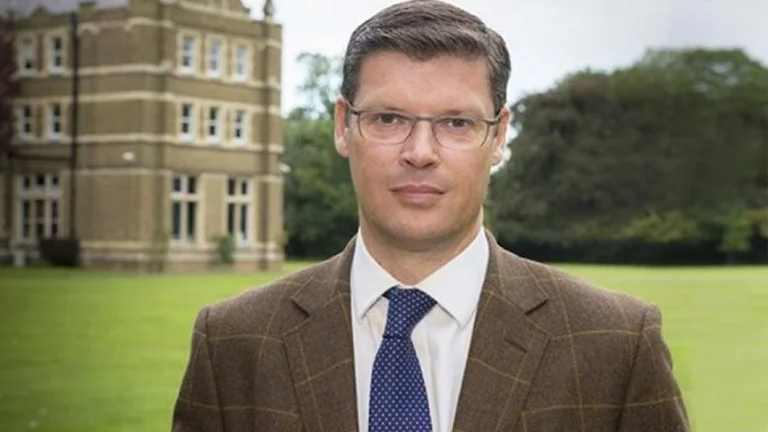
(6 years ago)Kosovo and Serbia need a final agreement, not the continuation of the format dialogue the European Union plans, says in an interview for Radio Free Europe, James Ker-Lindsay, professor at London's School for Economics and Political Science. He says there has been no co-operation between the US and the EU for the dialogue process, [...]
Radio Free Europe: Professor Ker-Lindsay, there are two parallel processes under way for Kosovo-Serbia dialogue. One in the United States led by Richard Green, the other by the European Union. This is the first time Washington and Brussels are divided when it comes to the peace processes in the Balkans. How did you comment on these developments?
ames Ker-Lindsey: I think we still don't know where these processes stand right now. Yesterday we had an important discussion with senior American and European officials. They are trying to show an attitude that they want to work together because they don't want to be against each other. At least publicly they're trying to look like they don't have great divisions. But in reality what we've seen are two very different processes that have developed between the European Union and the United States. But again, the biggest problem is we don't know what's going on.
The dialogue led by Europeans over the past few years has stalled, but the latter have appointed a special envoy to the issue, Miroslav Lajcak, but still has no information about how the EU is planning to resume dialogue. At the same time, the United States says they are working in this regard. I think the U.S. wants to reach a comprehensive agreement, but they're actually talking with a more limited vocabulary, such as the economy. But let me say, for now, it's a mess. A complete mess. Nobody knows what they're doing ( The EU and the United States. Everything has been badly organised, no collaboration. A deeper analysis of what they wanted to achieve has been missing.
The problem is that the US does not want the EU to succeed, and the contrary, Europeans do not want Americans to succeed. Both sides want to take credit. So, as I said, they publicly say they have no objections, but the reality is they haven't cooperated.
The announcement from The Hague overturned a peace process
Radio Free Europe: Last week, the specialised Prosecutor at The Hague has announced he has filed charges against Kosovo President Hashim Thaci under suspicion that he is involved in war crimes and crimes against humanity. That was just two days before the meeting between Kosovo and Serbia at the White House in Washington. How have you seen this development?
James Ker-Lindsey: That was a shocking announcement. There's been a lot of speculation. Some said that Europeans may have somewhat prompted the prosecutor to make the announcement, as they did not wish to hold US negotiations. Others have said that perhaps Americans themselves have done it to exert pressure on Kosovo President Hashim Thaci. I don't think this contains something real.
From my point of view, the prosecutor has been concerned that there might be an agreement on any possible kind of amnesty, and he wanted to make sure that something like that was removed from the table. But all he has managed to do is overthrow a peace process. Although we do not know what actually happened, some may be very happy that the talks have been cancelled.
Radio Free Europe: Who are you talking about?
James Ker-Lindsey: The European Union will be very happy that the talks were cancelled. The EU has not been happy about these talks in Washington. On the old side, I think Washington is very sad about what happened.
Radio Free Europe: Do you think it was a coincidence that prior to the talks in Washington they would have such an announcement from the Special Prosecutor?
James Ker-Lindsey: Absolutely not. There is no way that two days before negotiations are held in Washington, someone makes such an announcement, and that's called coincidence.
Radio Free Europe: How do you see Kosovo's role in dialogue with Serbia without the presence of President Thaci, who for years has led this process in the name of Kosovo?
James Ker-Lindsey: For any agreement you must have the entire society involved. Peace processes are difficult. They require cooperation for many things to do. But, above all, they want leadership. Any peace process requires people who have vision of reaching agreement. These must also be people who understand what society benefits and how they can convince society to accept it. The process requires visionary leaders who have creative ideas. So it's kind of complicated. I wouldn't comment on who is important or not, but dialogue requires leaders who can negotiate good and applicable agreements. The agreement, which would then be passed to parliament for approval or through any referendum.
Radio Free Europe: The European Union is planning very soon to hold a summit in Paris for the Kosovo-Serbia dialogue, whose co-ordinator will be French President Emmanuel Macron and German Chancellor Angela Merkel. What do you expect from this meeting, and do you think President Thaci will be invited there?
James Ker-Lindsey: I've been working on the conflict issue for a long time. One of the cases is Cyprus. The issue of dialogue between Kosovo and Serbia is becoming like Cyprus. We have all these statements saying we have to go back to dialogue. No. I've seen what happened to the dialogue in Cyprus. It's a waste of time, they've been developing dialogue for 50 years. You need a final deal. You need a comprehensive deal, because in Cyprus they have thus tried, with some confidence-building measures, but they have always had disagreements.
In the case of Kosovo and Serbia, dialogue according to the European Union, where parties only speak and achieve some very small things, could perhaps last forever. The whole process will remain hostage to reports between the parties on the ground, because you will always have something bad that happens, such as sanctions, or representation of terrorism, which reverse the process from the beginning. What is necessary, in my opinion, is that you need to focus on reaching an agreement. The European Union should focus on this. Now, they're still talking about the start of dialogue. No, there must be a final agreement.
Radio Free Europe: What should Kosovo do in this situation?
James Ker-Lindsey: The problem is that Kosovo and Serbia are stuck in this situation. Serbia will not join the EU unless it achieves agreement with Kosovo, and Kosovo cannot become a member of the United Nations Organisation. There are many people who are happy that the negotiations are not continuing because they have not wanted to reach an agreement that has been long discussed, but well, where are alternative ideas? All of this is leaving Serbia, but in particular Kosovo in a unclear situation.