4 months ago
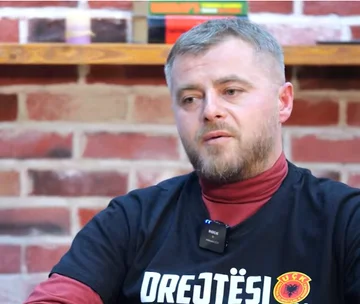
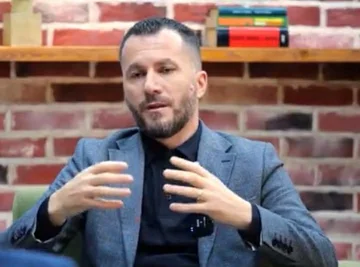
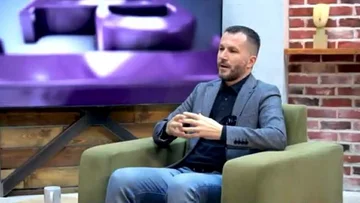
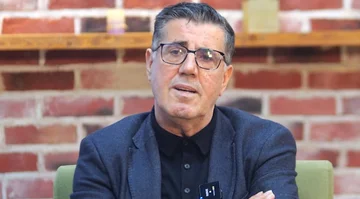
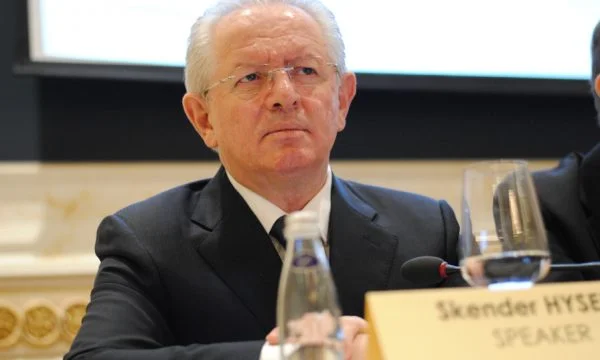
Dialogue in the hands of Skender Hysen, tomorrow he travels for meetings at State Department and White House
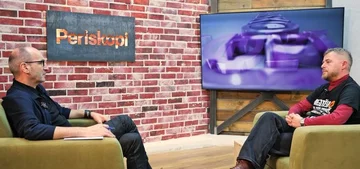
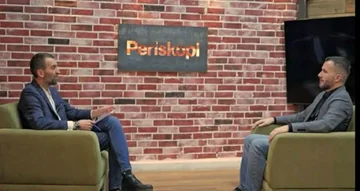
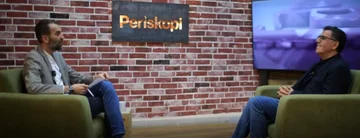
Periskopi(6 years ago)
(6 years ago)Kosovo's state co-ordinator for dialogue with Serbia, Skender Hyseni, said on Saturday he will travel to Washington, where he will hold meetings with senior US State Department officials, with the goal of co-ordinating the negotiations process. The U.S. is completely in the process, Hyseni said in an interview [...]
The U.S. is fully involved in this process, Hyseni said in an interview for Radio Free Europe.
On Thursday in Brussels, he held another round of talks with Serbia, at the expert level.
Hyseni said difficult negotiations are under way in Brussels for “elements of the final agreement”, which, according to him, are aimed at mutual recognition with Serbia.
He did not want to find out what future chapters will be discussed in Brussels, but stressed that this will become known at the end of the negotiations process when a final text of the agreement is reached.
The Serbian side, however, has already declared that in Brussels so far it has been talked about the missing, displaced and economic co-operation.
Hyseni added that a different commitment from the EU and the US's earlier is already evident, so that this issue between Kosovo and Serbia will eventually be resolved.
Interview:
Mr Hyseni, you have already held a second meeting with the Serbian side, in the role of Kosovo state co-ordinator for dialogue with Serbia. What are the principles on which work meetings are taking place?
Skender Hyseni: The principle is very simple and pragmatic. We are discussing specific elements, respectively, chapters of a legally binding agreement that is understood, as soon as it is signed, and internationally binding, meaning that the comprehensive and final agreement will be fully subject to international law. This single-minded agreement has formal recognition between Kosovo and the Republic of Serbia, as independent and sovereign states. Such an act of belief in us in Kosovo would establish a lasting peace and stability in the Western Balkans, and the same trust and goal is also in Brussels, but also in Washington. Therefore, any other interpretation of these negotiations is wrong.
Thus, it is not technical or conversation on specific matters that can be interpreted as technical, but rather. It is a completely political negotiation process aimed at reaching a final agreement with Serbia. And that, not by procrastinating, not by wasting too much time, because this process does not endure endless procrastination, but it will be a dynamic, very dense process and I believe very fast, regardless of the final outcome, that for Kosovo is exclusively mutual recognition.
And, I say with full conviction that the Republic of Kosovo will take that stance, so either there will be agreements for legally binding and internationally guaranteed recognition or there will be no agreement at any particular point, as is supposed to be said by different parties.
You have said that you are working on drafting the final agreement and that what is being put on paper, chapters and the written conciise elements are based on clear projections of international law. What will these chapters and elements contain?
Skender Hyseni: These chapters and these elements will just be paragraphs or articles of a general agreement that, completely at the end and final provisions, will be inevitable, in terms of Kosovo, mutual recognition between Kosovo and Serbia, as independent and sovereign states. I won't comment on specific details of a whole. So it's all about what matters and only then we'll talk and see what the components of this general agreement are, which will be put on the table for signatures and finally, put on the table of deputies of the Republic of Kosovo for ratification.
So there is nothing unknown here, except that while we are in the process of negotiating elements of the general agreement and general agreement as such, there are issues that require a minimum diplomatic and political disrepute. This has nothing to do with lack of transparency. You can't imagine a lack of transparency. But, at the same time, I believe you'll agree with me, that the negotiations of this nature are not one, suppose, football game that would play a game in front of the cameras. So, for the sake of the constructiveity and health of the process itself, a degree of diplomatic discrimination is required until the time when we will reach a final text of the general agreement.
I am highlighting again, as far as the Republic of Kosovo, its institutions, all political forces in Kosovo, which I have in the past few days contributed to, that is, as far as we are concerned, there is no alternative, besides mutual recognition of Kosovo-Serbia, which is a fundamental prerequisite for establishing a lasting peace between these two countries, but also a lasting peace throughout the Western Balkans, because, not resolving this issue between Kosovo and Serbia, there will continue to be a response to peace and stability in the relations of all nature, from trade and political relations, and the entire region.
The good news is that during this time, we, like Kosovo, have noticed that there is a different commitment to the European Union, but also to the United States of America that this job is finally resolved.
You mentioned the issue of transparency and the requirement for privacy of this process. Do you think such confidences are also from the Serbian side?
Skender Hyseni: I'm not concerned about what the Serbian side does and does. We, like Kosovo, will continue to demonstrate a high degree of seriousness in this process against the mediator, which in this case is the EU and the United States of America, which are completely locked up in the process. Therefore, it would also be a strategic elemental error if we get distracted by what Serbia will do in this case, because then we will be hostage to a more secure and reliable vision that things will move forward.
Mr. Hyseni, it has been said that in the dialogue, it is talked about various chapters such as the undiscovered, displaced, economic co-operation. But the end of this process, Kosovo and Serbia see it from completely different angles. You've said the deal should end with mutual recognition and that this agreement should be about anything or nothing. The Serbian side rejects the possibility of recognising Kosovo, while President Vuciq seeks compromise. What compromise can Kosovo make?
Skender Hyseni: It would be completely unnatural if we were to expect other positions of what you mentioned, because if we agreed there would be no need for such processes of dialogue at all. So, we're just following a difficult negotiation, I'm telling you with conviction, very difficult and I don't have illusions that's going to go all easy, on the contrary.
However, what I know and what I could stress, underline it hundreds of times is that the Republic of Kosovo, the institutions of Kosovo, political leaders in Kosovo with most of whom I have talked to, have a clear vision of what the path is to be pursued and what is the ultimate goal to achieve and we will give anything of ourselves to get there. Meanwhile, as for the Serbian side, I have stretched the question of dialogue to perhaps another level and is following the logic of “more dialogue with international partners, with the international community, and I expect less from direct confrontation.
At the same time, I am continuing to invite the international community to discuss both the bilateral level and Serbia with Kosovo, and that is happening. So your question, just as essential, is as obvious as the conspiracy. It would be absurd if Serbia today meant to recognise Kosovo. However, I am confident that this will inevitably be the final result of this process or there will be nothing in this process.
So no one has illusions that they will reach with Kosovo a separate agreement on this topic or another topic. Now I'm also saying my personal belief I've seen completely unproductive the entire process of so-called technical dialogue from 2010 onward because I think and have conviction and feel good that the entire political spectrum in Kosovo shares the same belief that there can be no agreement on any particular issue, without an agreement for mutual recognition.
The agreement on mutual recognition will create essential preconditions to be successful in separate agreements, on specific issues and specific issues for negotiations, on agreement, there will always be between two sovereign and independent states that are in the neighbourhood.
Can you tell us what future chapters will be discussed within the dialogue in Brussels?
Skender Hyseni: I, even, don't even call them chapters, I'm calling them, I'm underlining them, which are elements of the agreement and I don't want to rush and judge absolutely what the final agreement will look like, besides the part of which we're talking about: mutual recognition, preservation of the state territory, preservation at any cost of the entity and constitutional character of the Republic of Kosovo, and beyond that, Kosovo will never have trouble or unwillingness to deal with any interstate concerns that might arise between the two countries.
So we have to look at this whole venture with a little different vision, with a vision, which will create another atmosphere altogether between the two countries that have been in conflict, have been at war, have been at enmity. So, imagine a whole deal, which I'm sometimes calling <x0morrell”, so figuratively. Under that umbrella, we can talk about economic relations, various trade reports, arrangements of different natures for different areas, as do between independent and sovereign states. So, as we have with Albania, as we have North Macedonia, with Montenegro.
Now, we have to say that even with Albania, sometimes we have some disagreement about trade barriers, whether they're Tatar or non-tariff. Problems of this nature will always exist. But these problems are not solved. It can't be solved. We can try without stopping, but it cannot be solved unless these two countries know each other.
You have also met with US Assistant Secretary of State for Europe and Euro-Asian Philip Reeker.
Skender Hyseni: Yeah.
In what way will the United States of America be involved in the dialogue process and what, according to you, will be their role?
Skender Hyseni: The United States of America is already involved and will be actively involved, as well as this involvement will become increasingly evident.
For a preliminary briefing, I travel to Washington, D.C., tomorrow. where during the two to three days I will hold high-level meetings in the American State Department, and the White House, always with one purpose and after agreeing with the American State Department, to co-ordinate, agree, share assessments of the process and to co-ordinate further interactions and actions about dialogue. I'm highlighting this and I'm doing this in order to calm down and remove any concern there may be anywhere, which is missing the American component in this dialogue she is not missing. It's powerful, it's active and it's irreplaceable.
Do you see this role more concrete?
Skender Hyseni: Absolutely.
How so?
Skender Hyseni: We'll talk about this at the right time. I'm not one of those fast talkers.