11 minutes ago
Mustafa: Emergency package not implemented by 50 percent
Periskopi(6 years ago)
(6 years ago)The pandemic crisis and the closure of many economic activities over the past few months have caused major losses to the economy sector in the country, so the series of economic closures are required to be averted, since it is estimated that this will be a heavy coup for the sector. Senior adviser at Riinvest Institute, Muhamet Mustafa in one [...]
The pandemic crisis and the closure of many economic activities over the past few months have caused major losses to the economy sector in the country, so the series of economic closures are required to be averted, since it is estimated that this will be a heavy coup for the sector.
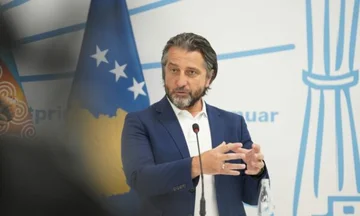
Senior adviser at the Riinvest Institute, Muhamet Mustafa, in an interview for KosovaPress, says that as a result of COVID-19 and preventative measures that have been taken in front of this pandemic, there are severe declines of up to 70 per cent depending on the sector.
Because of the decline in purchasing power, the loss has already begun to take place in trade, the sector that had large circulation in late March, when the first cases of infection in our country were introduced.
“Renets range from 20 percent to 70 percent, depending on the signature in the firm and sector sector. Now the trade sector has begun. As long as the trade sector in the first period, because of fears that there will be no trouble, there has been increased circulation, for example, in late March and part of April, commercial companies have increased circulation, now there is a reduction of turn 10 to 15 per cent or 20 per cent because purchasing power has dropped. It means that even companies have a problem with hotel companies, producers that are starting to burn, but it's a more difficult process than we thought. I think we should always avoid the series of closures, as in the March-April period and part of May, as this will be a heavy coup for Kosovo's economy, so we must do everything we can not to get into that” situation, he said.
Mustafa says the political stalemate and the selection of political war has created other problems.
He expects that after reviewing the budget in the Assembly, the implementation of the rest of the emergency package, which, according to him, has not been implemented by 50 percent.
The consequences and damages in business are bigger than we thought, so it is welcome as soon as the government takes quick action on the budget rebalancing, so that the emergency package can be implemented, because even the emergency package according to our estimates has failed to apply 50 percent. Of 170-180 million, about 80-90 million have mostly gone towards the right destination, the rest require budget rebalancing. Therefore, political stalemate and the selection of political warfare in this situation have created major problems. So neither has the emergency package been implemented, and I believe that with budget rebalancing, I hope that this will be done immediately”, Mustafa said.
While talking about the package of economic recovery, Mustafa says this package requires research and the early means in this package should be designated where they should be.
Aside from the package proposed by Prime Minister Avdullah Hoti -- the previous one for economic recovery -- Mustafa says banks should also develop credit activity in order to provide greater support to businesses.
The recovery package is a matter that requires research so that the effects of money are as big as possible and that it needs to be invested where the effects will be returned in general. What the government is now saying that by rebalancing it will provide 700m euros, and for the next year, even 500m euros, is a considerable amount and if well realised and in sectors where the return is greater will have a positive effect. However, a mechanism must be developed in implementation, whether the government will directly implement it in ministries and businesses, or whether it will be agreed to do so through banks. Perhaps it is more efficient and objective to assess the demands of businesses that should be thought of”, he said.
The Kosovo government has already presented the package of economic recovery as part of the governing programme and included nine measures to facilitate businesses.
According to the World Bank's report on the Western Balkans, Kosovo's share predicts that the economy will suffer 4.5 percent decline in 2020, followed by increased returns in 2021.
The explosion of COVIDD-19 and necessary braking measures are causing unprecedented pressure on investments, private consumption, but also on exports and remittances from the diaspora.
While consumption can be restored as the economy recovers, service exports and investments will take more time to recover. In this context, public revenues will suffer significant decline.
Because Kosovo entered into crisis with several fiscal covers, high government deposits, relatively low public debt, it now has some fiscal space to ease the effects of pandemic, although this space is limited by the simultaneous growth of current spending, the report said.
However, extending pandemic and containment measures could lead to deeper recession and greater lack of revenues, further limiting fiscal space for policy response.
The World Bank says that in addition to the total extension of tax payments, the government in office acted swiftly and announced the emergency response package of about 2.8 percent of GDP to support citizens, businesses and affected professions.
Accrued marks on providing package for the most needy, according to the World Bank, remain crucial for easing the immediate impact on the economy, poverty and society. It will be important to maintain fiscal space to be able to offer additional support if the crisis lasts longer, and to support later the necessary economic recovery, it is said among other things in this report.