4 months ago
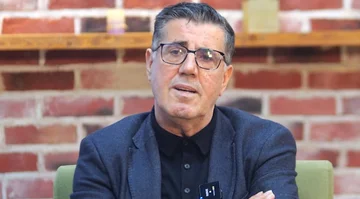
Hoti: We're not gonna download people, we're here to create new jobs.
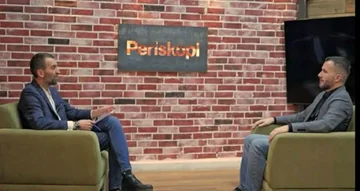
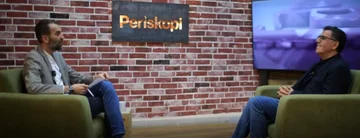
Periskopi(6 years ago)
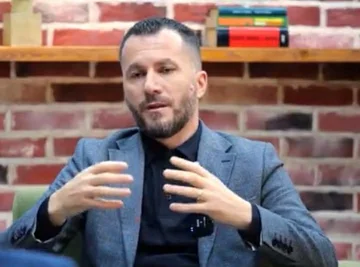
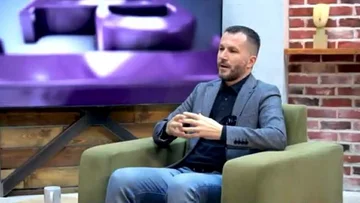
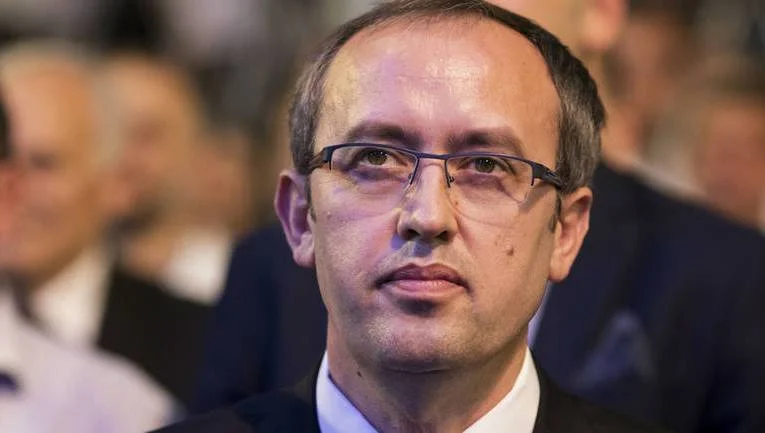
(6 years ago)Kosovo Prime Minister Avdullah Hoti said in an interview for Voice of America that his government intends to remove all obstacles to the resumption of talks between Kosovo and Serbia very soon. In the interview given to the Voice of America, Prime Minister Hoti expresses confidence in a rapid resumption of talks that will be conducted by [...]
Voice of America: Mr. Prime Minister, you took office at a time when it is expected to resume dialogue between Kosovo and Serbia. How much are you willing to take on such a responsibility?
Avdullah Hoti: I believe that the process is well-coroned in terms of our expectations as a society and as a state, but also procedures and principles that should be followed in the process of dialogue. The first one, we enter this process to conclude the agreement with Serbia, which should result in final recognition, because we have been dialogueing on topics that are perhaps more technical, for normalising relations between the two states, for free and other circulations in different segments. Meanwhile, we now have to sit down to complete the agreement, which is necessarily because that's how it makes sense, should lead to mutual recognition between the two countries. The second, as far as principles need to be maintained, I think it's quite clear, we have a clear position as a governing coalition in what form we enter into this dialogue, which is also determined by the Constitutional Court's decision last year on dialogue, where the competencies of institutions, the carriers of institutions of the Republic of Kosovo are correctly clarified in terms of the process of dialogue.
Voice of America: How do you think you'll go to the talks, you'll go along with the president or you'll form a team with the ruling coalition parties you're together?
Avdullah Hoti: That's why I'm saying it's clear in this direction because the dialogue is led by the government, the head of the government is the prime minister, so that I, under the Constitution, lose this burden of leadership of this process. What I'm going to do is implement a non-confrontation approach with other institutions, but a co-ordinating approach to getting everyone involved in this process. But of course, the burden will fall on the government, on this governing coalition. But beyond that, we will extend our hand to the opposition, to see how they can be involved in this process. All parliamentary parties should be involved in the process, but only on the basis of constitutional and parliamentary mechanisms that give all the opposition the right to engage in the process. The framework in this respect will have a key role, through existing parliamentary mechanisms, different parliamentary commissions, or by establishing new parliamentary mechanisms where the opposition still has the key to monitoring the process. What I assure the opposition and citizens is that the process will only be guided on constitutional grounds and with full transparency during this process, because this is not the process that belongs only to a governing coalition, but to the entire political spectrum and to all citizens of the country. Therefore, we are thinking different constitutional mechanisms, not institutional but constitutional mechanisms, that all sides are involved in the process and reach an agreement that can be ratified in the Kosovo parliament.
Voice of America: But, Mr. Prime Minister, so far invitations for talks have been sent to the country's president, Hashim Thaci. If the same thing happens again, how will you act?
Avdullah Hoti: The president has his constitutional competencies and he will exercise and exercise his powers. I have my powers as head of government, I will fully exercise without letting anyone interfere with them. I shouldn't and won't allow anyone to intervene in my competencies as the country's prime minister, but at the same time being accounting for the Kosovo Assembly as the government's labour watchdog.
Voice of America: Do you expect trouble in relation to the president in the negotiations?
Avdullah Hoti: No, absolutely not. As long as we all apply our constitutional obligations there should be no problem in this regard. What needs to happen, which has been missing in the past, because in the last government in particular there has been no will from the head of government to assume the co-ordination role among political forces in this process, but more has had a confrontational approach, perhaps for other political interests, but now it is not important. Our approach is that we bring everyone together to the table, and I will soon begin a round of consultations with all the leaders of the parliamentary political parties, to introduce them to our approach that is not unknown. All citizens know the approach we have as a governing coalition, even as the Democratic League, and now as the ruling coalition. Now it is the position of the Kosovo government to face this process of dialogue -- that is, a table of discussion, consultations with political party leaders to present how we see this process and ask them to be involved all the time in this process. I will keep constantly informed and involved all the time not only when the agreement is reached but during the entire process, so that once and for all the time the agreement with Serbia will be closed because I believe it is vital interest in peace and stability for the entire region.
Voice of America: Before these talks resume, measures that are imposed by the Kosovo government, such as reciprocity for goods coming from Serbia, must be removed. You've pledged to do such a thing when you're thinking of doing it?
Avdullah Hoti: We have pledged to remove all obstacles related to the dialogue process. In the coming days, we will make the necessary decisions for these obstacles to be removed, to breathe into dialogue, to enable dialogue because that is how we agree with our international partners to enable dialogue. If the dialogue is eventually not successful, we certainly maintain our right as a state, according to the Constitution and the laws in power to impose all reciprocal measures towards Serbia and other countries if that is seen necessary. But what is important in these measures is that they can succeed only if we agree with our international partners. We've seen the history of getting the 100 percent tax, or the current measures for reciprocity, and if we don't have our friends' support for setting these measures, they don't produce the desired effects for the state of Kosovo.
Voice of America: Will you ask Serbia for something in order to remove these measures?
Avdullah Hoti: I expect the two countries to remove all obstacles to dialogue.
Voice of America: What are these obstacles Serbia makes to Kosovo?
Avdullah Hoti: On the part of Serbia first of all is the ban on campaigning in the international arena on attracting recognition to Kosovo. That first of all and some other actions that the authorities of Serbia must take.
Voice of America: On the day you were elected prime minister, in parliament you have expressed yourself against exchange of territories or changing borders, but on the other hand Serbia wants something from Kosovo in order to reach an agreement. How do you see this?
Avdullah Hoti: I think our position is very clear. With this government and me as prime minister there are no agreements in exchange for territories, I believe it is not the position of the observed but well-known LDK, of this coalition and partners of this ruling coalition, which we want to reach a final agreement with Serbia for mutual recognition on the basis of the country's Constitution by fully maintaining and without even discussing the territorial integrity of the country.
Voice of America: Mr. Prime Minister, the Vetevendosje movement calls you Prime Minister of President Thaci and that your government has been chosen to implement any agreement he will bring. In fact, who will negotiate in Kosovo?
Avdullah Hoti: For Kosovo I will negotiate, as head of government in co-ordination with all other political forces, but I carry the burden. I do not want to comment now on the opposition's political statements, it is their right, I will also approach them to become part of this process.
Voice of America: Do you feel indebted to the president who secured the crucial vote for your election?
Avdullah Hoti: I feel indebted to deputies who have voted this coalition, I have responsibilities before them, not just before them, but in front of all MPs as representatives of the people of Kosovo, and I feel responsible to every citizen of the country.
Voice of America: There are already two special envoys for talks between Kosovo and Serbia, US Ambassador Richard Green and Slovak diplomat Miroslav Lajcak. There does not seem to be any co-ordination for the negotiation process right now among them. Are we talking about two negotiation processes?
Avdullah Hoti: I've had the first contacts, I've had a communication with Mr. Lajcak, he congratulated me on my duty and I've expressed our readiness as a government that is open to dialogue within these principles that we discussed earlier. He too has clear negotiating principles from our position as the new government of the Republic of Kosovo, and I expect to engage as soon as possible in a process of dialogue because this is the country's vital interest.
Voice of America: Will you participate in talks to be held by Mr. Lajcak, knowing that the president has already said he will not participate in such talks?
Avdullah Hoti: You see, Mr. Borrell and Mr. Lajcak represent the European Union and we know that the role of the EU and the role of the US are vital but also inseparable in this process. We do not select the ongoing envoy for dialogue, the names in the process of dialogue, choose the institutions of the European Union, and we must maintain respect for them and be willing to sit at the table to protect the interests of the state of Kosovo.
Voice of America: So you're going to participate in the talks whoever calls you, whether Ambassador Grenelli is Lajcak's diplomat?
Avdullah Hoti: We will insist, and this is our approach that both the EU and the US are fully involved in this process because we believe the agreement can only be reached with the involvement of the two sides. But what is even more important, we need to get guarantees from both the EU and the United States that the agreement will be implemented because we have a bad experience in this regard. Dozens of agreements have been signed in Brussels, and full of those agreements have not been realised because Serbia appears to have not had the pressure needed in this direction. Now we are in the final phase, to complete an open issue between the two countries, and I look forward to engaging in this process, complete it, and what's important to remove that dose of uncertainty about the policy of the whole region and then enter the Euro-integration processes very quickly.
Voice of America: When waiting for your first meetings and waiting for a quick deal?
Avdullah Hoti: First meetings can take place very soon after the movement, circulation, travel measures are released. I don't know when the deal can be reached, I can't give any date for that, it all depends on the dynamics of negotiations.
Voice of America: When will measures against Serbia be removed? Are elections in Serbia expected until 21 June?
Avdullah Hoti: Measures barring the dialogue process on the part of Kosovo will be removed very soon. I expect that under the commitments we have made from our international partners Serbia will remove all obstacles to this process and sit at the table of dialogue.
Voice of America: Within this month?
Avdullah Hoti: I think it's too fast, too fast.
Voice of America: Mr. Prime Minister, you brought down a government which, even according to part of Western diplomats, set standards in governance and fighting corruption. How much are you willing to keep up with these standards?
Avdullah Hoti: We in the government today approve our government programme agreed with coalition partners, and besides part of managing pandemic with some measures that are in detail from health professionals and plans for economic recovery, it is the rest of the strengthening of the rule and law and fighting corruption. And in this area, in strengthening the rule of law, you for a reasonable period of time will see concrete and not rhetorical actions.
Voice of America: Mr. Prime Minister, while you were in the preliminary government you caused various boards of public enterprises. Will you continue the same?
Avdullah Hoti: We're not here to fire people, we're here to create jobs, but we have to observe legal procedures and if it's necessary to fire people from their positions, only in accordance with the law.
Voice of America: Mr. Prime Minister has criticised you for dismissing the government at the time of the pandemic. Do you regret that?
Avdullah Hoti: Now I believe these are more rhetorical, political rhetoric of the opposition party that is now in opposition. We have been quite sincere in that coalition, but our former coalition partner has not respected the agreement we have had as coalition partner and certainly for the LDK those actions have been unacceptable and has come to the situation we have seen. We now have a new government with full constitutional mandate to advance and protect the country's interests.
Voice of America: Do you expect trouble in the functioning of your government given that you already have an Albanian majority in parliament?
Avdullah Hoti: Not absolutely. As long as this coalition works I don't see any problems and I don't see any reason that we can block the functioning of this coalition. I've personally been involved in a month and how much time in negotiations on reaching the coalition. With this coalition we have, with three Albanian parties and all communities not majority, even agreeing to the responsibilities we have within the ruling coalition, but also to the governing programme and the major reforms that are going to take place, I see no problem of bringing the mandate to its end. We are neither transitional nor temporary government, we are government with full constitutional mandate to lead the country in the most important processes and complete some processes that have already begun for thirty years.