4 months ago
Green: In Washington, we will talk only about economy, EU) abolish visas for Kosovo
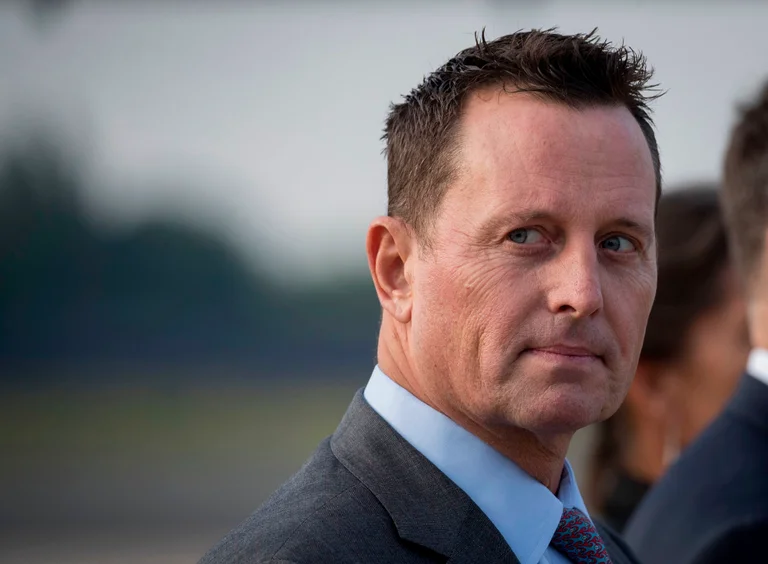
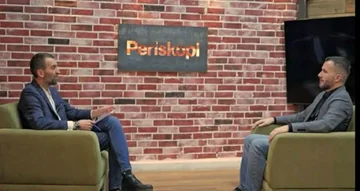
Periskopi(6 years ago)
(6 years ago)The American Emissary, Richard Green, was cut off. At this stage, which he calls the first phase, normalisation of economic reports should be achieved between Kosovo and Serbia. He says he has informed the French and the Germans of this. Then, the next phase, the political one, according to Green, must [...]
In an exclusive interview for Gazeta Express, President Trump's special emissary for dialogue between Kosovo and Serbia, Richard Green, has thrown a bucket of cold water on heated blood that on June 27th at the White House (which someone drew in other colors) will draw maps and knives to cut off the map of Kosovo, or cut anything else.
There's a lot of noise there, people who don't know, but who claim to know, are confusing the public”, Grenelli said, about claims that the White House will be discussed for serious policy themes. He has commissioned people in Kosovo, Serbia and Europe to listen only to those who are competent on this subject, not speculators.
I don't know how many times I have to say, even though I've been extremely clear, that we, the United States of America, are convinced that the 20-year conflict between Kosovo and Serbia can only be solved through economic normalisation”, he said.
According to the senior American representative, this should be the first phase of dialogue between Kosovo and Serbia. He has said that in the next phase, at step two, Europeans will lead the process. But this, he believes, should only happen when the first effects of the economy begin to come. Green has insisted on asking Europeans to start liberalising visas for Kosovo, because according to him without visa liberalisation there can be no economic development.
I N R V I S T A
Mr. Green, the last time we spoke, the prime minister of Kosovo was Albin Kurti. Following the no-confidence motion, he said that with your help he was knocked down. What was your contribution to this, Mr. Green?
Look, I'm not gonna see this. These are issues for the people of Kosovo. It's nothing more than the United States to be able to determine its American policy and from the US Embassy to the State Department, the National Security Council, the White House, the United States government was unified for what we don't want to waste our tax dollars and we haven't been obliged to give money to the states that have policies that will harm our support. So we had a very simple policy, which was: if there are taxes and reciprocity from any government in Kosovo, we wouldn't be able to offer our financial support, because we thought it was a waste. This had nothing to do with Mr. Kurt or any other government. It was the policy of the United States government to suspend our support while Kosovo had policies that hurt it itself. So we're not involved at all in <x0) musical chairs” about who is involved in the government. We've been very firm in our policy that we don't want to waste our money. It seems to me that it's very shocking that people wait for the taxpayers' dollars, no matter what their policy was, and that's not something the Trump Administration does. You can't just say you take US dollars automatically, no matter what kind of policies you create. There are consequences to any government policy, when it comes to supporting the United States. We should not be supposed to always write empty checks and it was a policy from USAID, from the MCC, from all our government agencies that the tax policy of 100 percent and reciprocity were damaging Kosovo's own economy, which was already fragile and therefore we didn't want to waste our money, so we just stayed away. If people involved in the Kosovo government decided that the presence of the United States government on the side was a real problem for them, then this is when they have the right to make whatever arrangements they want. We made it perfectly clear to Albin Kurt that this is U.S. policy. He could move forward without support from the United States. It was his choice. We asked nothing but to say that if you want our support, then you can't have a 100 percent tax and reciprocity.
Yeah, but you wouldn't have cooperated with him until he took the tax off. So he couldn't come to the United States, to the White House, in any combination, without...?
Albin Kurti was very likely to work with the United States government, and he decided he didn't want it because he had a policy that was contrary to our politics. He could try to move forward and say his policy is better. I won't be long. That's all I'm gonna say about Kurt.
The last question about this issue. He said in an interview that even after being fired, you two have continued writing to each other. Is that true or not?
I don't think that's true. One thing I'll say is that I've had very limited communication with him. Once it was personal, I might have met it twice. Every time I went to Pristina, I've met the cut, I have to say it. So, every time I was in Pristina, I've met her very briefly.
But at first it seemed you had great expectations about him.
No, that's not true at all. I never knew him.
Okay, because you had an exchange with the then Speaker of the Parliament, now the PDK chairman, Kadri Wessel...
There's a lot of rumors. Let me be very clear. When I arrived in Pristina, I met everyone briefly. Then I had a phone conversation at the White House between Robert O'Brien, me and Albin Kurti. It was a very long phone conversation, where he was very determined that he would not change his policies and he still wanted the support of the United States and we made it clear in that phone conversation that we are great friends with Kosovo, we love them good, but we were not in a position to donate money and offer financial support, when you were making policies that were damaging your own economy. So we made it perfectly clear. He knew that and chose to continue with his policy, however. He said: “there is nothing I can do about it. This is my policy.” He was very well aware. I met him when I was in Pristina, a phone conversation with Robert O'Brien at the White House and then some very limited messages. I never talked to him. It was something very minimal. He was like we talked all the time and like I pressured him. That's not true. We had very limited communication, because we made clear exactly what our policy was and he knew it. There was no mystery about that.
Do you think Mr. Hoti will now be prime minister legitimate...
We will not be involved in who the people of Kosovo choose for leaders. This is not a U.S. issue and I want to make this very clear. We are not involved in the policy of this issue. We act to maintain the position of the United States. The position of the United States is that we are willing to offer assistance to economic growth if you don't harm your economy. It doesn't make us who the prime minister or president is. If they decide to elect a new prime minister, a new president, while we can make sure that the economy is growing up, then we have no problem.
A somewhat tense debate is under way in Kosovo about who will lead our delegation. My question to you is, will you send an invitation to make it clear who should be the head of the delegation or is this our case?
You have little idea what the involvement of the United States is here. We do not control Kosovo. We are an ally of Kosovo. You call your delegation. We invite people who are sitting in the chair of the president and prime minister. That's what we do. We did it for Kosovo, we did it for Serbia. We invite official people sitting in those chairs, you put your delegation. We're not even involved in this.
All right. Then, the expectations of the people of Kosovo are different. Can you please tell us what we should expect about the 27th of this month?
I think you should just wait for conversations on economic issues. There are many rumors about what these talks are about and people who don't know they're pretending to know and are confusing the public, and I really hope that the public in Kosovo, in Serbia, in Europe, realize that they should only listen to people who know what they're talking about, because there are some reports and selfish commentators claiming they know what's going on. I don't know how many times I have to say it, but I have been perfectly clear to all who are involved that we, the United States, stand firm that this 20-year struggle between Kosovo and Serbia will only be resolved through economic normalisation, youth jobs and an emerging economy. All political issues that all political people in Europe and Kosovo are continuing to be thrown into... The reason these issues haven't been resolved for 20 years is because you're not focused on people who need to take advantage of economic normalisation. Many young people are abandoning the region and heading to Germany or Hungary or the Netherlands because they are not feeling there is hope in Kosovo. This will not be resolved through the immediate extension of a normalisation issue in some way. By the way, this is a big deal about Europe. There are hundreds of people who say Americans and Europeans are not on the same path.
Yes, Lajcak said today in Pristina.
Whoever says that, you shouldn't listen to him, because that's not true. I've been coordinating many times with French national security adviser and German national security adviser. They both know what the limited role of the United States is. Our limited role is to push towards economic normalisation, offer help to create jobs, offer help to facilitate some of the political issues. Anyone who continues to predict political issues or who claims that we will talk about difficult political issues next week is wrong. My vision, which I have talked about with the French adviser and German advisor, has two steps. The first step is economic normalisation. I don't know how many times the United States and the Trump Administration say that. People have to listen. We're focused on economic normalisation. We're trying to create faith and issues. For this reason, it is extremely important to conclude air transport, railway and road agreements. This is how trade develops.
This is the pillar of new agreement, railways, highways and air transport, right?
That's right. At the same time, the path of Europeans with Kosovo and Serbia towards integration into Europe is completely Europe-led, but this cannot be done until economic normalisation is achieved. That's the view of the United States and that's the vision of the United States. We stand firm that trying to postpone these issues that have been postponed for 20 years, the reason why they haven't worked is because there's no benefit for the people. The people need to see an emerging economy talk about talks. So it's very important that people understand it and we've said that this is not developmental news, it's not new news. We're focused on the economic part and this is the only part we're going to talk about in Washington, it's about the economy. The French know that, the Germans know this and they've approved this because the second step, which will take some time. You know, you won't talk about political issues until you score progress in the economy, until people see jobs and that takes a long time that's another direct blow against these rumors that the Trump Administration is looking for a quick deal. This is completely wrong, it's never been part of the equation. We don't have timelines. We never wanted something quick. Albin Kurti kept saying that, and he also repeatedly said that we want territorial exchange. I'm telling you we won't talk about these difficult political issues. The focus of the United States is on economic normalisation. Air transport, railway and border issues. So coming to the table to talk about these issues is exactly the focus. For this reason, the French and Germans fully understand that when we cross the economic section and that will take some time again, when jobs start to return, when the economy starts to improve, then you can start talking about political issues and then the Europeans will lead.
So you're going to co-operate closely with Europeans on political issues?
Listen, there are two different stages for this. United States is focused on the economic phase. All political issues are European issues. She comes in second. It will not be successful, and the vision we share with the French and the Germans is that you will not be successful in political issues without creating jobs for young people and creating economic normalisation. How can you claim you are making a final deal, when borders are not open, and when there is no flight between Pristina and Belgrade for the business community to make an economic normalisation? This is cheating. It has been connected and twisted for years and the United States believes it will never happen until you create hopes and jobs for young people. We're focused on this. And let me also say that as part of this economic focus, in order to promote growth in the economy, one of the things I've talked about with Chancellor Merkel several times and that I've talked about with two national security advisers is to say what I believe Europeans should be doing right now in order to help with economic normalisation, the first step, and I want you to talk about the first step and the second step, which is the second step, the first step is the economy. We're in charge of economic step. Part of this first step to economic normalisation is that Europeans must provide visas so businesses can grow. How can a construction business or an engineering firm or any kind of business that wants to be expanded outside Kosovo? They need to receive training in Germany or other countries, they need to go to business development, they need visas and what we've asked for is to start with small things. Again, don't say we're trying to remove all the visas. We're trying to do small things and start slowly. We've urged Europeans to think about the economic kind of visas, which are for business people so this can help for the first step.
Have you talked to them about this?
Yes, I've raised this issue many times and I'm continuing to press them to offer economic assistance by offering targeted visas for specific business sectors. Tourist visas are for all, but to start with targeted business visas at the same time as the United States is making economic development. By the way, Europeans are also making economic development. We're leading the first phase, they'll be leading in phase two.
Will we see the second step before November?
You're asking an impossible question and you're not listening to what I said. The second step does not start before the first step is successful.
Look, mutual recognition can't be successful until you have growing economies and businesses growing up and young people there and Europeans should be at the bottom of that because that's part of Europe. Similar to political issues are a road and we are not involved in this. We made it very clear. We're not involved, it's totally Europe. We've made it clear to the French and the Germans that once the economy begins to recover, once we have air, railway and land transport agreements, once we see businesses growing up, then it will be easier for Europeans for political affairs. There is an expression in the United States “to put the cart before horse”.
You know, we use it in our own language.
You can't do this. The first part, the hard work that needs to be done is the hard work of boosting the economy.
Will President Trump attend the meeting, Mr. Green?
I have to go, so you have one more question.
Yes, will President Trump attend the meeting during the White House conference?
At this point, there is no plan for him to attend this meeting. It'll be Robert O'Brien and Rick Green.
All right, thank you very much, Mr. Green.