4 months ago
German doctor: There will be second wave, its unclear intensity
Periskopi(6 years ago)
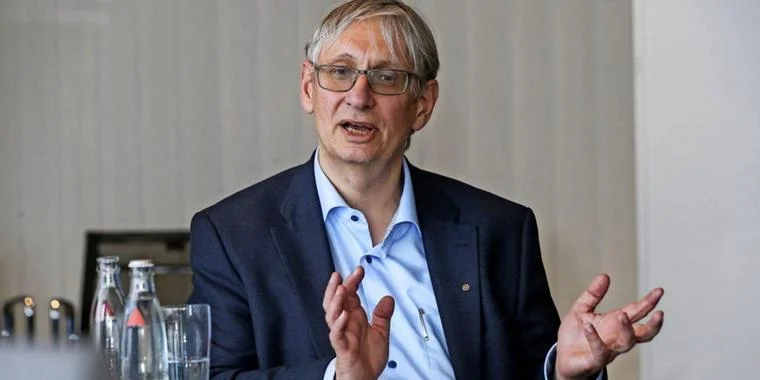
(6 years ago)Coronavirus has not disappeared, and its second wave will occur in autumn or winter, says Dr. Tobias Welte, of the German Centre for Infectious Diseases. In one interview, he says that major risk factors are cold air and low moisture. Welte says that physical distance and facial masks are [...]
Coronavirus has not disappeared, and its second wave will occur in autumn or winter, says Dr. Tobias Welte, of the German Centre for Infectious Diseases. In one interview, he says that major risk factors are cold air and low moisture.
Welte says that physical distance and facial masks are among the most important protective measures.
Welte, who is also a member of the German task force for the fight of the coronary, says that increasing the number of cases in Kosovo, in recent days, is related to the culture of living.
Radio Free Europe: Dr. Welte, can you first explain to us what the second wave of coronary is, and is one already happening? We see increasing numbers of cases in some countries.
Tobias WelteI think you're different from country to country. There are some places where the second wave is going on. In Iran, for example, there is daily increase in cases, as their numbers have declined. There is now the second wave. It can be religious. During the month of Ramadan, the number of cases has dropped, but then, after numerous human meetings, it has yet increased. In other countries, such as Germany, there is no domestic increase, but there are grounds. One of these are meat factories. The problem of these sites is that they carry some risk factors. In meat factories, for example, cold and dry air prevails; people work close to each other and distance is not respected.
And most workers come from southern and Eastern Europe and the conditions in which they live are far from perfect. These factors, then, make you more vulnerable to coronary. What we can learn from these kinds of explosions is that the virus is still here, it's still infectious. And if you give him a chance, there will be infection. Now we're in summertime, but if the cold air plays a role, we'll probably see the second wave in autumn or winter.
Radio Free Europe: Will there be a second wave in any country that has ever had coronary cases, or is that what depends on the strategy they follow?
Tobias WelteThe virus has not disappeared in any European country. We live in a global world. If travel is permitted and borders are opened again, the virus will spread from country to country. So, I'd say yes, there'll be second wave in the fall. The intensity of the second wave is still unclear.
Radio Free Europe: Can the second wave be prevented?
Tobias Welte: I'm afraid not. There won't be a vaccine until the middle of next year, if we're lucky. So the odds of a vaccine are not so big and there will be no effective treatment. The only thing we have to do, even when we reopen the economy, is keep some precautions. And the most important thing is distance.
Radio Free Europe: Could the second wave be worse than the first?
Tobias Welte: I think the second wave won't be worse, but it's probably a couple of problems together. Coronavirus and influenza can occur at the same time. So flu vaccines, anti - bacterial pneumonia, must be taken to reduce the risk of certain infections coming at the same time.
Radio Free EuropeThe second wave is often associated with autumn, as you said. Does the cold weather make the situation worse, or why?
Tobias Welte: Cold weather and low moisture are risk factors. Another risk factor is being in closed environments where aerosol [v.j. The mixture of solid particles or liquid dots in the air] and the time of aerosol survival is higher than outside. So if you are in closed rooms, if the air is colder and dryer, the danger increases.
Radio Free Europe: How to Fight the Second Wave In solitary confinement again?
Tobias Welte: I don't think there'll be total isolation again. None of the countries -- rich ones like Germany or Austria -- will be able to be isolated again because of the economy. There may be partial, regional isolation, but not total. What we're trying to do right now is figure out who's the most responsible for the coronary. Right now, it doesn't seem like children, so it doesn't make sense to shut down the nests or schools. The elderly, however, are more endangered, and the elderly with companion diseases are more likely to die. So we need special measures for special categories of the population.
Radio Free EuropeCan you give us more details, what are these special measures?
Tobias Welte: Contact restrictions, especially in nursing homes. I think distance is very important. I also trust masks covering my mouth and nose. Even if we don't like them, we should live with them.
Radio Free Europe: Could there be more than two waves of coronary?
Tobias WelteThe problem with these viruses is that we never know what's going to happen. If there are mutations in the virus, variation in virulence, change in transmission, it's unclear. If we see some flu epidemics where we have the greatest experience they've been with us for one, two, three years. For example, swine flu has been infertile for three years and then disappeared. One hope is that this is going to happen even with the Coronavirus now, that it will disappear at some time, either create mutations and become less dangerous, causing lower mortality rates, or become a more appropriate virus for the human system.
Radio Free Europe: I will move to Kosovo. Some days we've had up to 35 percent positive cases among the tests conducted. How do you comment?
Tobias Welte: I've never heard of this before. This is related to the culture of your life. So if it's family culture that people stay very close to each other, they kiss you very, to the left, to the right, to talk loud, then danger.
Radio Free Europe: Kosovo now does not test the first contacts, but cautions them to privacy for 14 days. Is it dangerous, considering that if someone doesn't know he's infected, he can spread the infection...
Tobias Welte: That's true. We act differently in Germany. We test the first contact. I think that's the right way, because if there's an explosion, you need to identify people at risk. If you want to stop an explosion, you have to start the intervention very soon.