4 months ago
US expects deal as soon as Kosovo announces completed mission
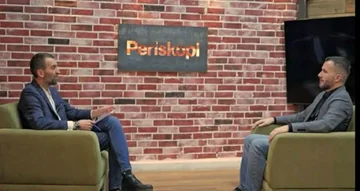
Periskopi(6 years ago)
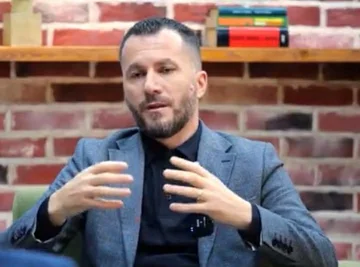
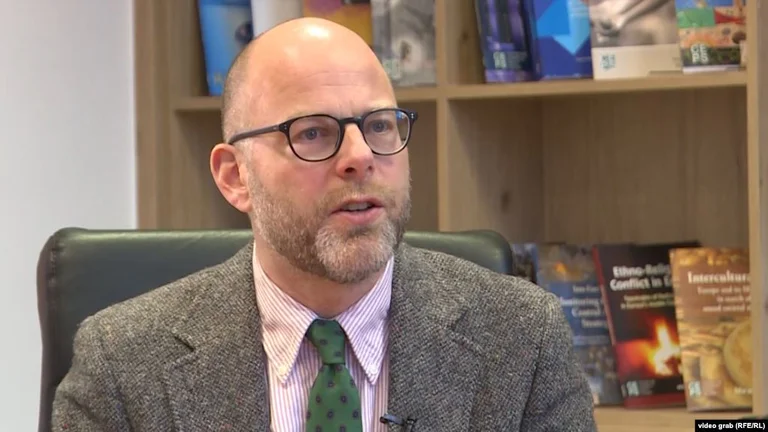
(6 years ago)Toby Vogel, expert at the Democratic Policy Council, says the US wants agreement between Kosovo and Serbia as soon as possible, in order to announce the completed mission and withdraw troops from Kosovo. In an interview for Radio Free Europe, he says administration Trump and presidents [...]
In an interview for Radio Free Europe, atells Thaci and Vuciq management are the main protagonists who support the exchange of territories between Kosovo and Serbia.
Vogel says the outgoing prime minister's Vetevendosje Movement, Albin Kurti, will have difficulty convincing the US and EU that the Constitutional Court's decision is unacceptable to him.
Radio Free Europe: Mr. Vogel, Kosovo Constitutional Court has found that New Kosovo government could be formed without elections, but outgoing Prime Minister Albin Kurti has said this decision is unacceptable. Where does this situation lead?
Toby Vogel: First of all, I don't want to comment on a Constitutional Court decision because I'm not an expert on the constitution. I don't necessarily understand all the legal complications here. But what I can say is that when Kosovo citizens have come to the polls last year, they have voted Vetevendosje and the Democratic League of Kosovo, based on expectations that they will form the government if elected.
Now the LDK has decided to withdraw from [the coalition] agreement, and in terms of political legitimacy, the created situation requires new elections. This is my personal perspective, not a legal analysis, not a constitutional analysis.
I understand that Vetevendosje and the prime minister in office, Kurti, do not accept this decision in a political sense. However, I think it will be very difficult for them to convince the European Union, especially the United States, of their views. The United States, in fact, has helped convince him. The LDK leaves the ruling coalition with Prime Minister Kurti for its reasons. And now, the EU and the US call for restraint, for respecting [the Constitutional Court's] decision.
Radio Free Europe: But, many have said that the Constitutional Court's decision could be a dangerous precedent -- marginalise the election winner and pave the way for political maneuvering in the future among political parties that may not win the elections...
Toby Vogel: As far as I understand the decision, he says the largest party, the largest number of seats [in Parliament], has the first chance to form the government. And if it, for whatever reason, cannot form or retain a majority in parliament, then the president can assign someone else to form the government. That's how I understand the decision. Everything else would allow Vetevendosje to hold the entire process hostage, not appointing an alternative candidate for prime minister. I repeat, I am not an expert in the Constitution, but I understand the decision and the legal and political reality behind it.
Radio Free Europe: One of Kosovo's most urgent tasks is the continuation of dialogue with Serbia, which was suspended at the end of 2018. When and under what conditions can this process resume?
Toby Vogel: I would rule out the idea that dialogue is the most urgent issue, because this dialogue has continued and has been interrupted for nearly a decade now. I don't think a month ago or a month later is a big problem. Emergency comes from the American side. Americans want agreements as soon as possible in order to declare the mission completed and withdraw troops from Kosovo.
This would be a victory in foreign policy for [American President Donald] Trump. It would be a personal excuse for Richard Grenelli [the White House envoy for the Kosovo-Serbia dialogue], which appears to have now been involved in the campaign to re-election Trump. This is what really stands behind the sense of urgency.
I understand why Kosovo feels this as urgent, because it is blocked, there has been no chance of becoming a member of the United Nations, it has not been able to become part of UN agencies, there is also a recognition campaign from Serbia.
The other aspect is who will represent Kosovo in the dialogue -- the president as yet, or prime minister. But, I think the most important thing to understand now is that [Kosovo's] president Hashim Thaci's push, in exchange for territories with Serbia, is not really leading anywhere. The only people who think this is a good idea are Americans and, until recently, the Europeans.
But, the European Union's envoy for Kosovo-Serbia dialogue, Miroslav Lajcak, has clearly indicated, saying this would be a bad idea. I think President Thaci understands very well that he is isolated, within his country, in terms of the idea of exchange of territories and that such agreements would not be implemented.
Radio Free Europe: Thaci insists the U.S. should take the lead in dialogue and you just said the US supports the exchange of territories. So is this matter expected to be on the table?
Toby Vogel: I think the main protagonists in favour of exchange of territories at the moment are [Serbia's president, Aleksandar] Vuciq, President Thaci and the Trump administration. Whether this will become part of diplomatic negotiations or not, it remains to be seen. It depends on how these talks are held. Several years lost in dialogue. In the past two years, there has been counterproductive talks on the exchange of territories, which would be contrary to European Union principles and values and very destabilising for the Balkans.
Now I see a kind of urgency on the EU's side to return to fundamental principles that accompanied dialogue when it started, nearly ten years ago.
Radio Free Europe: There seems to be little co-operation between two envoys in dialogue, the American, Richard Green, and the European one, Miroslav Lajcak. Do you see any problems here, because President Thaci also said he would not participate in negotiations with Lajcak...
Toby Vogel: President Thaci is not supposed to participate in talks with Lajcak, because it is Kosovo's prime minister who should be tasked with dialogue. You remember that when the dialogue started, it started with the prime ministers of both sides. And when they took over the president's other functions, dialogue went through them. So there's never been an institutional reason behind this. It's always been about personal power.
As for the role of the United States, it has been an unfriendly act. An act of bulimism of the Trump administration, not only towards the Government of Kosovo, which has ultimately been properly constituted after elections, but also to Europeans. It was made public, in an effort to marginalise the EU and marginalise Kurti. It's been a very aggressive move, because it's been public. There are always certain things that happen backstage. There may always be no unity between the EU and the US, but seeing so much public disagreement... I think it's a US attempt to take control of the process.
Radio Free Europe: Serbia also faces elections soon. So far there is no sign from the Serbian side that it may have changed its stance on Kosovo. In view of all these developments, what are the hopes of dialogue producing results?
Toby VogeI: I do not expect, and I am not the only one, many changes in Serbia. The opposition in Serbia is weak and divided. These elections are almost a formalisation that must be carried out before the dialogue resumes.
I don't know what the last phase of Vuciqi's game is and I don't know what it is doing to prepare the political scene and public opinion for the inevitable outcome of this dialogue, which will be the full recognition of Kosovo's independence. Kosovo has been out of control of Serbia for 20 years now. I don't think any reasonable observer has illusions that Kosovo will return under Serbia's sovereignty. I think it's time Serbia accepted that fact and accepted reality on the ground.