12 minutes ago
War criminals preparing to race for parliamentary elections in Serbia
Periskopi(6 years ago)
(6 years ago)The involvement of Captain Dragan and Vojislav Seselj for MPs in Serbia's Parliament has sparked numerous reactions to public opinion. “I think that what I want to put in order of day concerns every Serb, and I have no problem working with anyone who is in parliament who wants [...]
“I think that what I want to put in order of the day concerns every Serb, and I have no problem working with anyone in parliament who wants to be involved in protecting persecuted Serbs, said MP Dragan Vasiljkovic for Serbia TV in May 17.
Vasiljkovic is well-known throughout the Balkans as “Captain Dragan”, a war criminal who returned to Serbia only March 28th this year after serving a prison in Croatia for crimes he committed there in 1991.
Now he is trying to collect signatures of support that he needs to become a candidate in Serbia's upcoming June 21st parliamentary elections. If he succeeds, there will be two war criminals running for legislatures.
Vasiljkovic still does not have an official political programme, but has said that if elected, he would come to the defense of the persecuted “Serbs in Croatia, Kosovo and Montenegro.
He has also said he favours early release from prison for Milorad égija Ulemek and Zvezdan Jovanovic, who are serving sentences for the assassination of Serbian Prime Minister Zoran Djindjic in 2003. He said they should be released because “ata are heroes” who fought in the name of Serbs.
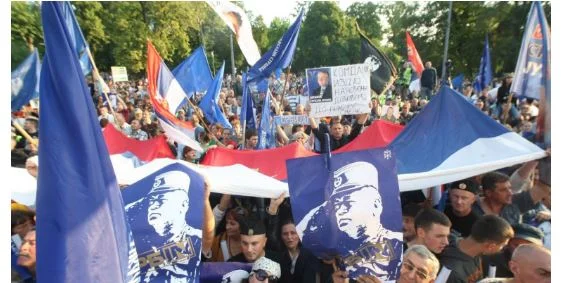
The other war criminal who has announced his candidacy is the ultranationalist leader of the Serbian Radical Party, Vojislav Seselj, who was sentenced by the International Criminal Court Mechanism for committing war crimes against Croats in his country in 1992.
veteran politician Seselj was already an MP in Serbia's last parliament, even though his conviction should have disqualified him from landing in the legislature and he is now running again.
Jovana Kolaric, a researcher at the Centre for Humanitarian Law, a Belgrade-based NGO dealing with war crimes in the former Yugoslavia, said there is a contradiction between the Serbian government's rhetoric regarding future focus and its practice of praising people who committed war crimes in the past.
“” Looking to the future “, Serbia prints and promotes books by people convicted of war crimes, cites their wartime experiences as an example and gives them tribute in various ways,” said Kolaric.
Last year, the Serbian Defence Ministry organised an event to promote a book denying that Bosnian Serb forces were responsible for the 71-strong massacre in Bosnia in 1995, and another event to promote a book by former Yugoslav Army General Nebojsa Pavkovic, who is currently serving a prison sentence for war crimes in Kosovo.