15 hours ago
New threats detected: Coronavius attacks almost everything from the brain to the fingers
Periskopi(6 years ago)
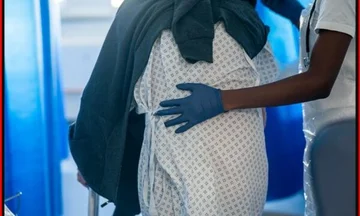
(6 years ago)Deborah Coughlin did not have the typical symptoms of COVID-19, she did not cough and had no difficulty breathing. The first few days, her temperature never rose above 37.8 degrees. In fact, 67-year-old American went to the Emergency Department to a hospital in Hartford, Connecticut, to vomit and diarrhea. We thought it was a poisoning [...]
In fact, 67-year-old American went to the Emergency Department to a hospital in Hartford, Connecticut, to vomit and diarrhea.
We thought it was a stomach poisoning”, her daughter, Catherine Coleman, told the Washington Post.
But at one point, while Coughlin was talking to her daughters on her cell phone, the oxygen level in the blood dropped to such a low level.
Coughlin is just one of the most seriously ill people with coronavirus with strange symptoms that many doctors throughout the U.S. and the world are trying to get to know, explain and treat, broadcast Telegrafi.
This is far more than a respiratory illness
We didn't know what we were dealing with at first. We saw patients die in front of us. Suddenly we were in a completely different game, and we did not know why the”, said the leading physician at Mount Sinai Hospital in New York City, the area of COVID-19 epidemic in the United States.
This complicated, unpredictable viral disease most often attacks your lungs, but it can also attack every part of your body literally from your brain to your fingers.
Coronervirus causes inflammatory reactions but also blood clotting throughout the body.
Coronavirus SARS-CoV-2, in some patients, forms blood clots in lungs, kidneys, veins throughout the body, and these blood clots in some cases end up in heart attacks and strokes that can suddenly kill the patient.
Blood Spills That Cause Strikes on Older Patients
One particular concern is that heart attacks and attacks occur in patients under the age of 50 who have previously had little or no symptoms of coronavirus.
“Virus seems to cause clots in large arteries”, a neurosurgeon from Mount Sinai Hospital told CNN last month, which addressed five such patients.
He added that their data shows a sevenfold increase in unexpected shocks in patients of younger age.
According to data from the autopsys of the American chain of private hospitals Northwell Health, about 40% of the coronavirus patients who died after being released from hospitals seemed to have a heart attack, or a corrostic complexity.
And Dutch scientists also found in a recent study that a third of the 184 patients who ended up in intensive care for coronavirus had a complexity associated with blood clots, whether on foot, lungs, hearts, or other body parts.
The virus also attacks kidneys, hearts, brains
Besides causing heart clots, the coronavirus directly attacks the heart, weakening the muscles of the heart. It also attacks the kidneys, causes neurological symptoms, and can reach the brain directly.
It may begin with very mild or symptoms without symptoms at all, and within a few days, there is a rapid deterioration of the situation, and this deterioration has surprised even experienced doctors. It mostly affects older people whose immunity has been weakened by previous diseases, but it can cause a dangerous inflammatory reaction with heart failure even in some children.
Children began dying of dangerous heart complications
The governor of the American state of New York announced last Friday that 73 children in that country became seriously ill, and a five-year-old boy in New York was the first child to die of coronavirus there. Two other children died on Saturday.
The news shocked doctors. We all thought this disease was killing older people, not children”, Dr. David Rach, president of Mount Sinai Hospital, for the Washington Post.