a minute ago
Thousands of euros in salaries, amount received in the past two months
Periskopi(6 years ago)
(6 years ago)A total of 775 thousand and 864 euros have received salaries and compensation from Kosovo's Parliament deputies for the months of March and April of this year, the Kosovo Assembly for Radio Free Europe has confirmed. These salaries, MPs have taken them at the time that Kosovo has been facing the pandemic of the new choreography. [...]
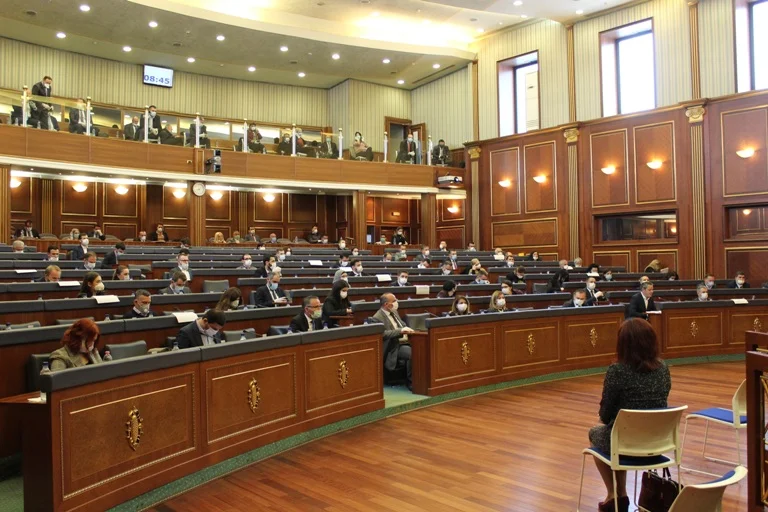
A total of 775 thousand and 864 euros have received salaries and compensation from Kosovo's Parliament deputies for the months of March and April of this year, the Kosovo Assembly for Radio Free Europe has confirmed.
These salaries, MPs have taken them at the time that Kosovo has been facing the pandemic of the new choreography.
Although institutions were challenged by the crisis caused by the spread of the coronary and the establishment of restrictions on the movement of citizens, which had a negative effect on the economy, all MPs received their salaries in full for the months of March and April.
None of the Kosovo Assembly deputies have given up their salaries because of the pandemic, confirms Kosovo's Assembly for Radio Free Europe.
The basic salary of a Kosovo Assembly MP is 1,547 euros, excluding compensation they receive for participating in the sessions, as well as parliamentary commissions.
But, since March 13th, when the first case of Kosovo was shown with Coronavirus, Kosovo Assembly deputies met twice for the budget, once to overthrow the government and the last time with the proposal of the Democratic Party of Kosovo, for the proposal and adoption of economic and financial measures for economic recovery.
This session ended a few minutes after it started, because it itself The PDK withdrew from the proposal for discussing the resolution it proposed.
During the months of March and April, MPs have been very few active in parliamentary commissions.
Organisations monitoring the work of the Kosovo Assembly say MPs have had to solidify with the economic crisis, applying at the institution level for some of their salary to be split to help the Ministry of Health, the National Institute of Public Health, as well as hospitals in need.
Agnes Haxhiu, policy researcher at the Kosovo Democratic Institute, says that in the two months of the pandemic, March and April, Kosovo Assembly deputies have failed to address the needs of Kosovo citizens.
Haxhiu says the Kosovo Assembly has not been able to provide assistance to institutions in the fight against pandemic, especially during the most critical months, March and April.
She believes it would be a good act of solidification if MPs in the next two or three months gave up a salary to help overcome the situation caused by the pandemic.
It is up to MPs to take such an initiative to reduce the pay of MPs. Although there have been some individual initiatives by some MPs to share their salary, this has not been at the institution level. Taking into account the small budget the Ministry of Health has in comparison with the actual needs, but also the economic consequences brought by the pandemic, would be an appropriate action, even for two or three months, if MPs decide to undertake such an initiative”, Haxhiu says.
The company of such an action, according to Haxhiu, would also be seen as helping relevant institutions to cope with the situation caused by the new coronary pandemic.
Albert Krasniqi, from the Democracy Plus organisation, estimates MPs have conveyed bad messages to citizens during the pandemic.
Krasniqi says giving up a part of the salary on the part of MPs would be only a symbolic one, but that he could not say the damages the political class has caused in recent months.
It would be good if the MPs had shown a kind of greater sensitivity and message delivery to other communities as well, to give away their donations, in order to cope more easily with the pandemic. However, a assembly that has not demonstrated the will and high level of responsibility for citizens... the division of their salaries would be hypocrisy, because the damages that the political class has done to its behaviour in the country are much larger and cannot be marked by a symbolic removal of a piece of their” pay, Krasniqi says.
Krasniqi is critical of the sessions Kosovo's Parliament has held during the months of March and April, as according to him, this institution has focused more on political warfare than on advancing initiatives for the good of citizens.
On individual grounds, some deputies from the Kosovo Assembly in recent weeks, through social networks, have announced that they will donate half the pay for management and fighting of the new choreography, but Radio Free Europe has been unable to prove how many of them have done so.
Unlike the Assembly, some members of the government cabinet have been solidified with the situation caused by the pandemic.
Kosovo's incumbent Prime Minister, Albin Kurti, and some cabinet ministers donated half of the salary to help fight the body's body.
From the government cabinet, besides incumbent Prime Minister Kurti, the incumbent deputy prime minister, Hakki Abazi, incumbent Justice Minister Albulen Haxhiu, Acting Minister of Internal Affairs and Public Administration Jhelal Svechla, acting Minister of Foreign Affairs Glauk Konjufca, and acting Minister of European Integrations Blerim Reka.
The money that has been donated by these members of the government cabinet, according to Kosovo's acting government spokesman, Kryeziu, has gone as financial support to the account for management and fighting the new corruption.
“All ministers [who have donated half the salary], including incumbent Deputy Prime Minister and Prime Minister Kurti, have shared 50 percent of their salary. And incumbent Minister of Finance and Transfers Besnik Bislimi has donated 650 euros, which percentaged at 56 percent of his salary”, Kryeziu says.
Currently, the prime minister's salary in Kosovo is around 1,500 euros, as at the beginning of the mandate, incumbent Prime Minister Albin Kurti abolished the government's decision to raise the 100 per cent salary, with which the prime minister's salary decision was 2,950 euros.
Some countries in the region have discussed the possibility of lowering salaries for the following months for top state officials, due to economic damage caused by pandemic.
But, in Kosovo so far, it has not been discussed for such an initiative. The incumbent Government of Kosovo has not confirmed this.
In the region, Montenegro has warned of the possibility of lowering state officials' salaries for May and June, due to the economic situation created by the pandemic and the coronary.
Montenegrin Prime Minister Dusko Markovic has cited the possibility of lowering salaries for the prime minister, president, their advisers, the heads of courts and prosecutors, as well as the directors of agencies.
While some officials in Bosnia and Herzegovina have given up a part of the pay for March, while in the Federation of Bosnia and Herzegovina, they have adopted an act for parliamentarians to give up the paushal they receive.
Serbia is among the most affected countries in the region by corruption, but even there is no discussion of lowering salaries for top state officials.
In a sign of solidification with the situation prevalent in Serbia, Serbian President Alexander Vuciq's party functionaries have been declared not to receive the 100-euro aid the state has warned of each citizen over the age of 18.