6 minutes ago
Study: Coronavirus first case in Europe, December
Periskopi(6 years ago)
(6 years ago)French scientists say they may have identified a possible case of a person affected by COVID-19 dating back to December, about a month before the first cases in Europe were officially confirmed. The one thought to be the first patient affected by disease (in Europe) is a citizen [...]
French scientists say they may have identified a possible case of a person affected by COVID-19 dating back to December, about a month before the first cases in Europe were officially confirmed. What is thought to be the first patient affected by disease (in Europe) is a French citizen who had not had any travel history before infection.
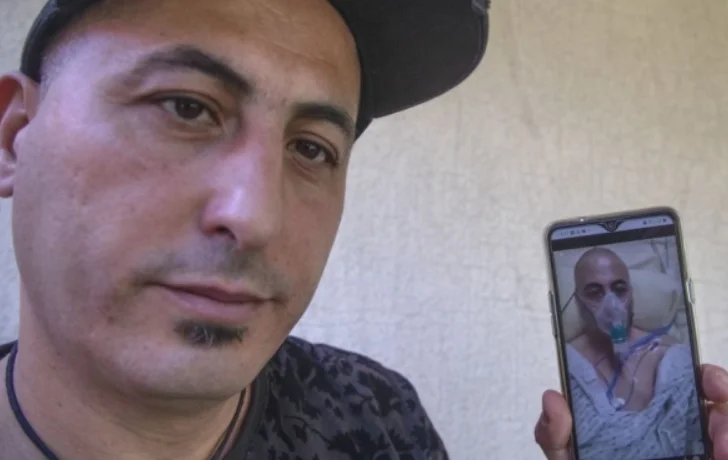
In a study published in the international newspaper on “Microbeque Agents”, doctors at a hospital in northern Paris reviewed samples from 14 patients treated for atomic pneumonia at the beginning of December and mid-January. Among them were the records of Ammirouche Hammar, a fish merchant, about 40th of Algeria's origin, who has been living for years in France and who had recently had no travel history.
Mr. Hammer told the news agency “Associated Press” that a few weeks ago doctors informed him it was likely in December that he was affected by COVID-19.
Already completely healed and playing soccer in his backyard, Mr. Hammer says it feels like the “blessed” that managed to survive.
My wife was shocked. As I watched the pandemic, the deadly wave of it all over the world, I thought: I am blessed, frankly! The disease was not then known. This is the worst thing. Doctors did not know what to do. It was a very, very serious infection for them, so they explained it to me, but they were unable to find out what it was, he says.
Mr. Hammar, who suffers from diabetes, was admitted to hospital with symptoms that doctors say were similar to those manifested in patients with COVID-19 in China and Italy. Two of his kids got sick a few days after him. When doctors reviewed the samples taken from Mr. Hammar in December, they found that he was positive about the choreography.
It's like a dry cough for about a week. I had a dry cough almost every day. Then began the temperature that grew daily until it reached over 40 degrees Fahrenheit [40 ° C], I am sure. I didn't measure it, but my wife touched me in the forehead and said, "You burn like a oven”," he relates.
Professor Yves Cohen is one of French researchers and intensive care specialists in northern Paris, where Mr. Hammar lives, which has been particularly hit by COVID-19, not only in the number of injuries but also in death.
Mr. Cohen dismissed the possibility that samples taken from Mr. Hammer were infected. He said they also reviewed his scanner, whose images were similar to those of a patient with COVID-19.
“The champions taken from Hammar may be infected and that's why we do some different tests. When we run two tests, if the sample is infected, one of them gives incorrect information, but in this case both were positive. We cannot avoid the fact that we are dealing with COVID-19, as the scanner also showed this and the scanner cannot be infected”, he says.
According to data, Mr. Hammer doesn't seem to have infected other people. He was later cured after treating antibiotics in intensive care departments. Mr. Cohen and his colleagues say their findings showed that there may be many other unidentified cases of coronarys before the disease was officially discovered in Europe.
“The epidemic may have started a month earlier than we think, and this enables us to know more about the epidemic. That's why I think it's important that other doctors, whether in France or the United States, conduct studies that we are currently conducting to better understand this virus. The better you know the enemy, the more efficient the answer to him”, he says.
Some experts say the results are interesting, but hardly convincing. A spokesperson for the World Health Organization described the findings as exciting <x0 warnings” and said they could help scientists better understand COVID-19 evolution.