a minute ago
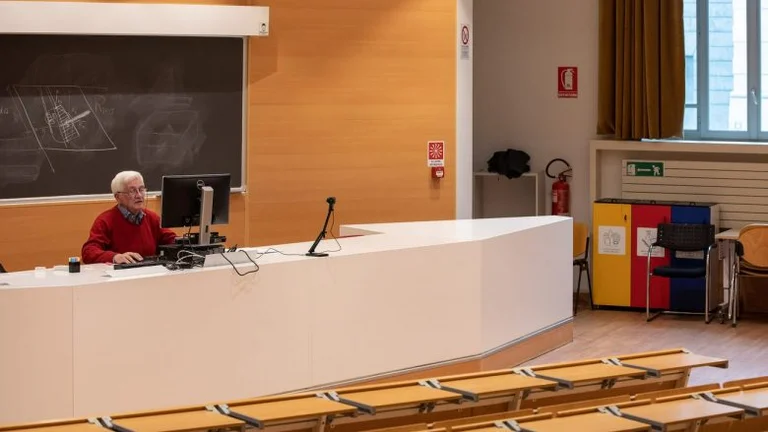
That's how schools and lessons can look if they resume in autumn
Periskopi(6 years ago)
(6 years ago)The colleagues will look very different in the autumn semester if they reopen in autumn. This is because the pandemic that has now forced colleges all over the world to jump suddenly into <x0-lethalation via internet”. And as Business Insiver writes, there's Telegrafi, traditional events like graduation, shows and athletics have all been canceled. [...]
And as it says Business Insider, conveys Telegrafi, traditional events like graduation, performances and athletics have all been cancelled.
But as the current interrupted semester ends, there is a new question: What in the next year?
According to BI, Harvard says it will open in the fall of 2020, but it is preparing “for a scenario in which many or all lessons will be developed from the distance”.
Princeton has asked its faculty to prepare for autumn under “
Other colleagues like Notre Dame University will announce their decisions during the summer.
Missouri University President Mun Choi has become “less optimistic” about a complete reopening in autumn.
In Michigan, Oakland University will have a “hibride” approach of lectures.
Even for schools to open, life will look different
In an edition for The New York Times, Brown University President Christina Paxson wrote that she predicts empty stadium stands and Zoo parties.
But even if colleges reopen, they'll probably face a very reduced student class from what they used to be, and fewer students in general, Telegrafi notes.
And students already at school are also said to have hesitated to return: Four-year-old institutions could see a general drop in the 20% census, with 26% of current students surveyed said it was unlikely or “too soon to say” if they were to return.
According to survey results, 41% of high school minority students said they would probably not attend college during the fall or it is “too soon to show”.
Another complicating factor is for international students the cause of travel restrictions.
Even postponing the start of the school year for January could potentially be a “bast most secure” for students coming from different countries.
Foreign citizens travelling from China are currently not allowed to enter the United States, which could have a major impact on the international student population.
According to the Institute of International Education, China was the largest source of international students in the 2018-2019 school year.
But Internet lectures can evolve
Students should not expect to return to lecture halls filled with hundreds of students soon, and even online instruction may seem different in autumn.
Remote learning requires a more differentiated and individualised approach in learning than traditional campuses”, said Janet Wolfe, school principal I Manhattan's DEAL, for Business Insider in an email.
Wolfe added that schools can be moved towards shorter and more intensive seminar style courses, which can help raise students.