4 minutes ago
Why aren't all returnees sent to quarantine in Kosovo?
Periskopi(6 years ago)
(6 years ago)Donika Lamageme, from Ferizaj, returned from London on Saturday, and from Pristina Airport went to her home in the proselytizing éso as a necessary measure to know whether she is infected with coronary or not. On Flight London - There were about 140 passengers, citizens of Kosovo who were in England, Canada, Ireland [...]
On Flight London There were about 140 passengers, citizens of Kosovo who were in England, Canada, Ireland and Iceland.
Before I got here, I hurt my leg, even when I got here they treated me priorityly and then I left immediately. I didn't go to quarantine because I broke my finger. As far as I've realized, the entire plane (all passengers) has gone to zesophism”, Donika said.
Vetizolation implies staying at home for 14 days, not having contact with other people, while quarantine refers to a more serious state of isolation declared by the authorities, often referring to the separation of people with high risk from contracting the disease.
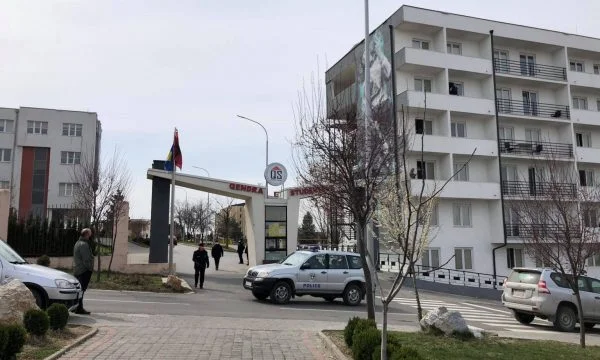
Valdet Hashan, the quarantine manager at the Students Centre in Pristina and currently the only one in Kosovo, said that on Saturday and Sunday about 300 Kosovo citizens have returned from Germany and the United Kingdom.
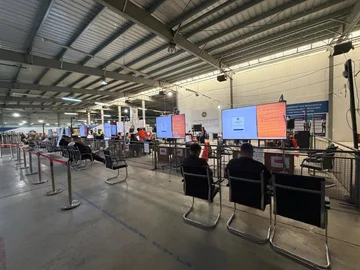
According to him, all these travelers have been subjected to checkups by doctors at the airport, and after their assessment, they have been sent to their own capacity.
Hashan said there are seven categories not subject to quarantine.
The chronically troubled subs, people over the age of 70, children under 18 who are not accompanied by one parent, health professionals, doctors, nurses, policemen and members of the Kosovo Security Force, people who come for cases of mortar, pregnant women and families who have young children, and people who are tested for COVID-19 [the disease causing the choreographer] and who testify with yahardciperci (doctors) these do not subject to the process, Hashan said.
Those who are not part of these categories are sent to quarantine for a week.
Hashan said that even in the coming days, hundreds of other citizens will arrive in Kosovo.
On May 27, we have two flights. Of the Netherlands, Belgium and Luxembourg will come 170 citizens and from Switzerland 150. By the 31st, 100 citizens from Italy will arrive, while on June 1st 120 will come from Turkey”, Hashan said.
Since the beginning of the COVID-19 pandemic, the Ministry of Foreign Affairs and Diaspora in Kosovo, in co-operation with Kosovo embassies in various countries, has repatriated over 2,600 citizens.
According to Kreshnik Ahmeti, head of the acting cabinet of Foreign Affairs and Diaspora, mostly citizens have been repatriated from Germany, Switzerland and Croatia.
So far, the Ministry of Foreign Affairs and Diaspora, in co-ordination with the Ministry of Health, has repatriated about 2,641 citizens and, in a short time, in about two weeks, we will return another 600. But that is not the last figure, because in the meantime, in co-ordination with the Ministry of Health, we are making the next repatriation plan, to include all remaining citizens abroad”, Ahmeti said.
Acting Minister of Health in Kosovo Arben Vitita warned at a press conference Monday that, depending on the epidemiological situation, by the end of this month, the quarantine at the Students Centre in Pristina could be closed.
Currently there are 141 people, while 280 countries are free.
No Border Decision Still
Kosovo has not yet lost borders with neighbouring states. Vitia said there is still no decision and that everything will depend on the epidemiological situation and other states.
Kosovo's incumbent Government spokesman Progress Kryeziu said the decision regarding the opening of borders would be taken during the re-evaluation of the third phase of release of restrictive measures, which is envisioned on 1 June.
The decision on whether borders will be opened is for the Government after receiving a recommendation from the Ministry of Health, which makes this recommendation in co-ordination with the National Public Health Institute, other line ministries and health experts”, Kryeziu said.
Kosovo, by May 25th, has confirmed 1,038 cases of people infected with coronarys. Of them, 791 have recovered and 30 have died. /rel