a minute ago
Pompeii says Hong Kong no longer has autonomy from China
Periskopi(6 years ago)
(6 years ago)State Secretary Mike Pompeo has told US lawmakers that Hong Kong was no longer an autonomous from mainland China, threatening the city's special trade status as required by American law. Today, I reported to Congress that Hong Kong is no longer an autonomous from China, given facts on the ground,” has written [...]
State Secretary Mike Pompeo has told US lawmakers that Hong Kong was no longer an autonomous from mainland China, threatening the city's special trade status as required by American law.
Today, I reported to Congress that Hong Kong is no longer an autonomous from China, given facts on the ground,” wrote Pompeo on Twitter. The former “The United States is with Hong Kong citizens,” has added it.
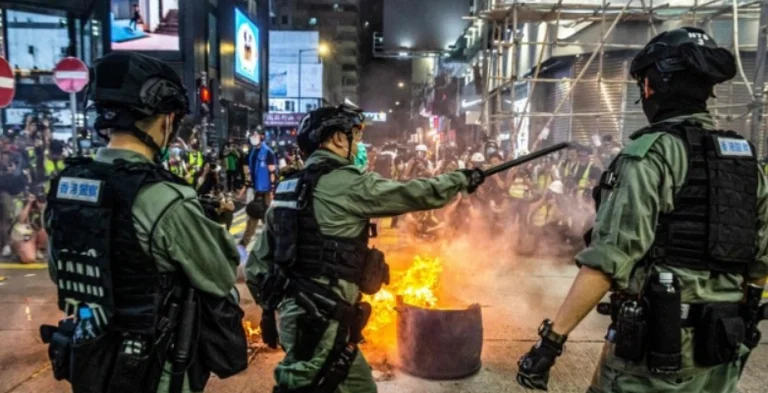
The move came as the Popular Congress in Beijing discussed a bill that would allow stricter measures against Hong Kong's push for greater independence from the rest of China, which is headed by the Communist Party.
The previous United Kingdom colony returned under China more than two decades ago and was placed under rule as part of a “one country, two” systems that define Hong Kong a particular administrative region.
This limited self-environment allowed Washington to maintain a special status for American companies doing business with entities in Hong Kong.
While critics claim Beijing has steadily expanded its impact on the city in recent years, removing this particular status could have serious consequences for Hong Kong's status as a key centre for international finances.
In November, President Donald Trump signed the Hong Kong Human Rights and Democracy Act in law calling for these favourable trade ties to be conditioned in an annual assessment of Hong Kong's State Department for Political Status.
On Tuesday, White House Press Secretary Kayleigh McEnnany conveyed a message from Trump saying: “He is unhappy with China's efforts and it is difficult to see how Hong Kong can remain a financial centre if China takes over. ”
Chinese officials have dismissed separatist tendencies in Hong Kong, as well as outside support for greater independence there.
“Hong Kong is a special administrative region of China, and preserving national security has always been the authority of the central government,” said Chinese Foreign Ministry spokesman Zhao Lijian before reporters in Beijing on Wednesday.
“The question of National Security legislation in the Special Administration Region is simply an internal issue of China, and no foreign intervention is allowed. We will take the necessary measures to counter the wrong actions of outside forces that interfere in Hong Kong's affairs,”, he said.
Local Hong Kong officials have also expressed their dissatisfaction.
Australia, Canada and the US have also voiced their opposition to the proposed law, which has launched protests in Hong Kong.
Washington's rejection of Beijing's policies in Hong Kong has represented yet another challenge to relations between the world's two main economies.
As the US and China reached an agreement in January to stop their trade war, disagreements over the treatment of pandemic and other geopolitical issues, such as territorial questions on Taiwan and the Great Sea of South China, continue to be the source of mounting tensions.